AI vs Human Hosts in Live Commerce: Performance Breakdown
How to build a futureproof relationship with AI
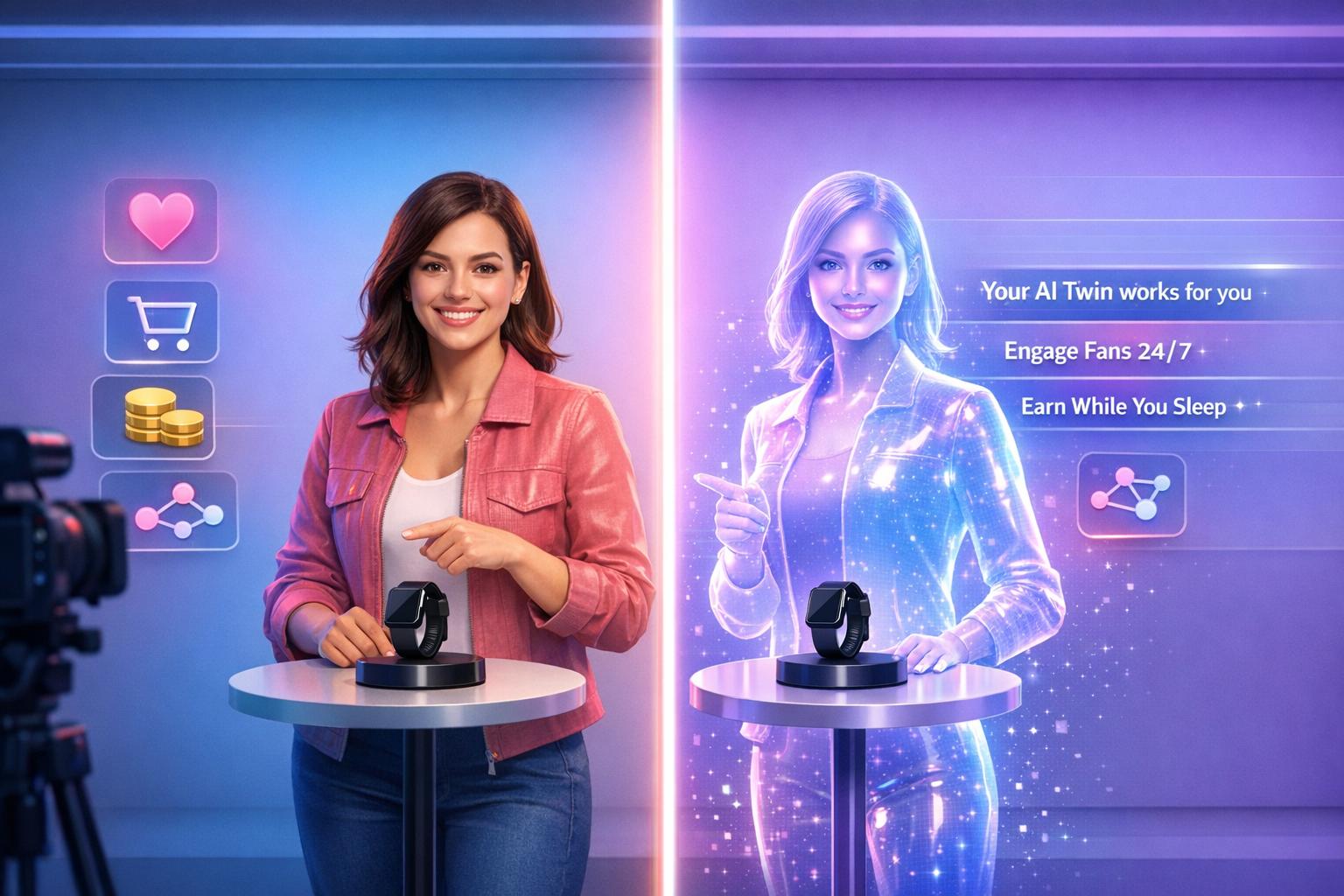
AI or human hosts? Your live commerce strategy depends on this key choice. Here's a quick breakdown:
Human hosts: Better at creating emotional connections, excelling in categories like fashion or luxury products. They boost engagement and sales but have limits on working hours and scalability. Costs include salaries, benefits, and training.
AI hosts: Cost-efficient and scalable, operating 24/7 without breaks. Perform well with practical products like groceries, especially when enhanced with real-time Q&A and emotion feedback. However, they struggle with emotionally driven sales and lack the personal touch of humans.
Key Stats:
AI hosts with real-time Q&A can match human hosts in sales performance, boosting revenue by 86%.
Human hosts outperform AI in emotionally driven categories, but scaling their efforts requires significant investment.
Bottom line: Use human hosts for emotional and high-value sales, AI for scalability and cost savings. A hybrid approach can maximize benefits.
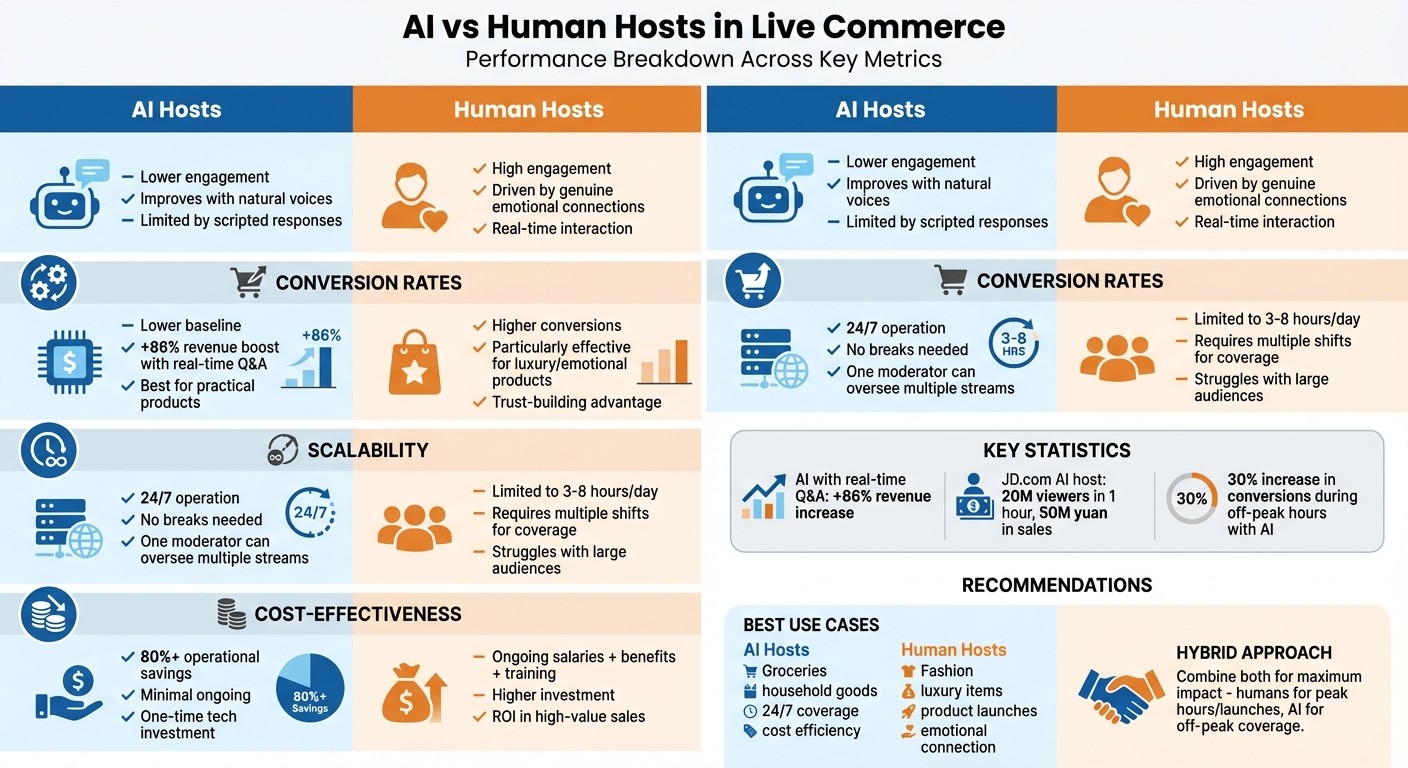
AI vs Human Hosts in Live Commerce: Performance Comparison
2 Fake People Made $7.6 Million In 6 Hours #ai #artificialintelligence #live #livestream
1. AI Hosts
Understanding how AI hosts perform in live commerce involves looking at their ability to engage audiences, drive conversions, scale operations, and reduce costs.
Engagement Rates
When it comes to engagement, AI hosts still lag behind their human counterparts. A study conducted in August 2025 by researchers from the UBC Sauder School of Business, led by Dr. Yanwen Wang, analyzed 328 products for a fashion retailer on Tmall.com. The results showed that non-interactive AI avatars had only a slight edge over having no host at all. In contrast, human hosts significantly boosted both engagement and sales.
However, the story changes when AI hosts are equipped with real-time Q&A capabilities. In the same study, researchers tested enhanced AI hosts with an online grocery retailer. These AI hosts, capable of answering customer questions in real time, saw a 25% increase in sales and an 86% jump in revenue - matching the performance of human hosts. Dr. Yanwen Wang emphasized this point:
"Only enhanced real-time Q&A interactions allowed the digital streamers to achieve sales performances on par with human streamers".
Interestingly, the type of product also plays a role. AI hosts perform better with practical, everyday items like groceries or household goods. But they struggle with products that rely on emotional appeal, such as fashion or luxury items. Additionally, while a natural, human-like voice can improve engagement, overly casual or scripted language may backfire by making interactions feel less authentic and harder to process.
These engagement challenges directly influence how well AI hosts convert viewers into buyers. Advanced strategies like AI grouping for live shopping events can help overcome these hurdles by tailoring interactions to specific audience segments.
Conversion Rates
Without real-time interaction, AI hosts offer little improvement in conversion rates. But when they incorporate behavioral realism - like answering questions on the spot - they can deliver impressive results. For example, adding real-time Q&A led to an 86% revenue boost, and incorporating features like lotteries further increased revenue by 70%.
A standout example comes from April 2024, when JD.com founder Richard Liu introduced an AI host named "Sales Liu" during a live stream. The event attracted over 20 million viewers in just one hour, generating more than 50 million yuan in sales by the end of the session.
These examples highlight a key takeaway: interactive features matter far more than visual realism when it comes to driving conversions.
Scalability
One area where AI hosts shine is scalability. Unlike human hosts, AI can operate around the clock without needing breaks or salaries. This means a single human moderator can oversee multiple AI-driven livestreams, stepping in only when complex questions arise. JD.com’s AI streamers, for instance, contributed to a 30% increase in order conversions during late-night and early-morning hours, times when human hosts are less available.
"Digital streamers do have one big advantage: cost. Unlike humans, they can livestream 24 hours a day without breaks or salaries." - Dr. Yanwen Wang, Associate Professor, UBC Sauder School of Business
AI hosts are also great at handling repetitive questions from large audiences without losing patience, making them ideal for high-volume promotional events where consistent messaging is key.
Cost-Effectiveness
The financial benefits of AI hosts are hard to ignore. While human streamers work limited hours and require salaries, benefits, and support teams, AI hosts involve only an upfront technology investment and minimal ongoing server costs. When enhanced with real-time Q&A capabilities, AI hosts can match the sales performance of human hosts at a fraction of the cost.
This cost efficiency is particularly appealing for products where emotional connection is less critical, such as groceries or promotional items. However, for brands to see real revenue gains, they must invest in making AI hosts more interactive and behaviorally realistic. Without these enhancements, the cost savings may not translate into meaningful results.
2. Human Hosts
Human hosts bring a unique ability to form meaningful connections with their audiences. Their knack for reading the room, responding with empathy, and creating emotional moments gives them a distinct advantage in situations where trust and emotional engagement are key.
Engagement Rates
Human streamers offer a level of interaction that AI simply can't replicate. A study conducted by Dr. Yanwen Wang at the UBC Sauder School of Business in September 2025 analyzed 328 products on Tmall.com. The findings? Human streamers significantly boosted sales, while basic digital streamers barely made a difference compared to having no streamer at all. This success stems from their ability to engage in real-time, fostering parasocial relationships through spontaneous conversations and emotional cues.
The type of product being sold also matters. Human hosts shine in categories like fashion, beauty, and lifestyle - areas where shopping is often driven by pleasure and emotional appeal. On the other hand, AI performs better with utilitarian products like household staples, where emotional resonance plays a smaller role. For new product launches, human hosts are preferred for their detailed insights and perceived credibility.
This heightened engagement naturally leads to stronger conversion rates.
Conversion Rates
Thanks to their emotional intelligence, human hosts excel at turning engagement into sales. They build trust and evoke positive emotions, which are key drivers of higher purchase rates. Their genuine enthusiasm and spontaneous reactions create a shopping environment that feels comfortable and inviting, reducing anxiety for customers - especially when it comes to complex or unfamiliar products.
Scalability
Despite their strengths, human hosts face challenges when it comes to scalability. Most human streamers can only work between 3 to 8 hours a day. To provide 24/7 coverage, brands would need to hire multiple hosts across shifts, which can quickly become costly and complicated.
Another limitation is their ability to manage large audiences in real time. When viewer numbers grow too high, individual hosts often struggle to maintain the same level of interaction, which can lead to disengagement. There's also the risk of over-reliance on star hosts. For example, when Dong Yuhui, a top streamer for the Chinese live commerce firm Oriental Selection, resigned in early 2024, the company’s market value was cut in half.
Cost-Effectiveness
Hiring human hosts requires ongoing investment in salaries, benefits, and training. For brands aiming to scale, these costs rise as more hosts are needed to cover longer hours or expand into different product categories.
However, in high-value or emotionally driven sales scenarios, this investment often pays off. To maximize returns, brands should strategically deploy human hosts in areas where their strengths - like emotional engagement and credibility - make the biggest impact.
Pros and Cons
AI and human hosts each bring their own strengths and limitations to the table, and understanding these trade-offs is key to making the right hosting choice.
Human hosts excel at creating emotional connections and driving conversions through genuine interactions. However, their performance is constrained by factors like physical endurance and higher ongoing costs. On the other hand, AI hosts shine in areas like scalability and cost-efficiency. They can operate 24/7 without requiring breaks, salaries, or benefits, making them particularly useful for promoting products that don't rely heavily on emotional appeal.
Research shows that human hosts generally outperform non-interactive AI in driving sales. However, when AI is equipped with advanced features like real-time Q&A and interactive elements (e.g., lottery functionalities), it can achieve sales and revenue outcomes comparable to those of human hosts.
The table below provides a clear comparison of how human and AI hosts stack up across key performance metrics:
Metric | Human Hosts | AI Hosts |
|---|---|---|
Engagement Rates | High; driven by genuine emotional connections | Lower; can improve with natural-sounding voices but often limited by scripted responses |
Conversion Rates | Higher; particularly effective for luxury or emotionally-driven products | Lower; comparable to humans only with advanced interactive features like real-time Q&A |
Scalability | Limited; constrained by physical endurance and scheduling | High; operates autonomously 24/7 without interruptions |
Cost-Effectiveness | Lower; includes salaries, commissions, and training expenses | Higher; minimal operational costs and no salary requirements |
This side-by-side breakdown highlights the unique strengths of each type of host, helping you weigh the options based on your specific needs.
Conclusion
Choosing the right host for live commerce depends on the type of product and the goals of your business. Human hosts bring emotional depth and storytelling to the table, making them ideal for luxury or high-value products where trust and personal connection are essential. They thrive in scenarios that call for warmth and spontaneity, especially when selling emotionally driven items like fashion or lifestyle goods. These genuine interactions often translate into higher conversion rates.
On the other hand, AI hosts shine when scalability and cost efficiency are priorities. They’re perfect for 24/7 operations, handling off-peak hours, and promoting utilitarian products where clear and concise information is the focus. With interactive features, AI hosts can deliver results comparable to human hosts at a fraction of the cost, with operational savings potentially exceeding 80%.
A hybrid approach can offer the best of both worlds. For example, human hosts can take center stage during peak hours or major product launches, while AI hosts maintain a seamless presence during quieter times. As Dr. Yanwen Wang from UBC Sauder School of Business explains:
"The best future approach may be a mix of human and AI. For example, a human could monitor several AI streamers at once, stepping in to answer questions when needed".
Ultimately, the key is to align the type of host with your product and audience. For utilitarian items, AI hosts provide cost-effective efficiency. For emotionally charged or high-value purchases, experienced human hosts remain the go-to choice for fostering trust and driving sales. By strategically combining both, businesses can optimize their live commerce strategy for maximum impact.
FAQs
How does combining AI and human hosts improve live commerce strategies?
A hybrid approach that combines the strengths of AI and human hosts can elevate live commerce strategies by merging efficiency with emotional connection. AI hosts are great at managing repetitive tasks, handling large-scale audiences, and ensuring operations run smoothly. On the other hand, human hosts bring warmth and relatability, creating emotional bonds with viewers.
This teamwork lets brands handle a variety of scenarios, from high-traffic sales events to one-on-one customer interactions. AI can manage routine tasks, giving human hosts the freedom to focus on crafting engaging, heartfelt moments that leave a lasting impression. Together, they strike a balance that increases audience engagement, improves conversion rates, and keeps live commerce efforts cost-efficient.
How do the costs of using AI hosts compare to human hosts in live commerce?
AI hosts present a budget-friendly alternative to human hosts in live commerce. They’re capable of operating 24/7 without breaks, which not only cuts down on labor costs but also allows for greater scalability. Plus, expenses tied to human employees - like wages, overtime, and benefits - are no longer a factor.
That said, there are initial costs involved in developing, training, and maintaining AI systems. These expenses can vary based on how advanced the technology needs to be. Still, the long-term savings in operational costs often outweigh these upfront investments, making AI hosts an appealing choice for brands aiming to streamline their live shopping efforts.
When do AI hosts perform better than human hosts in live commerce?
AI hosts shine in live commerce when reach, consistency, and cost-effectiveness are the main goals. Unlike human hosts, they can work non-stop, 24/7, without tiring, making them perfect for engaging large audiences while maintaining a steady and uniform presentation. This allows brands to keep their messaging consistent while cutting labor costs, stretching their marketing budgets further.
These virtual hosts are especially useful in situations where quick responses and high interaction levels are essential. They can tailor content to individual viewers, take care of repetitive tasks, and manage large audiences with ease. That said, while AI is great for structured and standardized sales settings, it falls short in creating emotional connections or navigating more complex, nuanced interactions - areas where human hosts still have the upper hand.