AI Twins and Emotion Feedback in Live Shopping
How to build a futureproof relationship with AI
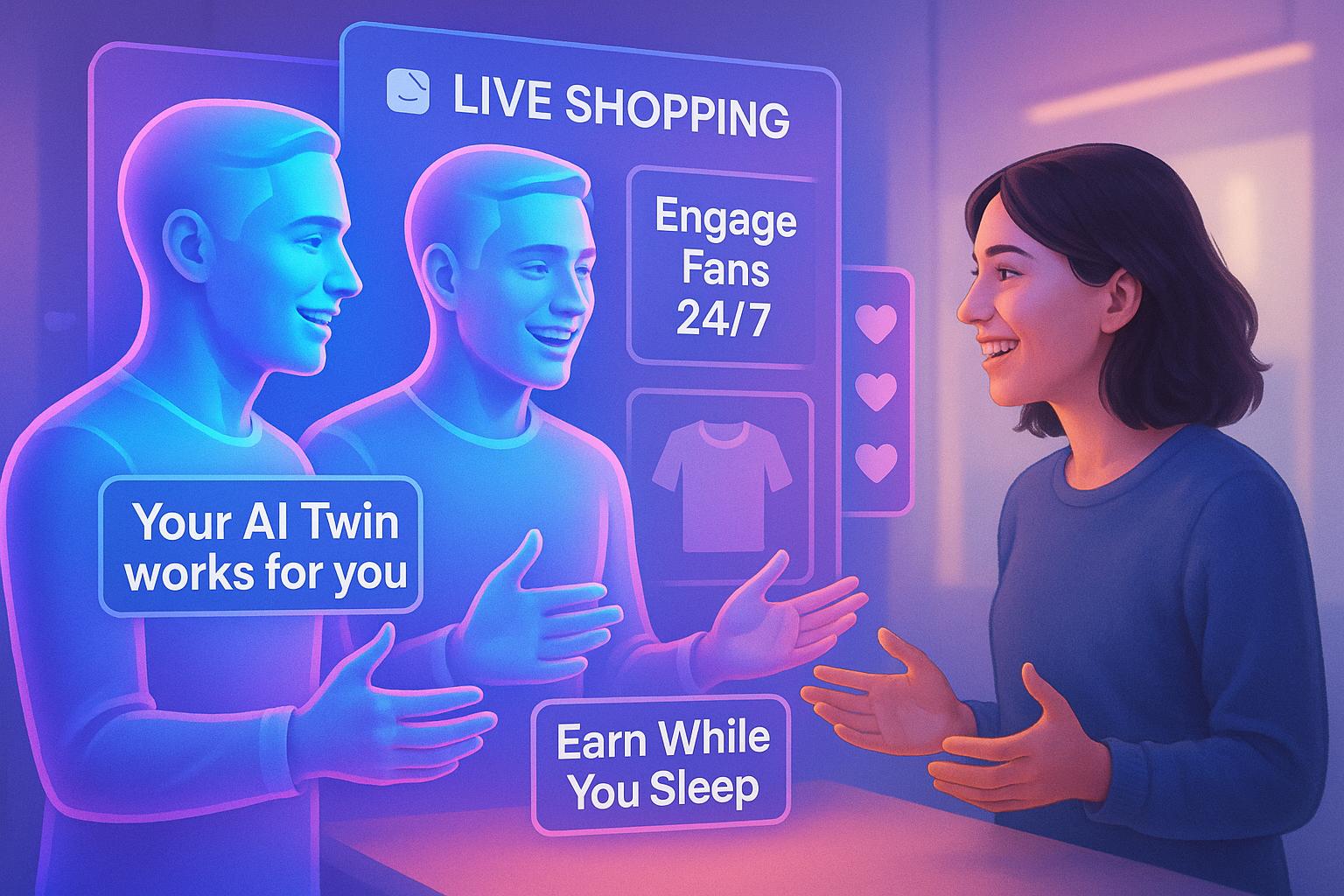
AI Twins are transforming live shopping, offering personalized, emotion-aware experiences that adapt to real-time consumer reactions. These digital replicas of real creators analyze facial expressions, voice tones, and engagement cues to make dynamic product recommendations. Platforms like TwinTone enable brands to use these AI hosts for 24/7 live streams, scaling their reach globally while reducing costs.
Key points:
AI Twins: Operate continuously, provide tailored recommendations, and support multilingual sessions.
Emotion Feedback: Adjusts tone and messaging based on audience reactions, boosting engagement.
Human Hosts: Offer spontaneity and genuine connections but are limited by availability and higher costs.
Hybrid Approach: Combines AI scalability with human relatability for optimal results.
Quick Comparison:
Aspect | AI Twins | Human Hosts |
|---|---|---|
Availability | 24/7, no breaks | Limited by schedules and fatigue |
Scalability | Multiple streams globally | One stream at a time |
Personalization | Data-driven, dynamic adjustments | Intuitive, less scalable |
Consistency | Uniform performance | Varies by session |
Cost | Lower ongoing costs | Higher recurring expenses |
Response to Questions | Limited by programming | Excels in improvisation |
AI Twins excel in efficiency and scale, while human hosts shine in creating emotional bonds. Brands are increasingly blending both to meet diverse consumer needs.
In China, AI Clones Are Putting Human Livestreamers Out of Work
1. AI Twins with Emotion Feedback
This section delves into how real-time analysis of facial expressions, voice tone, and chat sentiment enhances live shopping experiences. Below, we explore how emotion feedback impacts engagement, broadens reach, builds trust, and reduces costs.
Emotional Engagement
AI Twins equipped with emotional intelligence can pick up on audience emotions during live shopping sessions and respond dynamically. For example, if an AI Twin detects excitement about a product, it can immediately emphasize standout features or offer a time-sensitive discount. On the other hand, if confusion arises, the AI Twin can provide further explanations or even demonstrate the product to clarify its benefits. This real-time adaptability helps create a deeper connection with viewers by tailoring tone, pacing, and content delivery based on their emotional cues.
Scalability
With emotion feedback capabilities, AI Twins can do what human hosts can't - run multiple live sessions at the same time across different time zones and platforms, all while maintaining high-quality interactions. This means brands can showcase products 24/7. Imagine a beauty brand deploying an AI Twin modeled after a popular influencer to host live demos on platforms like TikTok, YouTube, Amazon, and Shopify. Each session can adapt dynamically to viewer input. TwinTone’s platform takes this a step further, offering branded live streams in over 40 languages around the clock. Campaigns that once required weeks of planning can now launch in just minutes, reaching massive audiences simultaneously.
Authenticity
AI Twins are designed to replicate the voices, mannerisms, and behavior of real creators, making interactions feel natural and engaging. Emotion feedback enhances this by enabling AI Twins to respond in a way that feels unscripted and genuine. TwinTone, for instance, uses creators' likenesses and behavioral data to ensure that each AI Twin reflects their unique tone and style. Features like "Expressive gestures", available in premium plans, allow AI Twins to convey a wide range of emotions, further humanizing their interactions. By mirroring human behavior so closely, these AI Twins not only foster trust but also make live shopping sessions more relatable and engaging.
Cost Efficiency
AI Twins with emotion feedback offer a cost-effective alternative to traditional live shopping approaches. Once created, an AI Twin can host unlimited sessions without the added expenses of labor, travel, or production, directly driving sales growth. TwinTone’s pricing underscores these savings: the Starter plan costs $110 per user per month (including 10 videos with creator avatars), while the Pro plan is priced at $220 per user per month (including 20 videos with expressive gestures). This efficient setup allows brands to produce content instantly, freeing up resources for other marketing efforts and increasing ROI on live shopping campaigns.
2. Human Live Shopping Hosts
Human hosts bring a unique, spontaneous touch to live shopping that AI Twins can't replicate. Their strength lies in building emotional connections and creating an engaging, interactive experience for viewers. Let’s dive into some key aspects of their role in live shopping.
Emotional Engagement
One of the biggest advantages of human hosts is their ability to connect emotionally with the audience. Through real-time conversations, expressive gestures, and personalized responses, they make viewers feel seen and heard. This kind of interaction builds trust and can significantly boost purchase intent and conversions. For instance, a host who responds to a viewer's question with enthusiasm or humor can create a sense of community around a brand. However, this personal touch has its limits - scaling such authenticity across multiple sessions can be challenging.
Scalability
Unlike AI-powered solutions, human hosts can only handle one live stream at a time. To run multiple sessions or cover extended hours, companies need to hire additional hosts, which increases operational costs. There are also natural constraints to consider - hosts need breaks, have limited availability, and require extensive training to align with a brand’s messaging and product knowledge. Every live event demands careful scheduling, preparation, and a team of dedicated resources, which adds layers of complexity.
Authenticity
Human hosts are often seen as more trustworthy because they offer genuine reactions, unscripted product demonstrations, and spontaneous answers to questions. This authenticity resonates strongly with American audiences, who value relatable and conversational tones. Hosts that reflect diverse backgrounds and incorporate familiar cultural references, such as using USD or mentioning popular lifestyle trends, further enhance their appeal and relevance to viewers. This sense of connection is hard to replicate with automated solutions.
Cost Efficiency
While human hosts bring authenticity, they come with higher costs. Salaries, training, and production expenses can quickly add up, especially when brands need to operate across different time zones or extend live sessions. Since human hosts have limited working hours and require breaks, scaling live shopping events means committing to ongoing expenses. Unlike automated systems, which can offer savings over time, relying solely on human hosts results in recurring costs that must be factored into a brand's live shopping strategy. Balancing these costs with the benefits of human interaction is key to finding the right approach.
Benefits and Drawbacks
AI Twins with emotion feedback and human hosts each bring their own set of strengths and challenges to live shopping. By weighing these trade-offs, brands can better shape their live commerce strategies.
AI Twins with emotion feedback stand out for their consistency and scalability. They operate around the clock in over 40 languages, using emotion feedback to adjust their tone and recommendations in real time. This capability can boost conversion rates by as much as 30% compared to standard online shopping experiences.
Cost efficiency is another major advantage. Platforms like TwinTone demonstrate how quickly brands can launch campaigns - often in minutes rather than weeks - saving both time and money. This agility allows brands to respond faster to market trends or inventory changes, giving them a competitive edge.
However, these benefits come with challenges. AI Twins often struggle with the subtleties of human interaction and may falter when faced with unexpected questions. Additionally, their reliance on collecting and analyzing emotional and behavioral data raises privacy concerns, which could deter some users.
On the other hand, human hosts bring qualities that technology cannot replicate. They excel at building genuine emotional connections and trust with their audiences. Their ability to improvise, share personal stories, and respond creatively to viewer comments fosters a sense of community. This personal touch is especially critical for high-involvement purchases or luxury products, where trust plays a key role in the buying decision.
That said, human hosts have their own limitations. They can only manage one live stream at a time, need breaks, and their performance can vary from session to session. For brands requiring extended coverage or multiple streams across regions, these operational constraints can quickly drive up costs.
The table below highlights the key differences between AI Twins and human hosts:
Aspect | AI Twins with Emotion Feedback | Human Live Shopping Hosts |
|---|---|---|
Availability | Operates 24/7 without breaks | Limited by schedules and fatigue |
Scalability | Supports multiple streams globally | One stream per host at a time |
Personalization | Data-driven, highly tailored recommendations | Intuitive but less scalable |
Consistency | Delivers uniform messaging every time | Performance varies by host and session |
Authenticity | Advanced but lacks genuine empathy | Builds natural emotional connections |
Cost Structure | Lower ongoing costs after setup | Recurring salaries and training expenses |
Response to Unexpected Situations | Limited by programming and data | Excels in improvisation and problem-solving |
Cultural Sensitivity | Requires careful programming for nuances | Naturally understands cultural context |
Privacy Considerations | Relies on emotional and behavioral data collection | Minimal data collection during interactions |
Conclusion
Deciding between AI Twins and human hosts ultimately depends on what your brand values most. AI Twins shine when it comes to scalability and delivering fast, data-driven personalization - something that resonates with 76% of US consumers. On the other hand, human hosts excel in creating genuine connections, which are crucial for high-touch sales scenarios.
AI Twins are especially useful in situations where continuous, multilingual support or quick campaign rollouts are needed. Their flexibility allows brands to adapt swiftly to market trends and inventory changes without missing a beat.
However, human hosts bring something irreplaceable to the table: authenticity. For luxury goods, complex products, or anything that hinges on building trust, the human touch remains essential. This is why many top brands are blending the strengths of both.
A hybrid approach is becoming increasingly popular. AI Twins handle routine tasks and off-peak hours with ease, while human hosts step in for high-stakes events or moments that require a personal touch. This combination ensures broad coverage without sacrificing the human element where it matters most.
As technology evolves, advancements like emotion feedback tools are narrowing the gap between AI and human hosts. Still, the trade-off between efficiency and authentic engagement remains a key consideration. Notably, 59% of companies are planning to incorporate digital twin technologies by 2028, signaling a shift toward integrating both approaches in live shopping strategies. The key is aligning your strategy with customer expectations to balance efficiency with meaningful connections.
FAQs
How do AI Twins with emotion feedback improve live shopping experiences?
AI Twins with emotion feedback are changing the game for live shopping, bringing a more interactive and personalized touch to the experience. These digital replicas of real creators can host live streams, highlight products, and even react to audience emotions in real time. The result? A shopping experience that feels more genuine and dynamic.
Brands can take advantage of AI Twins to host live shopping events around the clock, in over 40 languages, ensuring they stay connected with audiences worldwide. With emotion feedback, these AI Twins adjust their tone and delivery to better align with viewers' feelings, creating stronger connections and encouraging more sales.
What privacy concerns come with AI Twins that use emotional and behavioral data?
AI Twins that gather emotional and behavioral data come with some serious privacy concerns. These include risks like unauthorized data collection, misuse of sensitive information, and breaches of personal data. People might also feel uneasy about how their emotional responses and behaviors are being stored, shared, or used - especially if it's done without clear consent.
To tackle these issues, brands and creators need to prioritize robust data security measures and ensure privacy policies are transparent. Making sure users are fully informed and provide explicit consent not only safeguards their personal information but also helps build trust.
When is it most effective for brands to combine AI Twins with human hosts during live shopping events?
A mix of AI Twins and human hosts can work wonders in various scenarios. AI Twins excel at repetitive tasks like presenting product details, addressing frequently asked questions, or managing 24/7 live streams. On the other hand, human hosts shine in more nuanced roles, such as tackling complex customer queries or bringing a personal flair to high-profile events.
This partnership enables brands to expand their live shopping initiatives without losing the human connection. By relying on AI Twins for reliability and human hosts for creativity, brands can craft a shopping experience that's both efficient and engaging, leaving a lasting impression on their audience.