social commerce
How Predictive Segmentation Drives Social Commerce
Predictive segmentation is transforming how brands sell through social platforms like TikTok Shop and Instagram Shopping.
Predictive segmentation is transforming how brands sell through social platforms like TikTok Shop and Instagram Shopping. It uses machine learning to anticipate customer behavior - what they’ll buy, when, and on which platform - allowing businesses to create highly personalized experiences. This approach goes beyond traditional methods by combining social engagement, ecommerce transactions, and browsing habits to predict outcomes like purchase likelihood, churn risk, and customer lifetime value (CLV).
This section delves into the core elements of predictive segmentation for social commerce, building on the benefits discussed earlier. At its heart, predictive segmentation relies on three pillars: data, analytical models, and actionable customer groupings.
Social commerce generates a wealth of unique data that goes beyond what traditional ecommerce offers. The most effective predictive models combine three key types of data to provide a comprehensive view of customer behavior.
The unique power of social commerce lies in how these data sources interact. For example, a fashion brand might notice a user who frequently comments on live shopping videos and adds items to their cart but rarely completes purchases. This combination identifies them as highly engaged but at risk of dropping off, an insight that traditional ecommerce data alone might miss. On the other hand, a user with high purchase frequency and consistent engagement with branded content stands out as a high-value customer, ideal for targeted campaigns.
By linking social, behavioral, and transactional data, brands can uncover high-value segments and deliver timely, personalized product recommendations.
Machine learning models turn raw data into actionable insights about customer behavior. In social commerce, the focus often revolves around three outcomes: predicting purchases, identifying at-risk customers, and estimating customer lifetime value.
Propensity scoring models: These models calculate the likelihood of specific actions. For example, purchase likelihood models estimate the probability of a customer making a purchase within a set timeframe - usually 7 to 30 days - based on recent behaviors like product views, cart additions, and social engagement. A user with multiple product views and cart additions might receive a 70% likelihood score. Conversely, churn risk models identify users whose engagement is declining, such as fewer likes, reduced site visits, or longer gaps between purchases.
Recommendation systems: These systems suggest products tailored to user preferences and social context. Using collaborative filtering and content-based approaches, they analyze purchase history, browsing behavior, and social interactions to power features like "Trending with shoppers like you" or "Customers who bought this also bought...". In social commerce, these recommendations are seamlessly integrated into product feeds, Stories, Reels, and live shopping events.
Customer lifetime value (CLV) models: These models predict the total revenue a customer is likely to generate over their relationship with a brand. They factor in historical spending, purchase frequency, and engagement depth to identify top-tier customers.
One subscription-based service used predictive analytics to spot customers at risk of canceling by analyzing declining engagement and purchase behavior. Targeted retention campaigns with personalized offers helped reduce churn by 18% in just six months.
These models often rely on algorithms like logistic regression, random forests, and gradient boosting, with deep learning techniques enhancing predictions for large-scale behavioral data. Predictions are updated frequently - daily or weekly - to adapt to shifts in customer behavior and keep segments relevant in the fast-paced world of social commerce.
Predictive Segmentation Basics for Social Commerce
Converting Predictions into Customer Segments
Retention and loyalty goals: Use repeat purchase rate and customer lifetime value (CLTV) to measure success. For win-back campaigns targeting at-risk customers, track how many return within 30 days and the value of their purchases.
Ad efficiency goals: Focus on metrics like return on ad spend (ROAS), cost per acquisition (CPA), and click-through rate (CTR).
According to a 2023 McKinsey report, companies leveraging advanced customer segmentation and personalization saw revenue increases of 10–30%. A 2024 Forrester study found brands using predictive analytics for segmentation achieved 20–30% higher conversion rates compared to rule-based methods.
Assign clear ownership of these goals and establish a regular review schedule - weekly or monthly - to ensure your segmentation strategy evolves with your business needs and delivers results.
Once you’ve set your metrics, the next step is to consolidate and prepare your data for analysis.
Your predictive models are only as good as the data they’re built on. To create accurate segments, unify data from social platforms and ecommerce systems into a single, cohesive view of each customer.
Social commerce generates data from numerous touchpoints. For platforms like Instagram, TikTok, Facebook, and Pinterest, collect engagement metrics such as likes, shares, saves, comments, video views, and click-throughs from posts and Stories. Combine this with data on add-to-cart and purchase behaviors from social shops. Don’t forget to include interactions with user-generated content and creator posts to pinpoint what drives conversions.
From ecommerce systems like Shopify or BigCommerce, gather transaction history, product views, cart abandonment data, purchase frequency, and customer demographics like location. Standardize formats for consistency - use USD (e.g., $1,299.99), timestamps (e.g., 12/08/2025 2:30 PM UTC), and proper formatting for numbers (e.g., 1,250.75). When applicable, use US customary units like pounds and inches.
Clean your data to remove duplicates and consolidate profiles. For instance, a customer might appear with multiple email addresses or phone numbers across platforms. Correct inconsistencies and fill in missing values to ensure your models are built on solid ground.
Set Goals and Metrics
A PwC study revealed that 76% of consumers expect personalized experiences, and 64% find it frustrating when brands fail to deliver. Clean, unified data is essential for accurate segmentation and effective personalization.
Use tools like a customer data platform (CDP) or data warehouse to centralize information from your CRM, ecommerce systems, and social commerce tools. This unified data source will continuously feed your predictive models and keep your segments current.
Once your data is ready, it’s time to deploy predictive models and turn insights into actionable segments.
With clean, unified data, you can deploy predictive models to transform customer behavior into actionable segments. You can use tools like Segmentify, Pecan, or Emarsys for pre-built models, or create custom ones if you have in-house data science expertise.
Some key models for social commerce include:
- Purchase Propensity: Predicts which users are most likely to make a purchase within the next 7–14 days.
- Churn Risk: Identifies users whose engagement or purchase frequency is declining.
- Customer Lifetime Value (CLV): Forecasts the long-term value of each customer.
- Engagement Propensity: Assesses the likelihood of users engaging with live streams, Stories, or user-generated content.
According to a 2023 McKinsey report, companies leveraging advanced customer segmentation and personalization saw revenue increases of 10–30%.
How to Build and Apply Predictive Segments
Prepare and Combine Data
Transform model outputs into segments using thresholds and business rules. For example, churn risk could be segmented as follows:
A 2023 Gartner survey found that 60% of marketing leaders plan to increase their investment in predictive analytics and AI-driven segmentation within the next two years.
Integrate these segments into your marketing channels. Push them to ad platforms like Meta Ads, TikTok Ads, and Google Ads as custom audiences. Sync them with email and SMS platforms like Klaviyo or Braze to deliver personalized campaigns. On social feeds, use a personalization engine to display tailored content - like “Trending Now” collections for high-propensity users or “Back in Stock” alerts for those at risk of churning.
Live shopping is where predictive segmentation can truly shine. Use your segments to invite high-propensity users to live shopping events through push notifications, email, or in-app messages. During the event, tailor on-screen product recommendations based on each viewer’s segment - show bestsellers to high-propensity users, premium bundles to high-CLV customers, and limited-time restocks to those at risk of churning. Platforms like TwinTone (https://twintone.ai) can take this further by hosting AI-driven live streams with personalized product showcases. After the event, follow up with automated offers to re-engage attendees who didn’t convert.
Once you've set up predictive models and created actionable customer segments, the next step is putting them into action. Predictive segmentation can reshape how you connect with customers in social commerce by enabling personalized feeds, dynamic live streams, and targeted campaigns designed to keep customers engaged. Here's how you can use these segments to achieve measurable results.
Deploy Predictive Models
Predictive segmentation allows you to match specific customer groups with tailored product recommendations. By analyzing data like purchase history, browsing habits, and social interactions, you can deliver highly relevant suggestions across social feeds, videos, and live streams. For example:
Customers in the "High Propensity to Purchase" group might see trending bestsellers or newly launched products in Instagram carousels.
Those in the "High CLV" (Customer Lifetime Value) segment could be shown premium bundles or exclusive items.
Users flagged as "Likely to Churn" might receive recommendations for restocked favorites or curated collections designed to rekindle their interest.
Predictive models use techniques like collaborative filtering or hybrid approaches to calculate scores such as "Likelihood to Purchase" or "Next Best Product." These scores guide the selection of items displayed in shoppable content, ensuring relevance.
A 2023 case study by Segmentify highlighted how a fashion retailer leveraged predictive segmentation to target high-purchase-intent customers with personalized Instagram carousels and TikTok videos. The result? A 35% increase in click-through rate and a 22% boost in conversion rates compared to generic campaigns (Segmentify, 2023).
For shoppable videos, predictive segmentation helps decide which products to feature. A beauty brand, for instance, might create TikTok videos showcasing lipstick shades for frequent buyers in that category, while highlighting skincare bundles for those predicted to show interest. After live shopping sessions, you can use segmentation to send follow-ups tailored to audience behavior. High-propensity users might get a replay link with a limited-time discount, while medium-engagement users could receive a curated "Top Picks from the Stream" email.
These personalized touches can significantly improve click-through and conversion rates - sometimes by as much as 20–30% - compared to generic content. This approach also enhances live shopping experiences, where real-time data can further refine engagement strategies.
Live shopping offers a prime opportunity to use predictive segmentation for immediate results. By targeting the right audience, timing events strategically, and offering personalized promotions, you can create more engaging and effective live streams.
High Risk (70–100)
Target these customers with win-back campaigns, such as “We miss you” discounts.
Medium Risk (40–69)
Send re-engagement messages like “New arrivals you might like.”
Low Risk (0–39)
Keep engagement steady with regular updates and offers.
For
CLV, you might divide customers into High, Medium, and Low categories. High-CLV customers could receive VIP perks, early access to products, and loyalty rewards, while medium and low segments might be targeted with cross-sell or upsell campaigns.
Using Predictive Segmentation in Social Commerce
Personalized Product Recommendations
Before a live stream, reach out to segments like "High Propensity", "Frequent Live Shoppers", or "Recently Engaged" through push notifications, emails, or in-app messages. If you're unveiling a new product line, consider inviting your "High CLV" segment to an exclusive early access event to maximize attendance and sales.
During the stream, real-time data such as chat activity, cart additions, and viewing duration can guide on-the-spot adjustments. For example, if high-intent viewers aren't adding items to their carts, a limited-time discount or bundle deal could nudge them toward a purchase. Predictive models can also help determine which products to spotlight based on the buying habits of similar high-value customers. A home goods company might focus on showcasing kitchen gadgets if its "High CLV" group has historically favored that category.
Platforms like TwinTone enable scalable live shopping by using AI-powered "Twins" to host dynamic, data-driven live streams. By integrating predictive segmentation data, these AI Twins can tailor content to match the preferences of live audiences. For instance:
If a high-propensity group is watching, the AI Twin might highlight bestsellers and limited-time offers.
If viewers at risk of churning are present, the AI Twin could focus on restocked items or exclusive discounts to re-engage them.
Scheduling these AI-driven live streams during peak activity times for key segments can transform live shopping into a continuous, data-informed experience. After the event, follow up with segmented campaigns - such as sending replay highlights to attendees who didn’t convert or personalized "Here's what you missed" messages with special offers.
Predictive segmentation isn't just useful for real-time engagement; it also plays a critical role in retaining customers and winning back those at risk of leaving. Predictive models can identify early signs of churn - like reduced app logins, fewer social interactions, or a longer gap since the last purchase - and help you target these users effectively.
For customers in the "High Churn Risk" segment, design campaigns that re-engage them with personalized offers. These might include:
Exclusive social-only discounts
Improving Live Shopping Experiences
Loyalty rewards delivered through social ads or in-app messages
For win-back efforts, consider tactics like limited-time discounts, "We miss you" campaigns with curated product suggestions, or invitations to personalized live shopping events. For instance, a fashion retailer might target users in the "Medium Churn Risk" group with Instagram ads featuring new arrivals in their favorite categories, paired with a 15% discount valid for 48 hours.
A case study by GrowthJockey demonstrated how an e-commerce brand used predictive analytics to segment customers by churn risk and CLV. Targeted win-back campaigns on social media - featuring personalized offers and exclusive live shopping invites - reduced churn by 27% and increased repeat purchases by 30% within three months (GrowthJockey, 2023).
The key to success is personalization. Instead of generic messages, use predictive insights to tailor the timing, channel, and offer to each user's preferences. For example, if a "High CLV, Medium Churn Risk" customer hasn't purchased in 45 days, a personalized email featuring their favorite product categories alongside an invite to an exclusive live shopping event can make a big difference.
AI-powered live streams can also play a role in retention and win-back strategies. Platforms like TwinTone allow you to host 24/7 live product showcases that adapt dynamically to viewer behavior. This ensures that at-risk customers see products and promotions specifically designed to re-engage them.
To refine your approach, track the performance of these campaigns by segment. Measure metrics like how many at-risk customers return within 30 days, the value of their follow-up purchases, and their engagement with subsequent campaigns. Use these insights to continually improve your retention efforts and keep high-value customers coming back.
Once you've rolled out predictive segments, keeping an eye on their performance and making adjustments is essential to maintain success in social commerce. Customer behaviors can shift over time, and without regular evaluation and fine-tuning, even the most advanced segmentation strategies can lose their edge. Here's how to measure your segmentation's effectiveness and refine it for better results.
To get the most out of your predictive segmentation, monitor key metrics like conversion rates and revenue per segment. These numbers can reveal which groups are driving the most value and where you should focus your efforts. For instance, calculate the conversion rate by dividing the number of purchases in a segment by the total interactions or impressions. If your "High Propensity to Purchase" group converts at 8% compared to 2% for the "Medium Propensity" group, it’s clear where your resources should go.
Revenue tracking is equally important. Look at how much each segment contributes over specific timeframes - weekly, monthly, or quarterly. For example, if your "High CLV" (Customer Lifetime Value) segment generates $125,000 in monthly revenue but only accounts for 15% of your customer base, that group deserves tailored content and personalized campaigns. Compare these results to your baseline metrics before implementing predictive segmentation to calculate incremental revenue - the additional income directly tied to your segmentation efforts.
Measuring and Improving Predictive Segmentation
Retention and Win-Back Campaigns
Keep tabs on metrics like click-through rates (CTR), add-to-cart rates, and average order value (AOV) to detect shifts in segment behavior. For example, a segment with a high CTR but low conversion might benefit from improved product recommendations or more appealing offers. If engagement within a segment declines over time, it may signal that preferences have changed, and your model needs an update.
A performance dashboard can simplify tracking by displaying metrics in USD, making trends and anomalies easier to spot. For instance, a 20-30% drop in revenue or conversion rates for a previously strong segment should prompt immediate investigation. Similarly, if the accuracy of your predictions - how closely they align with actual customer behavior - falls below 70-80%, it’s time for a model refresh.
Always record baseline metrics before launching segmentation so you can measure its impact effectively. Track changes in conversion rates, customer retention, and revenue to understand the return on investment (ROI) and justify ongoing efforts in predictive analytics.
Once you’ve established performance benchmarks, start testing and refining your strategies to keep segmentation accurate and effective. Customer preferences evolve, and market conditions shift, so what worked last month might not work today. A/B testing is a powerful way to compare different tactics within the same segment and see which delivers better results.
For instance, you could test two different recommendation strategies for your "High Propensity" segment and go with the one that converts better. Track metrics like conversion rates, engagement levels, and revenue in USD for each test variant.
Experiment with various elements in your campaigns, such as product recommendations, messaging styles, visuals, offer types, and timing. For example, a fashion retailer might find that their "Likely to Churn" segment responds better to exclusive early access invitations than to discount codes. Insights like these can shape future retention strategies.
During peak shopping periods, increase the frequency of your tests to quickly gather actionable data. Document test results with timestamps and segment identifiers so you can reference them when updating your models.
Update your predictive models regularly - monthly for most businesses or weekly during busy seasons. Immediate updates should be made if conversion rates for a segment drop by 15-20%, if new data reveals significant behavioral changes, or after major marketing campaigns that might have influenced preferences.
Seasonal patterns also play a role. Before and after big shopping events, retrain your models to account for these shifts. Similarly, if you launch new products, add social commerce channels, or make significant changes to your recommendation algorithms, schedule a model update. Keep a detailed log of what triggers each update to better understand the factors affecting model accuracy.
Track Performance by Segment
Use performance data to create a feedback loop. For example, if a campaign targeting your "High CLV" segment exceeds expectations, analyze what made it successful and incorporate those insights into your segmentation criteria. This approach ensures your predictions improve over time as they adapt to real-world results.
Performance insights can also amplify the effectiveness of AI-generated content, especially in live shopping scenarios. Platforms like TwinTone offer opportunities to track how different segments engage with AI-created content.
Start by monitoring viewer retention rates - the percentage of viewers who stick around during an AI-hosted live stream - and compare them across segments. If your "High Propensity" group has a 75% retention rate while your "Medium Engagement" group drops to 40%, it’s clear which audience responds better to AI content. Similarly, track conversion rates during live streams by dividing purchases made during the event by the total number of viewers, and calculate revenue per live stream in USD.
If AI-hosted live streams lead to a 30% higher conversion rate for your "Frequent Live Shoppers" segment compared to traditional video content, that’s a strong signal to expand AI-driven campaigns for that group. Some segments may naturally respond better to AI content - use this data to allocate resources wisely.
Dive deeper into what works by analyzing which types of AI-generated content drive the most engagement and conversions within each segment. Look at the product categories featured, messaging styles, and content formats (e.g., live streams, short videos, carousel posts) that perform best. A content performance matrix showing revenue by segment and content type can help pinpoint high-performing strategies worth replicating.
Use these insights to fine-tune your AI tools. For example, if Segment A prefers lifestyle-focused product demonstrations while Segment B values detailed technical specs, adjust your AI-generated content accordingly. Platforms like TwinTone can even integrate predictive segmentation data to make AI content dynamic - highlighting bestsellers for high-propensity viewers or exclusive discounts for at-risk customers.
Finally, calculate the ROI of AI content by segment - divide the revenue generated by the cost of producing the content. This financial perspective helps prioritize which segments deserve premium AI-driven strategies and live shopping events.
Feed the results of your AI content back into your predictive models. When the system learns what types of content drive purchases for specific segments, it can make more accurate predictions about future behaviors. This creates a cycle where performance data continuously improves both your segmentation and content strategies, making each campaign more targeted and effective.
To ensure alignment across teams, establish a monthly review process involving marketing, data science, and product teams. Use statistical significance testing to confirm that performance differences are meaningful, not random. Document all findings in a centralized knowledge base to build a long-term understanding of what works for each segment. These ongoing adjustments will keep your predictive segmentation sharp and aligned with changing customer behaviors and campaign goals.
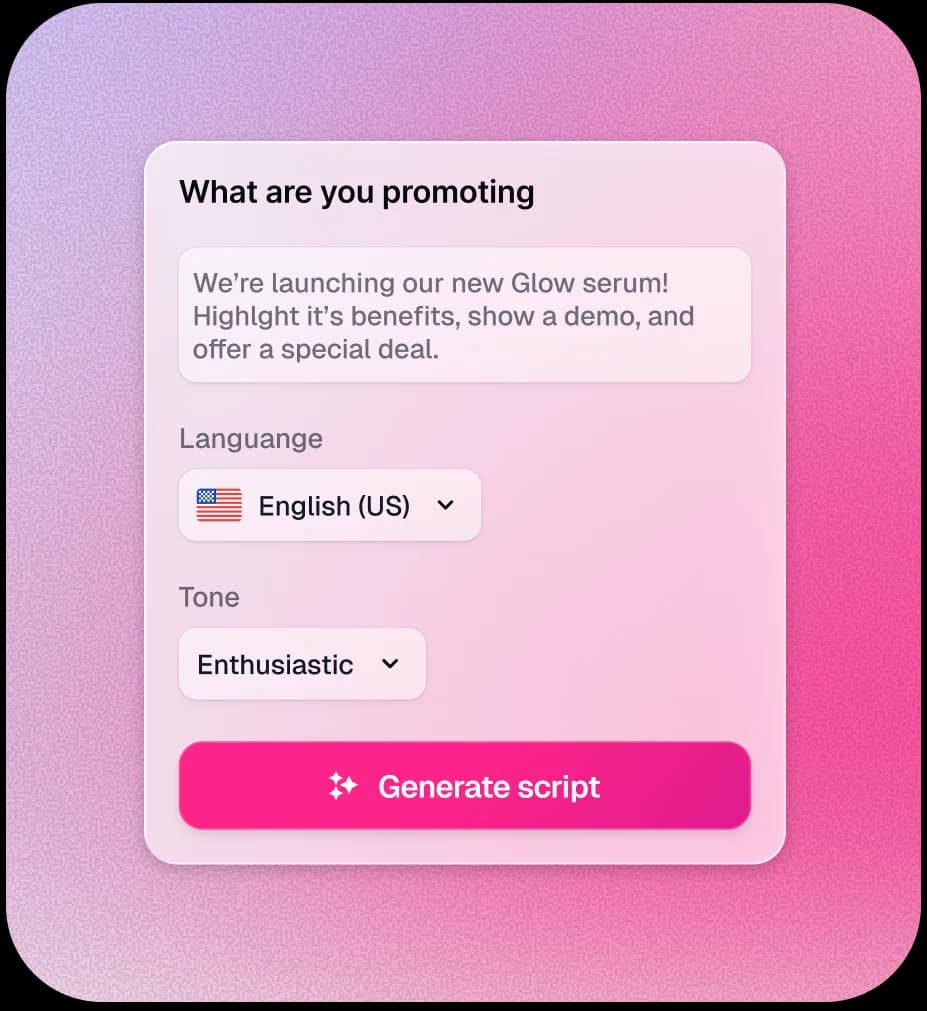
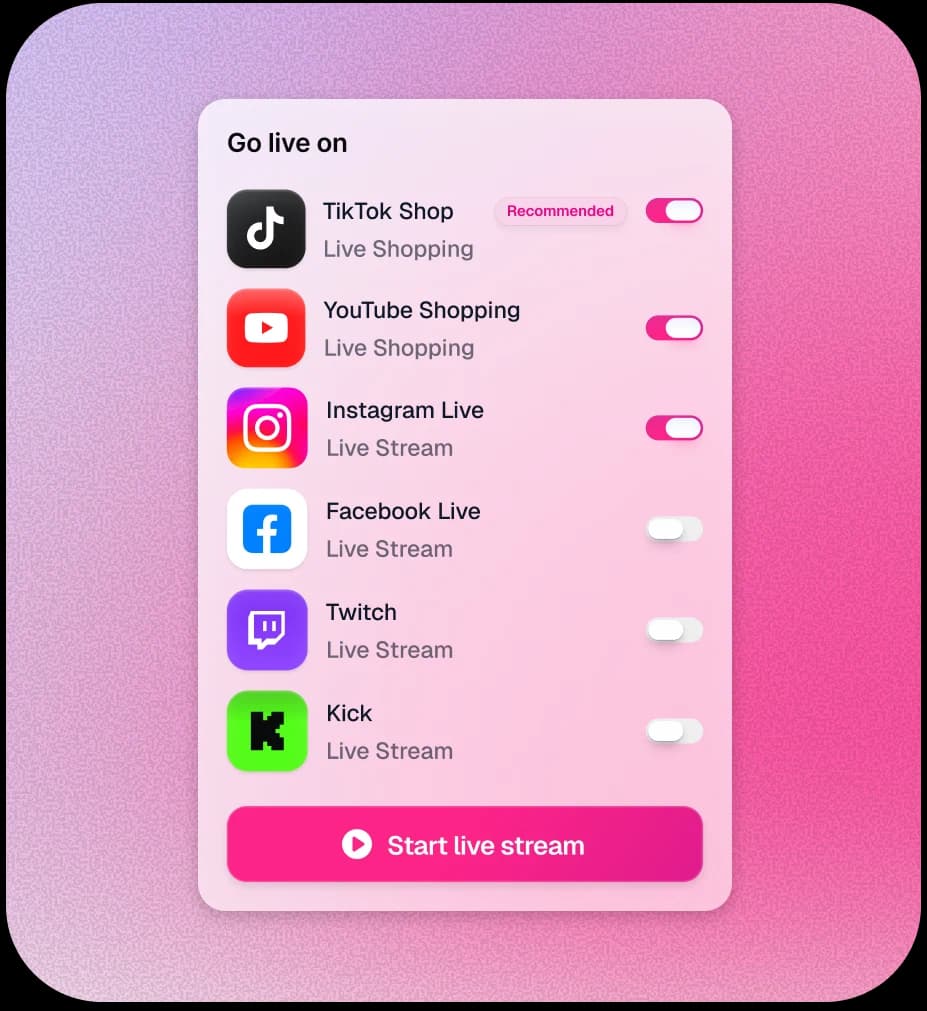
See an AI creator sell your products live
Connect your catalogue and go live in minutes — no studio, no crew.
Conclusion
Test and Refine Continuously
Predictive segmentation transforms marketing from guesswork into a finely tuned strategy. By predicting who’s likely to buy, who’s at risk of leaving, and what matters most to each customer, brands can craft personalized recommendations and offers that truly connect. Instead of relying on a generic approach, you can tailor experiences: high-intent shoppers might see limited-time bundles priced at $49.90 during a live stream, while new customers are introduced to educational tutorials and starter products. This kind of precision leads to higher conversion rates, deeper engagement, and measurable revenue growth.
The real power of predictive segmentation lies in bridging insights with action. It identifies who to target and what they care about - it’s the analytical backbone of your strategy. But turning those insights into results requires content that adapts in real time. Platforms like TwinTone make this possible by integrating predictive insights into AI-driven live streams. These tools let you run 24/7 live streams that adjust their offerings and showcases based on customer segments. For example, premium customers see exclusive drops, while at-risk shoppers get win-back deals - all without overburdening your team or waiting on creator availability.
To take it further, continuous performance feedback sharpens your approach. By linking predictive segmentation with AI-powered content, you create a feedback loop where performance data - like click-through rates, watch time, and conversions - feeds back into your models and content strategy. This helps you understand what resonates with different groups, such as budget-conscious families versus trend-focused Gen Z shoppers. Over time, your predictions become more accurate, your content feels more relevant, and your campaigns become increasingly effective.
Use Performance Data to Improve AI Content
For U.S. brands, predictive segmentation is a must for achieving scalable personalization and driving revenue growth. Even mid-sized companies can start small - focusing on basic targets like purchase likelihood or predicted customer lifetime value - and gradually expand to advanced strategies like live shopping optimization and automated content creation. The key is tying these efforts to clear business goals, such as boosting social-driven revenue by a set percentage, increasing repeat purchases within a specific timeframe, or reducing churn among high-value customers. Predictive segmentation moves you away from broad, inefficient tactics to targeted strategies that maximize your return. You’ll lower acquisition costs, move inventory faster, and make every ad dollar count. Brands using this approach consistently report better ad returns and more profitable campaigns because they’re no longer wasting budget on audiences unlikely to convert.
As your strategy proves itself with performance data, refine and scale. Build predictive segments, align social commerce tactics to each group, and use AI-powered tools to deliver tailored content across all channels. By combining the precision of predictive segmentation with AI-driven, creator-led content, you can deliver personalized, engaging, and scalable social commerce campaigns that truly resonate.
Predictive segmentation taps into advanced data analytics and machine learning to forecast customer behaviors, preferences, and buying habits. Unlike traditional methods that rely on fixed attributes like age or location, this approach creates dynamic profiles that adapt and evolve as new data comes in.
What makes predictive segmentation different from traditional methods in social commerce?
With this strategy, brands can offer deeply personalized experiences - think custom product recommendations or targeted live shopping events. This not only enhances customer engagement but also helps drive sales. By using these predictive insights, businesses can anticipate trends and respond to customer needs with greater precision.
To use predictive segmentation effectively, businesses should start by diving into their customer data. By spotting patterns and understanding preferences, they can create audience segments tailored to behaviors, demographics, and buying habits. These segments then pave the way for personalized experiences, like specific product recommendations or targeted promotions that truly connect with each group.
Take live shopping events as an example. Predictive segmentation can help brands feature products that match the interests of particular audience segments, boosting both engagement and sales. Tools like TwinTone take this further by leveraging creators’ AI Twins to host live streams around the clock. This approach offers a seamless, scalable way to showcase products and build authentic connections with audiences.
How can brands effectively use predictive segmentation to boost social commerce?
Predictive segmentation enables brands to craft more personalized and interactive live shopping experiences by analyzing customer behavior and preferences. This approach allows businesses to offer customized product recommendations, targeted promotions, and dynamic interactions that truly connect with their audience.
With tools like TwinTone, brands can elevate this experience even further. By leveraging AI-powered AI Twins, companies can host live streams, respond to product questions in real-time, and showcase products around the clock. This not only fosters genuine engagement but also builds customer trust and scales sales effectively.
Psychographic Data in AI-Powered Platforms
How does predictive segmentation enhance live shopping on social media?
- AI Growth Models for DTC Brands
- Real-Time: Sentiment Analysis for Social Commerce
- AI Grouping for Live Shopping Events
- AI Twins for Brand Partnerships: A New Model
- How: Brands Can License Creators Using AI
- AI-Driven Influencer Marketing Explained
Frequently asked questions
Can Predictive Analytics Aid Customer Needs Segmentation?
The next step? Turning these predictions into actionable customer segments.