creator economy
How Creators Can License Their Likeness With AI
Your face, voice, and personality are now assets you can license with AI. By creating digital replicas, you can generate income from ads, videos, and brand…
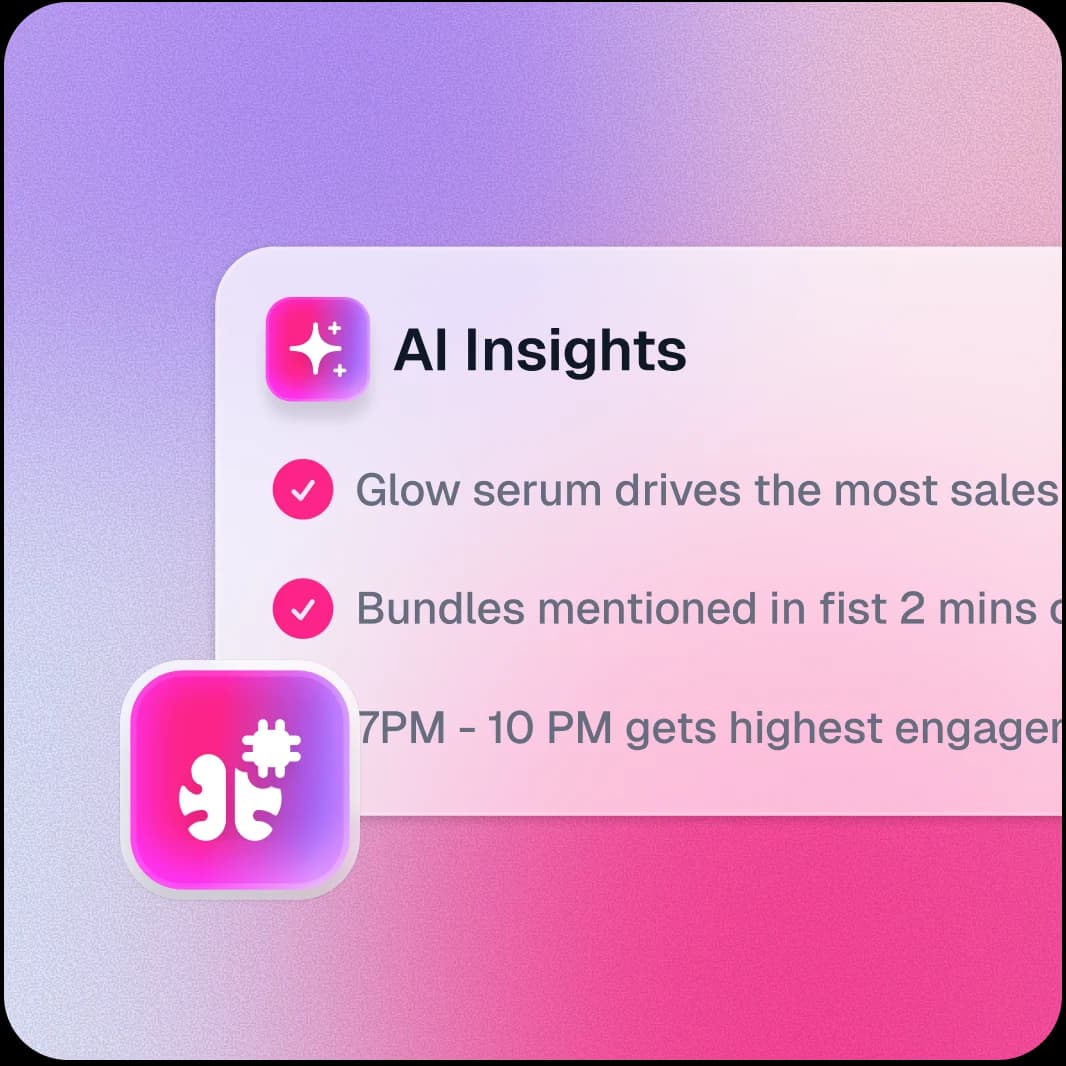
Your face, voice, and personality are now assets you can license with AI. By creating digital replicas, you can generate income from ads, videos, and brand collaborations without being physically present. But protecting your identity is key - AI misuse can lead to scams or unauthorized use, as seen in cases like Steven Bartlett’s AI deepfake incident in 2025.
Here’s what you need to know to license your likeness securely:
AI licensing is a growing opportunity, but it requires clear contracts, consent, and monitoring to ensure your identity stays protected and profitable.
Your likeness rights, often referred to as the "right of publicity", give you the legal authority to control how your identity is used for commercial purposes. In simple terms, no one can profit from your identity without your permission and fair compensation.
But these rights go beyond just your face. They cover your name, image, voice, and even biometric data like face scans or voiceprints. They also extend to signature elements of your persona, such as catchphrases, gestures, or a distinctive style. In the world of AI, this protection applies to digital replicas, voice clones, and AI avatars designed to mimic your appearance or behavior.
For example, in the case of Vanna White v. Samsung, a court ruled that an ad featuring a robot in a blonde wig turning letters on a game show set infringed on White's publicity rights - even though her actual face or body wasn’t used. Similarly, in Bette Midler v. Ford Motor Co., hiring a singer to imitate Midler’s voice in a commercial was deemed illegal, emphasizing that a voice can be just as distinctive - and protectable - as a face.
Currently, around two-thirds of U.S. states have laws recognizing publicity rights, though there’s no federal standard yet. However, things are changing quickly. For instance, Tennessee’s ELVIS Act aims to protect voices from unauthorized AI replication, while federal lawmakers are working on the NO FAKES Act to address unauthorized digital replicas.
These legal principles highlight why securing your likeness through licensing is becoming increasingly important in the age of AI.
Likeness Rights and AI Licensing Basics
What Likeness Rights Include
Licensing your likeness ensures the "4 C's" - Consent, Control, Credit, and Compensation - and helps you avoid risks like unauthorized mimicry. A striking example occurred in April 2023, when an anonymous creator used AI to replicate the voices of Drake and The Weeknd in a song called "Heart on My Sleeve." The track quickly gained millions of plays on TikTok and Spotify before Universal Music Group intervened to have it removed. Similarly, TV personality Al Roker found himself the target of deepfake videos misusing his AI-generated voice and image to advertise a fake hypertension cure.
Beyond protection, licensing your likeness can unlock new revenue streams. AI allows you to expand your reach, enabling personalized fan interactions, simultaneous appearances in multiple campaigns, or even content production in languages you don’t speak. Surveys show strong support for these protections: 73% of industry workers favor requiring consent for voice cloning, 77% for superimposing faces, and 68% for creating realistic avatars.
The legal environment is also adapting to these challenges. Recent laws, like California’s AB 2602 and New York’s Fashion Workers Act, mandate clear, written consent before creating or using digital replicas. Violations can result in hefty penalties. For example, under Maine’s AI transparency law, breaches can lead to fines of up to $10,000 per violation. A major case involving Facebook’s unauthorized use of facial recognition for photo tagging resulted in a $650 million settlement.
AI is reshaping how likeness licensing works. Instead of a single photo shoot or voice recording, you’re now licensing a digital version of yourself that can generate unlimited new content without requiring your physical presence.
This shift requires new legal and technical considerations. Licensing agreements now need to address three key permissions: training the AI model on your likeness, generating content using that model, and defining exactly how and where that content can be used. It’s also essential to include safeguards to prevent misuse, such as ensuring your likeness isn’t used in political ads or content spreading misinformation. These updates demand a new level of oversight and control.
"The Disney-OpenAI moment - reported multi‑character licensing plus a major platform tie‑in - has shifted generative character work from niche experiments to mainstream product strategy."
Why You Should License Your Likeness
As the legal framework evolves, staying in control of your AI assets is critical. This includes managing the AI models trained on your likeness to prevent unauthorized use or repurposing.
Platforms like TwinTone are stepping in to help. They integrate protections directly into their licensing tools, allowing you to set boundaries, monitor usage, and enforce your rights while expanding your digital presence. These AI-powered solutions ensure you maintain full control over how your likeness is used in the ever-changing digital world.
TwinTone blends AI technology with rights management, turning the concepts of likeness licensing into practical, actionable steps. By combining AI Twin creation, licensing controls, and content distribution into one platform, TwinTone helps you take charge of your digital identity and monetize it effectively.
Start by linking your social media accounts to verify your identity and gain access to brand discovery features. This step ensures your identity is secure.
Next, upload a 2-minute consent video alongside clear photos. These assets are used to train your AI Twin, replicating your face, voice, and style. For the best results, ensure your video has clear audio and even lighting.
Your data is encrypted and stored securely. TwinTone guarantees that your AI Twin will never be trained, modified, or shared without your explicit consent.
Surveys show strong support for these protections: 73% of industry workers favor requiring consent for voice cloning, 77% for superimposing faces, and 68% for creating realistic avatars.
How to License Your Likeness with TwinTone
Step 2: Configure Your Licensing Settings
Step 3: Establish Licensing Agreements
AI Likeness Licensing Rates by Creator Tier 2026
When deciding how to price your AI likeness license, it's crucial to balance your market value with industry norms. Key factors to consider include your follower count, the type of content you create, and how your content will be used. With TwinTone, you have full control over your subscription tier and the per-video rates you charge brands.
TwinTone provides three subscription plans tailored to different creator needs:
- Starter Plan: Priced at $110/month, this plan includes 10 AI UGC videos featuring real creator avatars and multilingual output in over 40 languages. Videos can be up to 60 seconds long, making it a great starting point for creators new to AI content.
- Pro Plan: At $220/month, this plan doubles your output to 20 AI UGC videos per month. It also unlocks advanced features like expressive creator gestures, enhanced voice styles, and multilingual variations. This plan suits creators juggling multiple brand partnerships.
- Enterprise Plan: Designed for high-volume creators, this plan offers custom pricing and includes 50+ videos per month, premium creator features, AI livestreaming, priority support, and brand-specific AI Twin training. With this plan, you handle your own per-video rates for brand collaborations, giving you maximum control over monetizing your digital assets.
AI Twin mirrors your face, voice, and style
Licensing rules and pricing established
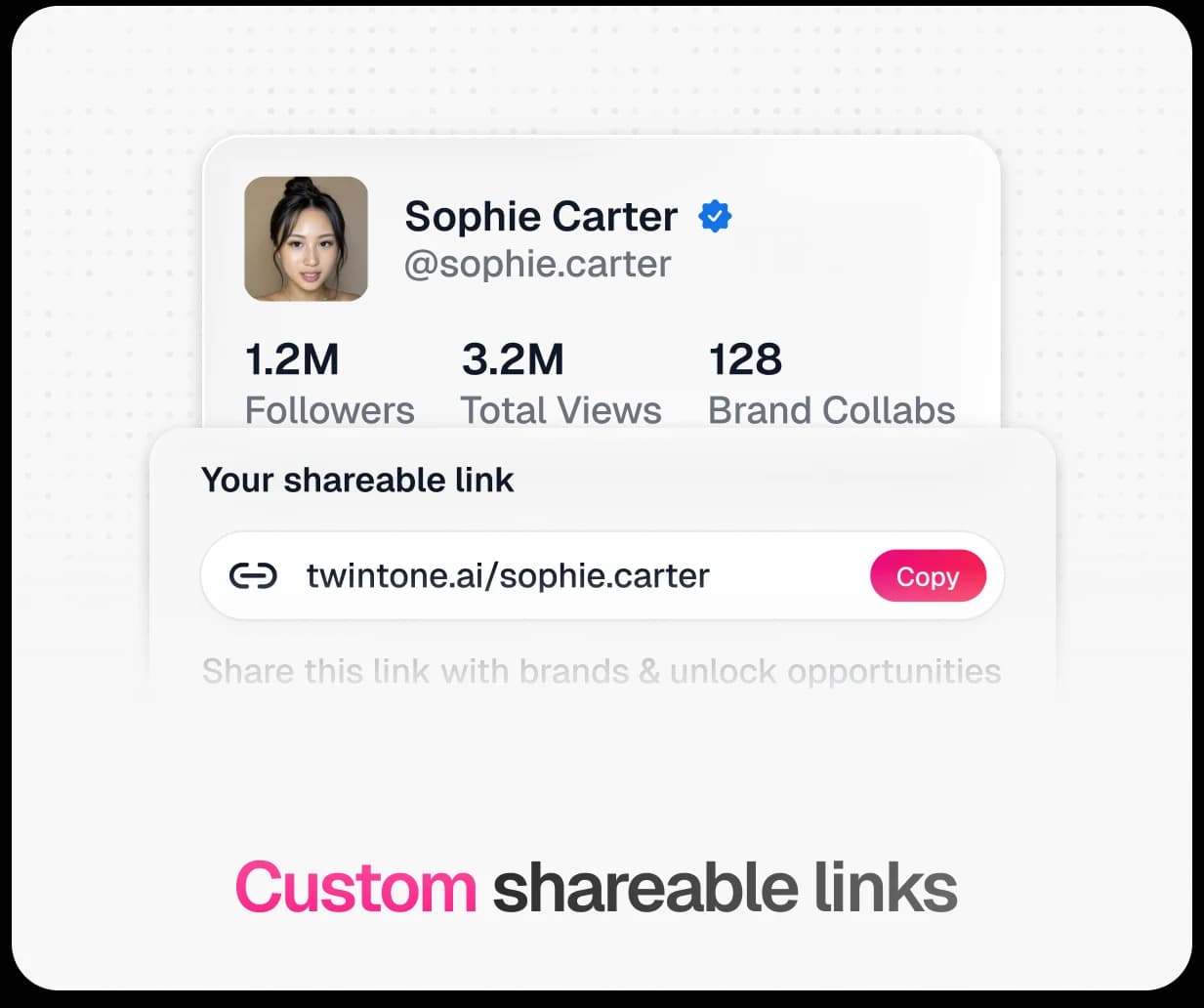
Share link with approved brands
Brands create content using your AI Twin
Use analytics to track performance
Ensure compliance with licensing agreements
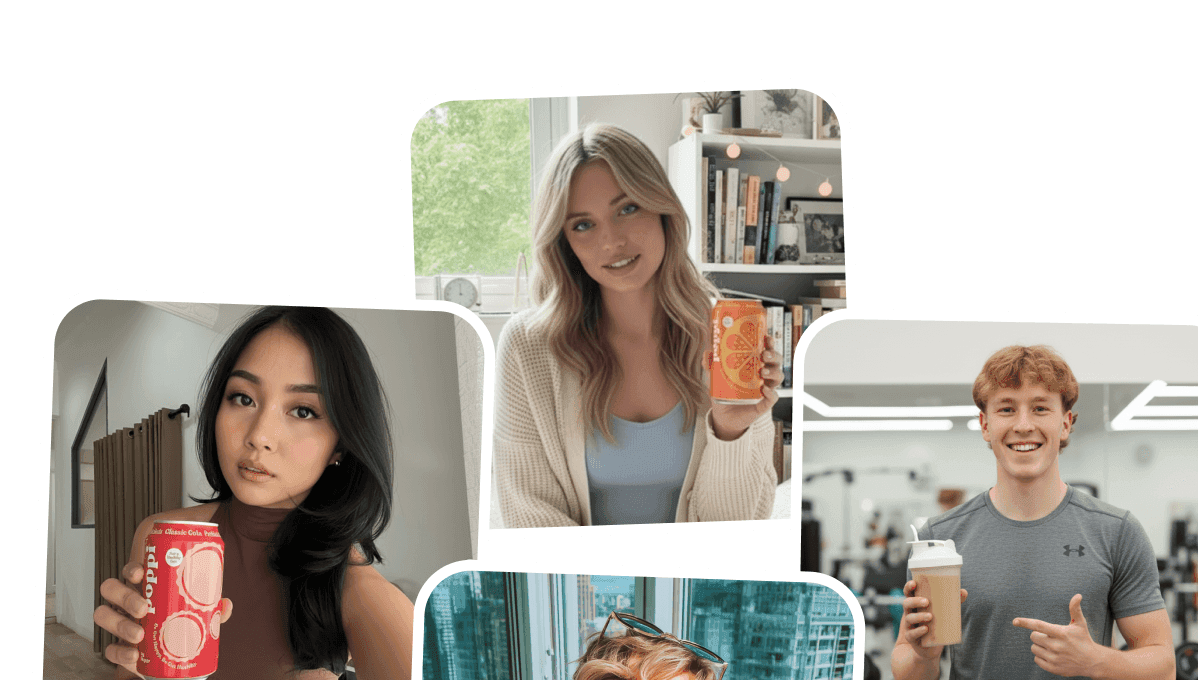
Pricing Your AI Likeness License
Step 4: Create and Distribute Content
These subscription tiers provide a foundation for setting competitive per-video rates while aligning with industry benchmarks.
TwinTone’s flexible subscription plans are just one part of the equation. Industry standards can help you determine fair rates for your AI-generated content. As of 2026, creator-driven advertising dominates 80% of the market, pushing licensing fees higher. Your rates should reflect how brands plan to use your content.
Here’s a breakdown of typical rates by creator tier:
UGC Creators (0–50,000 followers):
Full buyout rates range from $800 to $3,000 per video. For 30-day paid ads, charge $150–$500. Perpetual usage rights, which grant lifetime usage, typically cost $700–$2,500. Be cautious about offering perpetual licenses unless the payout is worth it.
Influencers (50,000–500,000 followers):
Step 5: Monitor Usage and Enforce Agreements
Full buyouts can command $2,500–$15,000. For 30-day paid ads, rates range from $300 to $900. Perpetual usage rights are priced between $2,500 and $12,000.
Key Opinion Leaders (KOLs) (500,000–5 million+ followers):
Full buyouts range from $20,000 to $200,000 or more. For 30-day paid ads, expect $2,000–$8,000, while perpetual usage rights can go for $15,000–$75,000 or higher.
Additional fees may apply based on specific usage scenarios. For example, whitelisting - where brands run ads using your social media handle - typically costs $100–$2,500 per month. Global usage rights can add a premium of 30%–200% to your base fee. If a brand requests 90-day paid ads instead of 30-day, charge two to three times your 30-day rate.
To maximize your earnings, use TwinTone’s tiered pricing settings to differentiate rates for standard UGC videos and more engaging formats like live-shopping demos. Always set clear expiration dates for licenses and establish penalties for late renewals or unauthorized usage. Tools like Meta Ad Library or TikTok Creative Center can help you track ad usage and ensure compliance with your agreements.
Licensing your AI likeness is crucial for protecting your brand, maintaining trust with your audience, and ensuring you stay in control as your reach grows. Following these practical steps will help align your licensing strategy with the technical measures discussed earlier.
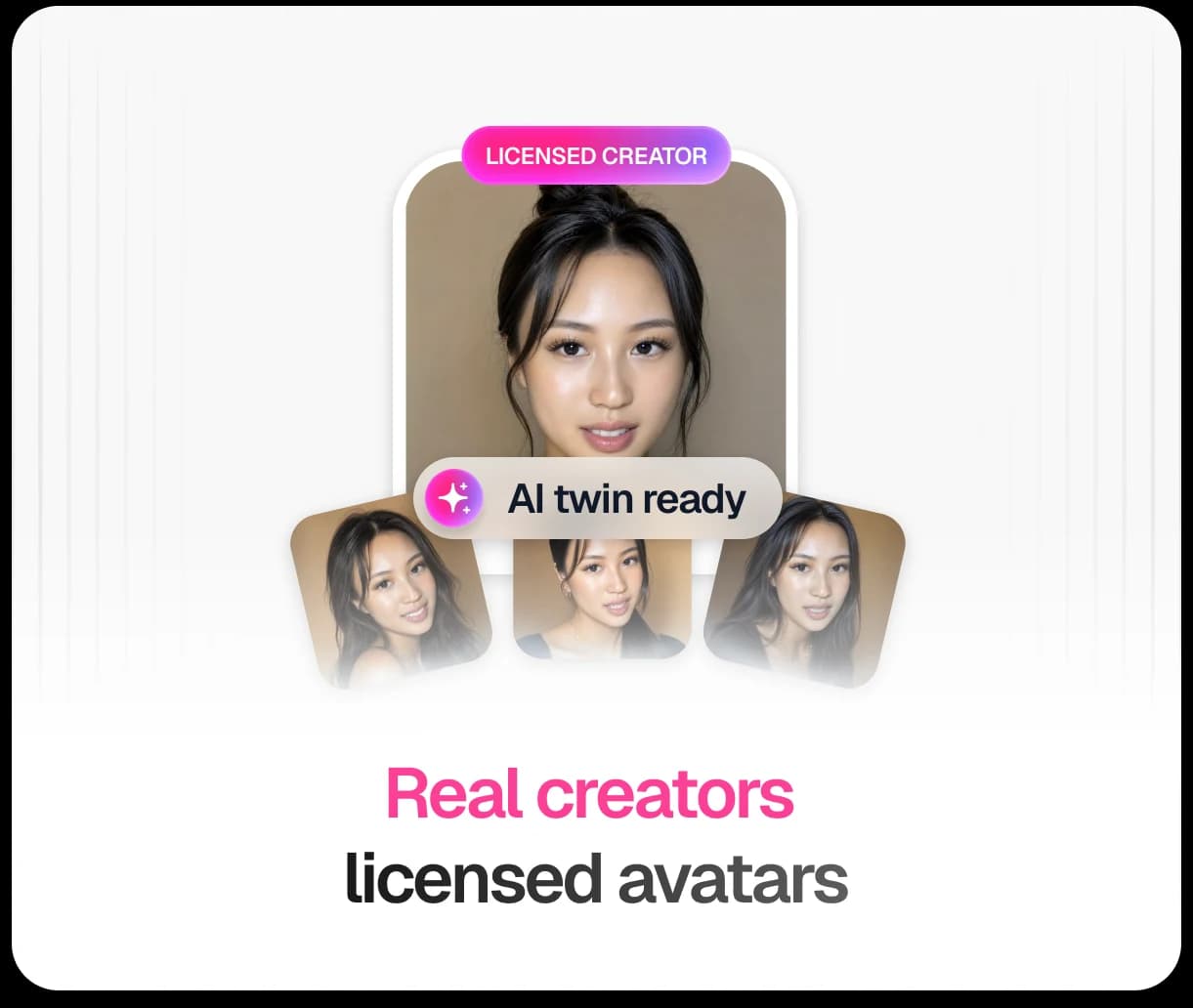
Best Practices for Licensing Your Likeness
TwinTone Subscription Options
Being upfront about AI-generated content isn’t just a good practice - it’s a requirement. Both audiences and brands expect transparency when AI plays a role in content creation. This approach not only builds trust but also shields you from potential false endorsement claims under Federal Trade Commission (FTC) rules.
Many platforms now mandate clear labeling of synthetic media. As part of your brand agreements, include specific clauses about the use of AI likenesses and require disclosure if generative AI tools are used. Keep detailed records of your creative process to defend your copyrights if needed.
"At the very least, brands should push for transparency around the use of AI - but better yet, guidelines around its use, or the prohibition on the use of generative AI."
Joseph Lawlor, advertising and IP lawyer at Haynes and Boone.
Maintaining control over your likeness is non-negotiable. Legal cases have repeatedly shown the importance of keeping ownership of your image and voice.
When negotiating contracts, break down permissions into categories like training, generation, and commercialization rights. This structure allows for renegotiation without giving up full control. Always include approval rights, ensuring your consent is required before any AI-generated content featuring your likeness is published. Regularly review AI platform terms - ideally every quarter - to safeguard your ownership rights. For major deals, go beyond standard licenses and negotiate for indemnification clauses to protect yourself against third-party copyright claims.
Industry Pricing Standards
Tools like TwinTone’s customizable agreements and monitoring systems can further strengthen your control.
Expanding your licensing strategy doesn’t have to mean losing oversight. Automation can help enforce your rights and keep your likeness protected as you scale.
Set up automated safeguards, like prompt blocklists and brand-safety filters, to ensure your likeness isn’t misused in sensitive contexts such as political ads, adult content, or misinformation campaigns. These technical controls are essential for protecting your reputation.
Organize your licensing agreements in a structured registry that includes clear restrictions - such as “no synthetic voice in political ads” or “no usage beyond 90 days without renewal.” TwinTone can help enforce these rules automatically. Use digital tools to monitor unauthorized uses of your likeness and consider adding watermarks or copyright notices to your AI-generated content to prevent it from being used to train other AI models without permission. By building automated systems, you can focus on creating while your safeguards work tirelessly in the background.
Licensing your likeness with AI opens up a steady revenue stream while ensuring you maintain full control over your personal brand. With TwinTone, creators can turn unused content into passive income, set clear boundaries with automated safeguards, and expand their licensing strategies without losing oversight.
Data from the industry highlights the financial potential of licensing digital assets instead of letting them collect dust or risking unauthorized use. Metrics show that monetizing content through licensing can lead to measurable income gains, a far better alternative to leaving it unprotected or uncompensated.
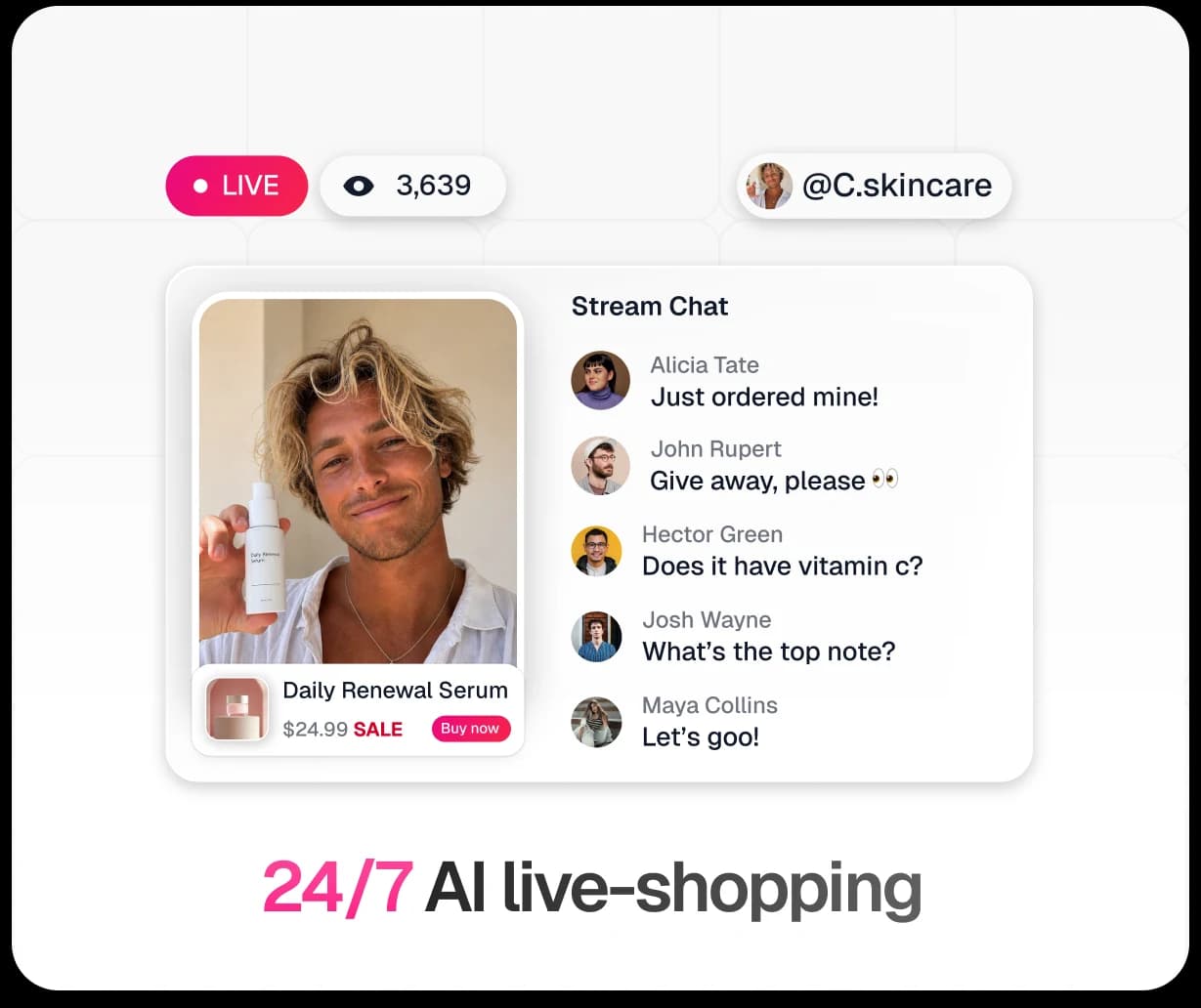
See an AI creator sell your products live
Connect your catalogue and go live in minutes — no studio, no crew.
Conclusion
Disclose AI-Generated Content
By 2033, it's projected that AI-generated content will make up 90% of what audiences consume. Creators who establish strong licensing systems now will be in a prime position to benefit from this shift. These trends emphasize the need for clear and effective licensing strategies.
TwinTone is ready to help creators adapt to these changes with customizable agreements and automated tools. Features like prompt blocklists and real-time analytics allow you to scale your efforts confidently. You don’t have to choose between growth and control - TwinTone ensures both work hand in hand. Your likeness becomes a 24/7 asset, generating income worldwide while staying protected by the safeguards you set.
Keep Control of Your Rights
The future of creator monetization is unfolding now. Take charge of your likeness, safeguard your rights, and use AI as a tool to grow your revenue - without giving up control.
Protecting your likeness from unauthorized AI use starts with knowing your legal rights. In the U.S., certain states - like California - have laws in place that allow you to take legal action if your name, voice, image, or likeness is used without your consent. In some cases, these protections can even remain in effect after your passing.
Scale Your Licensing with Automation
To stay ahead, make sure any contracts you sign explicitly outline how your likeness can be used. Carefully review existing agreements to avoid unintentionally granting more rights than intended. If you're involved in creating digital replicas or AI avatars, always secure written consent and confirm how your data will be handled. On top of that, consider using emerging tools designed to help you control how your content is utilized in AI training or to negotiate fair compensation for its usage.
By staying informed about your rights and taking proactive steps, you can better protect - and even profit from - your personal brand in the rapidly evolving AI landscape.
How can I safeguard my likeness from unauthorized use by AI?
Licensing your likeness through AI can open up exciting financial opportunities, offering new ways to earn and grow your personal brand. AI-powered platforms make it possible to collect royalties whenever your digital likeness is featured in ads, collaborations, or other content. Essentially, the more your likeness is used, the more income you can bring in.
What’s even better? Licensing agreements let you set your own terms, including rates and usage guidelines. This means you stay in control of how your image is represented, ensuring it stays true to your brand. Many companies are willing to pay top dollar for fair, non-exclusive rights, especially for ongoing or long-term partnerships. It’s a win-win for creators: you get to monetize your intellectual property while keeping your creative freedom intact.
What are the financial advantages of using AI to license my likeness?
TwinTone takes protecting your AI likeness seriously by enforcing strict content guidelines and offering a flexible preference system. This system puts you in charge, letting you decide exactly where and how your likeness can be used. You even have the option to exclude specific types of content entirely.
With full control over licensing agreements and usage permissions, TwinTone ensures your personal brand is handled in a way that aligns with your values and priorities.
How does TwinTone protect and manage the use of my AI likeness?
- NFTs and Decentralized Identity for Creators
- Ethical AI for Personalized Content
- AI Twins and Licensing Risks for Brands
- Identity Verification for Creators: Why AI Matters
- AI Twins for Brand Partnerships: A New Model
- How: Brands Can License Creators Using AI
- AI-Driven Influencer Marketing Explained
Frequently asked questions
Can I Legally Use AI Generated Celebrity Avatars In My Content If The AI Company Made Them?
Choose the types of brands you'd like to collaborate with and specify any content categories you'd prefer to avoid, such as political, adult, or medical material.