AI
How AI Agents Are Replacing Manual Content Creation
AI agents are transforming how businesses produce content by automating tasks like generating content ideas, writing, design, and video production.
AI agents are transforming how businesses produce content by automating tasks like generating content ideas, writing, design, and video production. These tools enable faster, cheaper, and scalable workflows compared to manual methods, drastically reducing costs and increasing efficiency. Companies like WADDLE and Nestlé have already seen significant improvements, such as doubling conversion rates and cutting production costs by up to 70%. Key benefits include:
AI tools like TwinTone, Jasper, and Adobe Firefly simplify complex workflows, from generating product descriptions to creating videos and running live streams. These platforms also integrate analytics to measure engagement, conversions, and ROI, allowing businesses to refine strategies in real time. By automating repetitive tasks, AI empowers teams to focus on strategy and storytelling, helping brands stay competitive in a fast-paced digital landscape.
AI is reshaping how content is created, making it faster, cheaper, and more scalable than ever. Traditional content creation relies heavily on human effort, which means costs rise steadily with every new asset. In contrast, once AI systems are set up, the cost of producing additional content becomes almost negligible.
Take graphic design, video editing, or drafting as examples. These tasks, when automated, can cut non-working expenses by as much as 40%. Some companies have even seen their content production grow tenfold without needing to increase their budgets. For instance, a shipbuilder slashed engineering efforts by 40% and reduced lead times by 60% using AI for complex design processes. Similarly, a telecommunications firm boosted digital sales fivefold with AI-powered assistants capable of sending over 40,000 messages daily.
Another key advantage is speed. Manual workflows can take hours or even days due to back-and-forth handoffs between teams. AI agents, on the other hand, can get the job done in seconds. This speed not only allows for real-time adjustments but also makes it easier to customize content for different markets instantly. For example, software developers using AI coding tools have completed tasks 56% faster compared to those relying on manual methods. This efficiency makes it clear why AI outpaces traditional approaches.
Then there’s scalability. Human teams are bound by the number of people and hours available. AI agents, however, can generate endless variations of content tailored to specific audiences, all without breaking a sweat. As Boston Consulting Group researchers aptly ask:
The Latest AI-Powered Content Creation Workflow for Business (Speed Challenge!)
Manual vs. AI Automation Comparison
"How will your organization transform when the marginal cost of creating and distributing content falls to near zero?"
Core Features and Use Cases
- Easily tailored to micro-segments
- Sequential and time-consuming handoffs
- Autonomous multi-step execution
- Based on static, periodic insights
- Adapts dynamically using live data
AI agents are not just a faster alternative - they’re transforming the entire content creation process, making it more efficient and adaptable than ever before.
Labor-intensive; high cost per asset
Days or weeks for production and approvals
Seconds to minutes; real-time adjustments
Limited by team size and hours
Virtually unlimited; 10x output possible
With 250 marketing experts managing 4,000 3D digital products across seven hubs, Nestlé reduced content scaling time and costs by 70%.
Why AI Agents Outperform Manual Content Creation
Analytics and ROI Measurement
TwinTone uses AI Twins to revolutionize content creation, offering on-demand UGC videos, product demos, and live shopping streams - all without the hassle of manual outreach or production. These AI Twins are digital replicas of real creators, designed to maintain the authentic tone and style of their human counterparts, ensuring content feels genuine and relatable.
The platform automates every step of the content creation process. Whether it's launching products on TikTok, creating shoppable videos for Shopify, or running continuous live streams on Amazon, TwinTone handles it all. Through API integration, brands can scale content production across countless SKUs or campaigns with ease, making it a game-changer for efficient content generation.
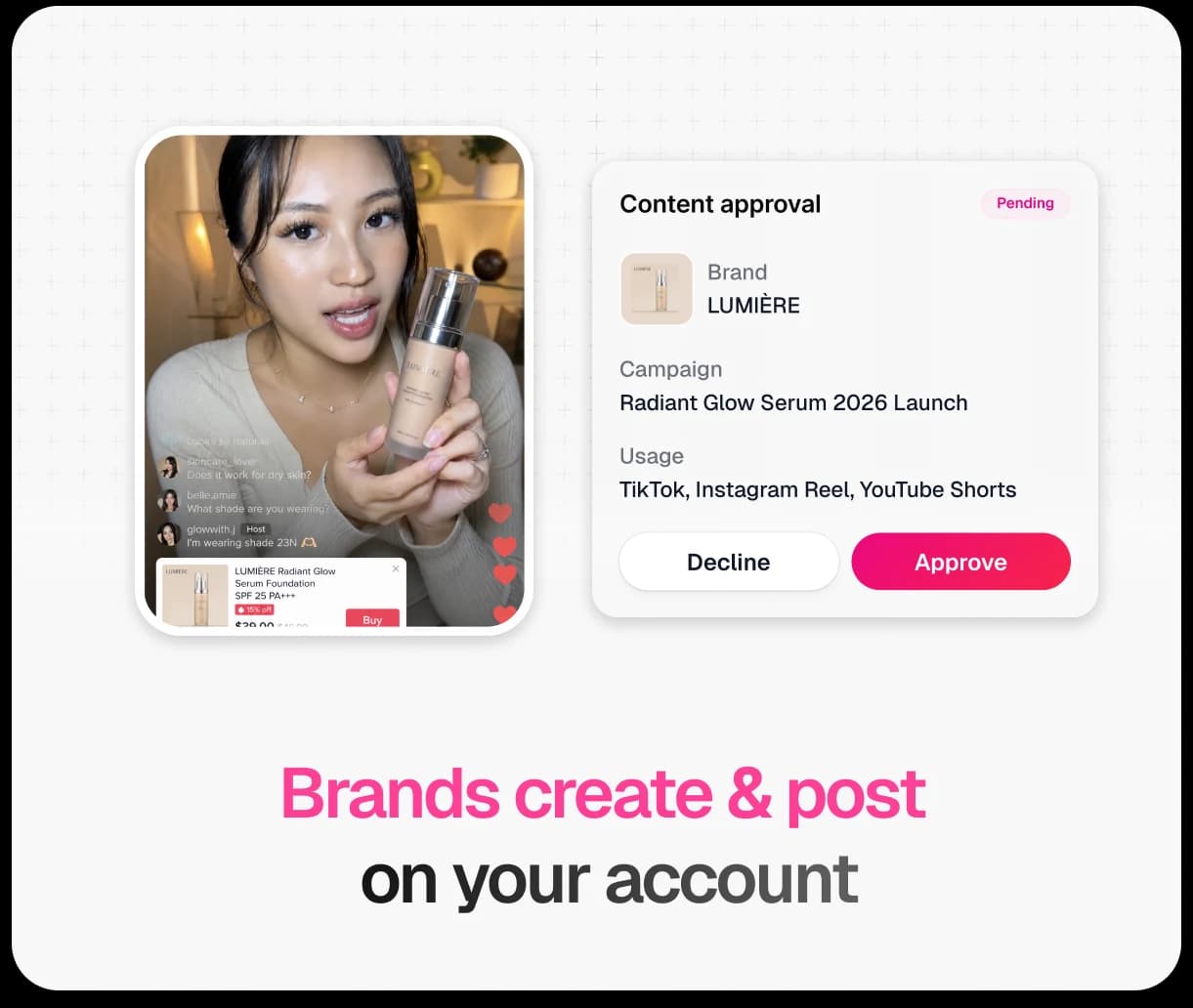
TwinTone eliminates the need for traditional creator coordination, replacing it with a streamlined, automated process. Its standout feature? The ability to produce unlimited content at scale. Depending on the subscription plan, brands can create anywhere from 10 to over 50 AI UGC videos per month. Each video features creator avatars showcasing products with natural gestures and voice styles. These videos are versatile, serving as performance creatives for paid ads, organic social media posts, or even shoppable content embedded on ecommerce platforms.
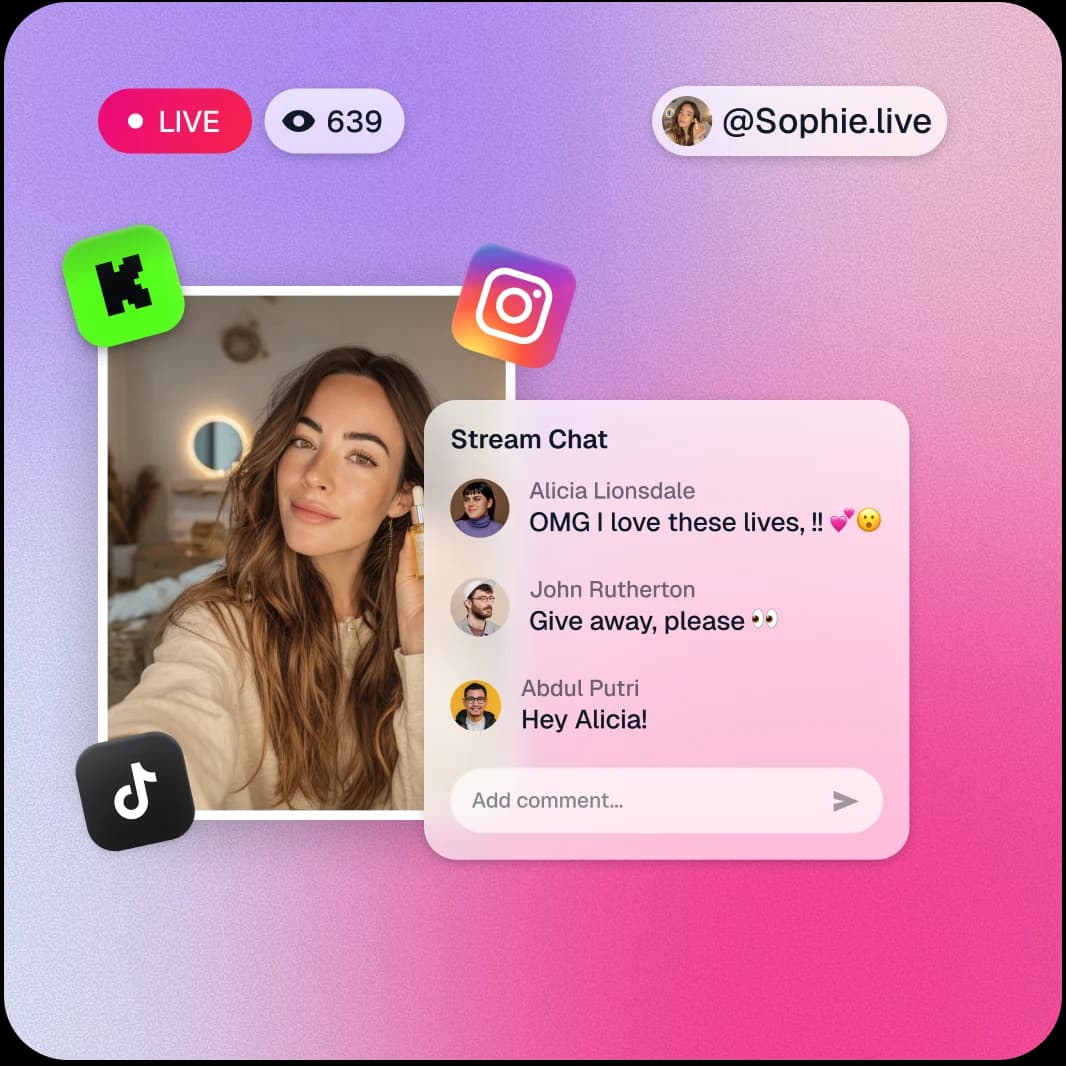
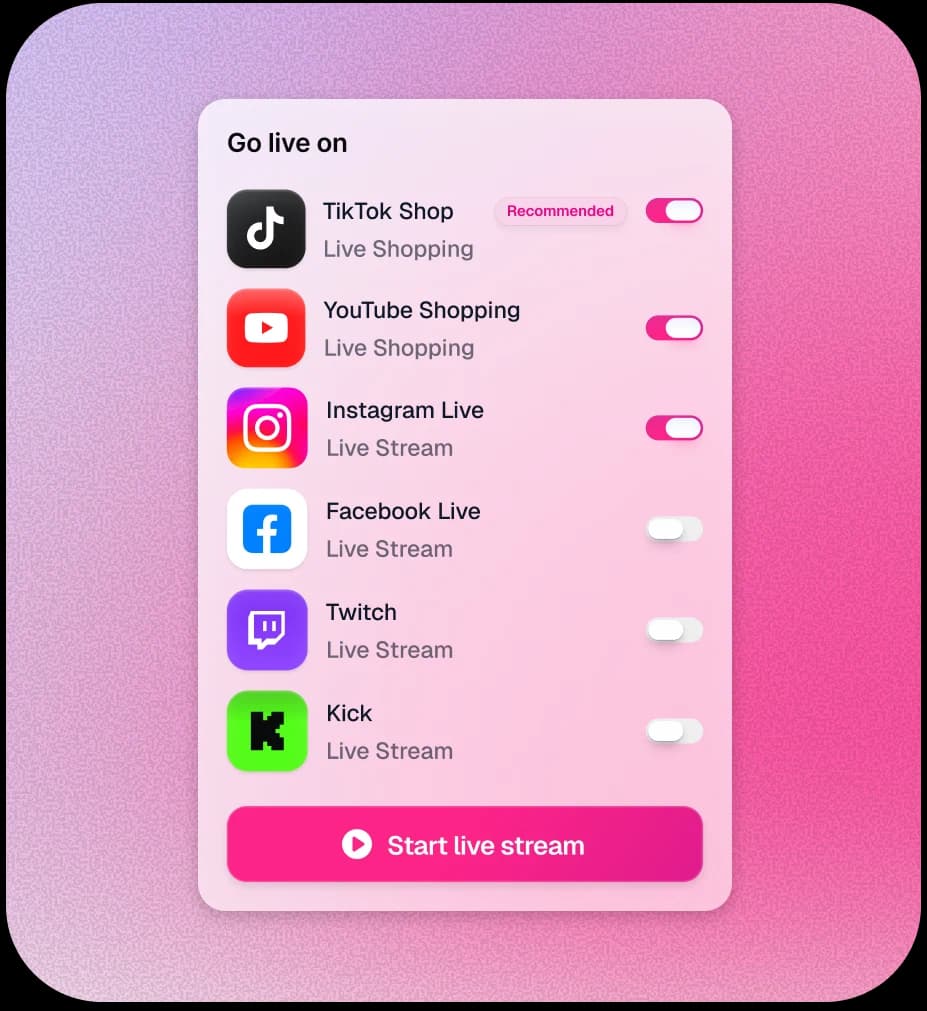
Another highlight is AI livestreaming, which allows brands to host automated, interactive live streams around the clock on platforms like TikTok, YouTube, Amazon, and Twitch. These streams not only showcase products but also engage with viewers in real time, transforming casual browsing into active shopping experiences.
For brands managing large product catalogs, TwinTone's API simplifies localized video production. A single input can generate videos in multiple languages - English, Spanish, French, German, Mandarin, and more - making it an ideal solution for global campaigns. This approach mirrors Nestlé’s strategy in July 2025, when they collaborated with Microsoft and NVIDIA to create a digital twin content supply chain. With 250 marketing experts managing 4,000 3D digital products across seven hubs, Nestlé reduced content scaling time and costs by 70%.
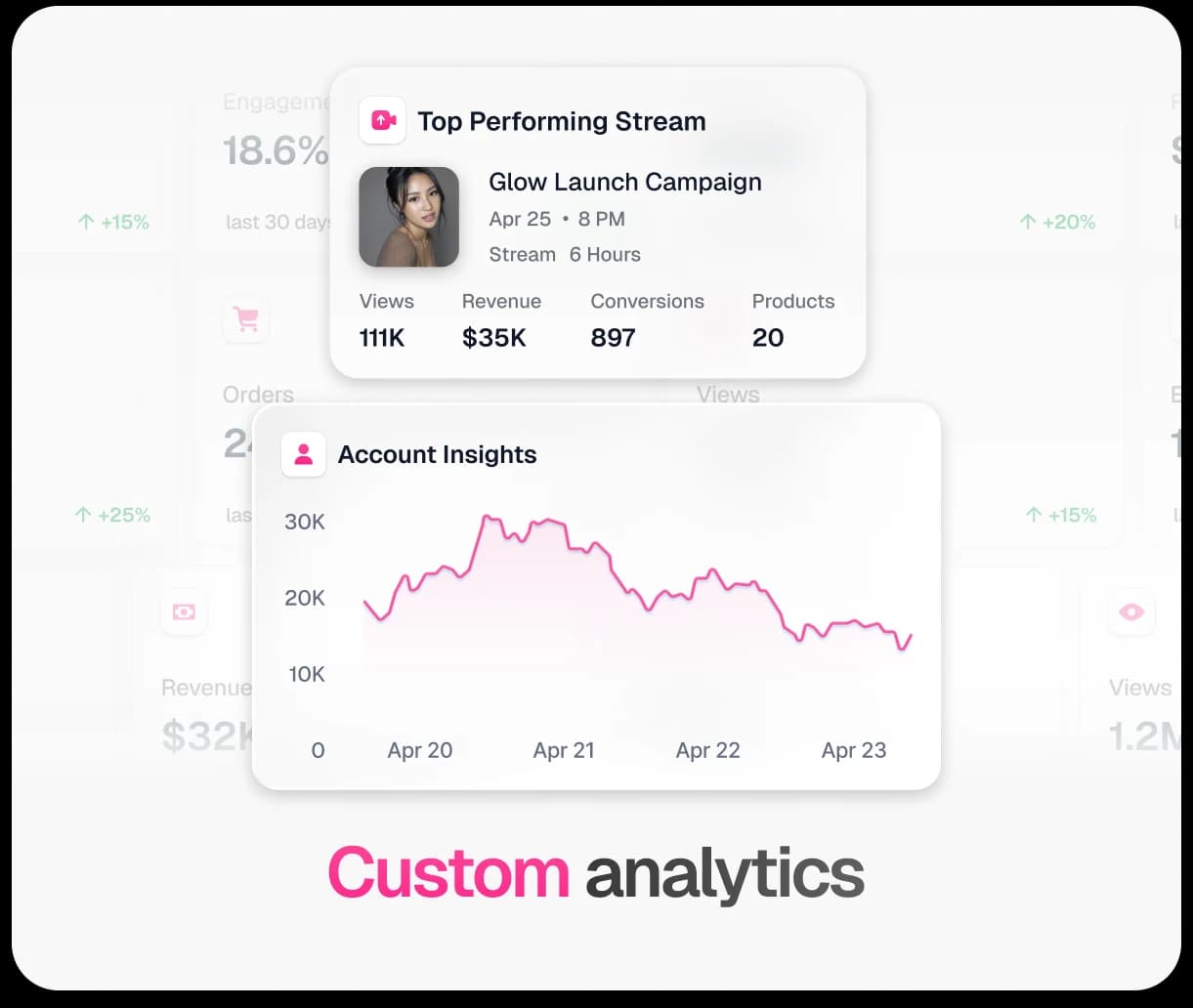
TwinTone doesn’t stop at content creation - it also provides robust analytics to measure success. Brands gain real-time insights into engagement, conversions, and ROI, allowing them to quickly identify what works and what doesn’t. Instead of waiting weeks for data, teams can act on performance metrics almost instantly, fine-tuning campaigns for better results.
AI Writing Tools for Copy and Product Descriptions
The platform also supports batch A/B testing, enabling brands to test multiple video variations at once. By tweaking elements like backgrounds or creator styles, teams can identify the highest-performing creative. This strategy proved effective for Vietjet in June 2024, when they used TikTok’s Custom Avatars to run a multilingual campaign, successfully reaching both English-speaking and non-English-speaking audiences.
"Agents are being built to perform audience simulations, test images, content, and even segmentation strategy to drive higher return on ad spend (ROAS) or even predict impact."
AI agents are transforming creative industries by automating writing, design, and video production. These tools not only speed up workflows but also ensure consistent branding across thousands of assets. Marketing teams, for instance, can now generate content in hours rather than weeks, slashing production costs by 60% and reducing time-to-market by 63% in these creative areas.
By replacing manual processes with AI-driven automation, bottlenecks like freelancer coordination and lengthy approval cycles are minimized. Teams can produce on-brand assets instantly, allowing some companies to deliver five times more content than before. This shift is redefining how brands operate in today’s fast-paced digital landscape.
Here’s a closer look at how AI tools are revolutionizing writing, design, and video production.
AI writing assistants are reshaping how brands create marketing copy, product descriptions, and campaign ideas. These tools analyze a handful of high-quality examples to produce content that aligns with brand standards. For example, platforms like Jasper use "Brand IQ" to store tone, style guides, and company-specific knowledge, ensuring the output remains true to the brand’s voice. This prevents generic results and keeps messaging consistent across channels.
TwinTone: AI Twins for Automated Content Production
AI Design Tools for Visual Assets
In 2025, Adidas leveraged Jasper to churn out 7,500 product descriptions in just 24 hours, dramatically speeding up their inventory launch process. Similarly, Cushman & Wakefield saved over 10,000 hours annually by automating their marketing content production while maintaining localized, compliant messaging across global markets. Peter So, VP of Digital Innovation at Cushman & Wakefield, highlighted the broader impact:
"It's not just about efficiency gains, it's about augmenting human creativity, scaling expertise, and unlocking new ways to engage customers and drive business outcomes."
These tools also make it easy to repurpose content across different formats while preserving the same brand voice. On average, marketing teams save 1.5 hours per creative asset, freeing up valuable time for strategic planning and experimentation.
AI design platforms are revolutionizing how visuals, banners, and social media graphics are created. Tools like Adobe Firefly and Jasper rely on custom models trained to replicate specific visual styles, ensuring that all generated content adheres to brand guidelines for colors, fonts, and aesthetics. This eliminates the need for stock photos or manual photography, enabling teams to create high-quality visuals with simple text prompts.
Features like "Generative Expand" allow landscape images to be automatically converted into vertical formats for platforms like TikTok and Instagram without compromising key visuals. This automation means a single asset can be adapted for use across paid ads, websites, social media, and email without manual resizing. Teams using generative AI have reported a 65% reduction in the time required to create ad variations for platforms like Meta.
Today, over 75% of marketers incorporate AI tools into their workflows, with around 19% specifically using AI to generate content. These tools are user-friendly, allowing even non-designers to create professional visuals without needing advanced Photoshop skills or coding expertise. This accessibility is leveling the playing field, empowering entire organizations to participate in creative production.
Automated Video Production at Scale
But AI’s impact doesn’t stop at design - it also extends to video production, where automation is taking efficiency to new heights.
AI-powered platforms are streamlining video production by automating the creation of product demos, shoppable videos, and live shopping content. AI avatars ensure a consistent brand presence, eliminating the need for traditional filming while maintaining natural gestures and voice styles. These platforms can also generate custom B-roll footage from text prompts, removing the need for costly location shoots or licensing fees.
Multilingual localization is another game-changer. AI can automatically translate and dub videos, making it easier for brands to reach global audiences. For instance, in June 2024, Vietjet used TikTok’s Custom Avatars to execute a multilingual campaign that successfully targeted both English-speaking and non-English-speaking audiences. This kind of automation allows brands with extensive product catalogs to create videos in multiple languages from a single input.
The result? A seamless process that integrates data, strategy, and creative execution into one automated workflow. AI’s ability to handle these tasks at scale is reshaping how brands deliver dynamic visual content.
Ecommerce brands are turning to AI agents to streamline their workflows, eliminate production delays, and ramp up content creation. Instead of juggling multiple creators or waiting weeks for video assets, teams can now generate user-generated content (UGC), automate live streams, and monitor performance in real time. The results speak for themselves: brands using AI-driven personalization have reported a 40% increase in average order value, a 47% boost in click-through rates, and 29% lower acquisition costs. The best approach? Start with simple, high-volume tasks like product descriptions or ad variations before diving into complete automation. These advancements pave the way for more precise applications in UGC, live streaming, and performance analytics.
AI agents can transform raw customer feedback into polished, visual content. By analyzing verified reviews and testimonials, these tools create videos and carousels featuring lifelike avatars and natural voiceovers. The result? Scalable content that retains the genuine voice of real customers, something manual production struggles to achieve.

How AI Agents Automate Writing, Design, and Video
Creating UGC on Demand
For instance, AI agents can pull key features and benefits directly from product pages, generating multiple video variations based on proven scripts. They can even tailor UGC to specific audience segments - think beach-themed content for coastal shoppers and mountain-themed visuals for outdoor enthusiasts. This adaptability allows brands to respond quickly to trends and launch campaigns without the usual production delays.
And the cost? Minimal. AI-generated UGC can be produced for just $5 to $10 per minute.
To maintain a consistent brand voice, feed the AI with 10–20 high-quality UGC posts and reviews to establish tone. For added authenticity, blend AI-generated videos with real customer photos to strike the perfect balance.
AI-powered live streams are changing the game for platforms like TikTok, Shopify, and Amazon. Using digital avatars - whether stock models or custom designs based on brand spokespeople - brands can host live content in over 30 languages. These avatars deliver consistent branding with natural gestures and voice styles, cutting out the need for expensive shoots.
AI tools can also help brainstorm TikTok ideas, spot emerging trends, and craft ad scripts tailored to specific industries and audiences. For example, the "ABCD Detector" generates automated reports to ensure ads align with proven creative guidelines. One key insight? Including the brand name within the first five seconds of a video can significantly reduce viewer drop-off.
"New agentic shopping tools will allow people to find just the right set of products from the businesses in our catalog." - Mark Zuckerberg, CEO, Meta
Automating Live Streams with AI Hosts
To ensure quality, integrate a "review gate" for complex tasks like live-stream scripts. A structured workflow - Analysis → Research → Synthesis → Hook → Review - helps prevent errors like fabricated stats or off-brand messaging. This approach keeps the AI on track while maintaining human oversight.
AI agents aren't just about content creation - they're also invaluable for strategic decision-making. Real-time analytics tools help brands measure engagement, conversions, and ROI, feeding these insights back into AI systems to improve future content. Platforms like Reporting Ninja simplify this process by pulling live data from major marketing channels into custom dashboards, eliminating the need for manual data compilation. Many AI agents also integrate directly with platforms like Google, Meta, and TikTok to track performance history and launch optimized campaigns.
To maximize results, focus on two key metrics: operational efficiency (like cost per asset and production time) and business outcomes (such as conversion rates and ROI). Establishing clear benchmarks before deploying AI tools makes it easier to measure improvements in speed and conversions. Use standardized naming conventions - like (Angle|Audience|Channel) - for AI-generated assets to streamline performance analysis. Weekly audits of live AI-generated content ensure adherence to brand guidelines and provide opportunities to refine AI prompts. Automated A/B testing allows AI systems to experiment with multiple formats, headlines, and calls-to-action, dynamically identifying top-performing content. For example, automated distribution via platforms like Nativo has delivered a 50% higher click-through rate compared to traditional display ads.
- Cost per asset, production hours, tool proficiency
- Reinvest savings into more creative testing
- Click-through rate (CTR), views, social shares
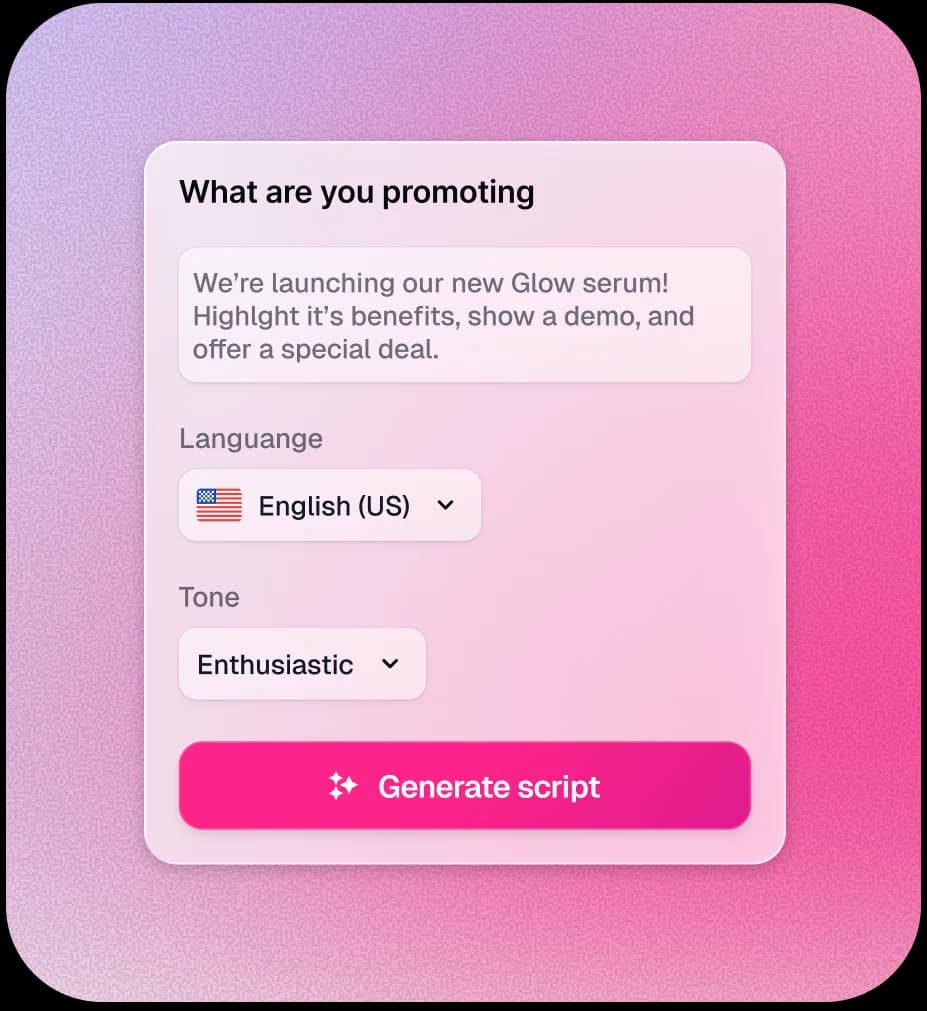
See an AI creator sell your products live
Connect your catalogue and go live in minutes — no studio, no crew.
How to Use AI Agents for Ecommerce and Social Commerce
Tracking Performance with Real-Time Analytics
"AI creative generation pays off when you run it like an operating system, not a side experiment." - AdMove AI
How do AI tools ensure content stays true to a brand's voice and style?
AI agents are reshaping content creation by delivering faster production, reducing costs, and scaling output to levels previously unimaginable. Brands can now create product videos, social media posts, and even live streams within minutes. Recent advancements have drastically improved production speed, making it easier than ever for businesses to produce high volumes of content efficiently.
This evolution is further propelled by trends like automated commerce. AI agents now take on complex tasks such as researching trending topics, writing scripts, and assembling visual assets - all without human input. Meta’s substantial investment in "personal superintelligence" for 2026 underscores the industry’s focus on using AI to craft highly personalized content and shopping experiences.
"This is going to be a big year for delivering personal superintelligence, accelerating our business, building infrastructure for the future." - Mark Zuckerberg, CEO, Meta
Emerging technologies like multilingual content production and AI-powered livestreaming are also transforming the landscape. Brands can now translate and localize content into over 40 languages instantly, while AI hosts manage 24/7 live shopping streams on platforms such as TikTok, Shopify, Amazon, and YouTube. These innovations break down geographic barriers, enabling businesses to connect with global audiences without the need for re-recording or re-shooting content.
Throughout this guide, one thing is clear: AI doesn’t replace human creativity - it enhances it. By automating repetitive, high-volume tasks, AI allows teams to focus on strategy, storytelling, and building deeper connections with their audience. Companies that embrace these tools today will position themselves to grow faster, reduce costs, and stay ahead in an increasingly competitive market.
AI tools help maintain a brand's voice and style by analyzing existing materials like past articles, social media updates, or marketing campaigns. These tools learn the tone, language, and messaging style of the brand, enabling them to produce consistent content that feels aligned with the brand's identity across various platforms.
Focus on high-performing formats and topics
Conversion rate, ROI, Average Order Value (AOV)
Scale investment in successful AI variants; phase out underperformers
Return rate, accuracy score, brand fit
Refine
AI prompts and rules based on audits
Conclusion
What challenges should I consider when using AI for content creation?
To make the content even more precise, pairing AI with human oversight is key. This teamwork allows for refining the content to better reflect the brand's values and connect with the intended audience. By blending AI's speed with human creativity, businesses can ramp up content production while keeping it genuine and high-quality.
While AI tools can boost efficiency, they come with their own set of challenges. For one, AI-generated content can sometimes miss the mark when it comes to originality, creativity, or emotional depth - all essential elements for truly connecting with an audience. On top of that, there are potential ethical pitfalls, like plagiarism or copyright issues, which demand careful monitoring to ensure everything stays above board.
Another concern is that AI systems rely on massive datasets, which may include flawed or biased information. This means their outputs can sometimes reflect those inaccuracies, making human oversight a must to maintain quality and stay true to your brand’s voice. Finally, implementing AI tools often requires an upfront investment - not just in the technology itself but also in training your team to use it effectively. For teams accustomed to manual processes, this transition can feel resource-heavy. Striking the right balance between these factors is essential for using AI responsibly and to its fullest potential.
AI tools place a strong emphasis on data privacy and security, adhering to strict compliance standards and implementing advanced safeguards. Many platforms follow established frameworks like SOC 2 Type II, which focuses on maintaining data confidentiality and integrity through rigorous controls. Encryption plays a key role here, securing data both during transmission and while it's stored, effectively blocking unauthorized access.
In addition to encryption, these tools often include features like access controls, user authentication, and activity monitoring. Together, these measures create a secure environment, ensuring proprietary or personal data stays protected throughout the content creation process.
How AI UGC is taking over the world
How do AI tools protect data privacy and security during content creation?
- Scaling: UGC Without Hiring More Creators
- How: AI Twins Reduce UGC Production Costs
- AI Agents for Creators: Use Cases and Examples
- AI Twins for Brand Partnerships: A New Model
- How: Brands Can License Creators Using AI
- AI-Driven Influencer Marketing Explained