
What Is UGC? A Complete Guide for Modern Brands
How to build a futureproof relationship with AI
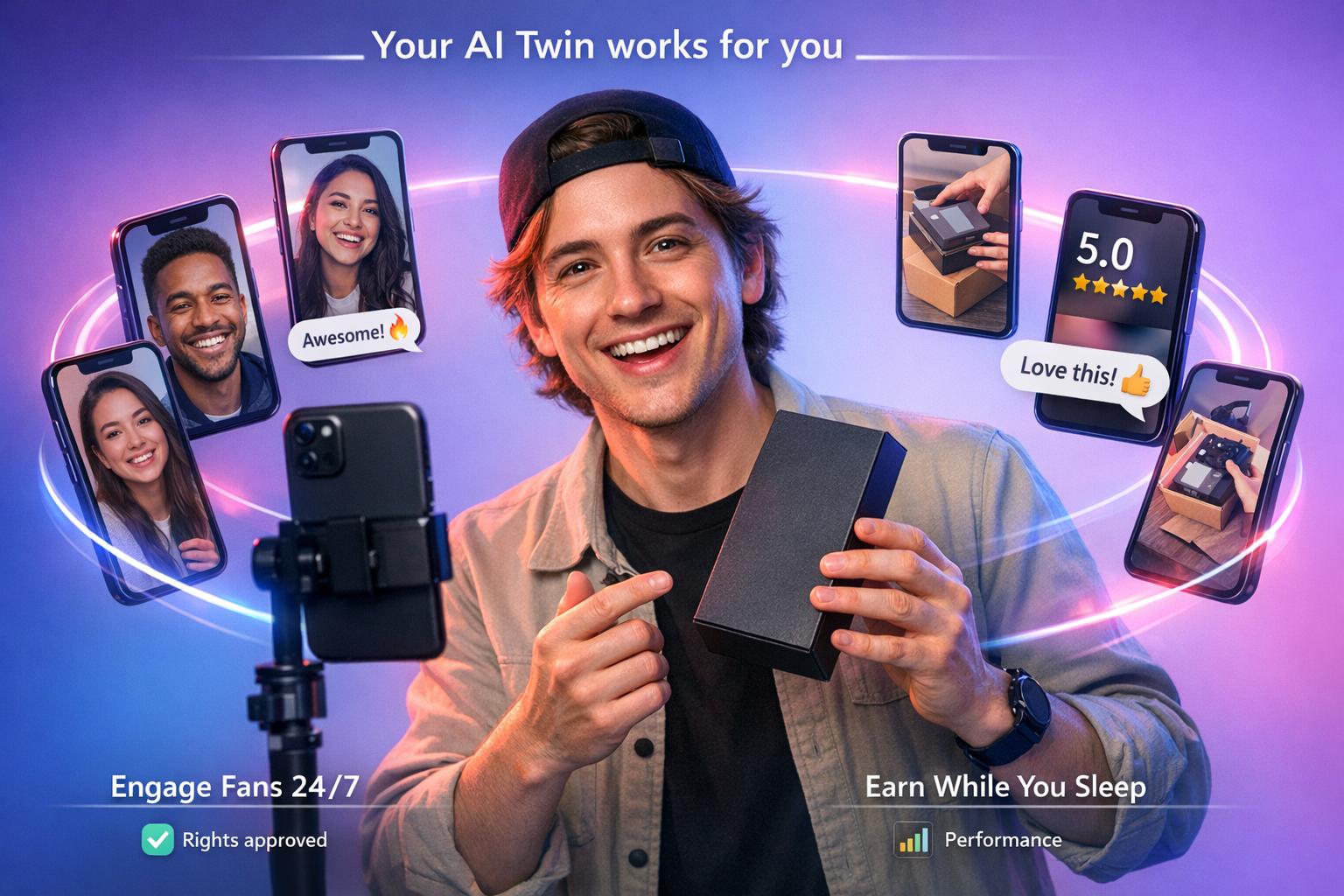
User-generated content (UGC) is any material - like photos, reviews, or videos - created by real customers or fans of a product. It’s trusted by 92% of consumers over traditional ads and influences 79% of buying decisions. UGC works because it feels relatable and shows products in everyday use, making it a powerful marketing tool.
Here’s why UGC matters:
Builds trust: People rely on reviews and real-life experiences.
Boosts sales: Products with UGC are 270% more likely to sell.
Drives engagement: UGC campaigns see 50% higher interaction rates than brand-made content.
UGC thrives on platforms like Instagram, TikTok, YouTube, and ecommerce sites. It’s effective in formats like unboxing videos, testimonials, and reviews. Brands can collect UGC by encouraging customers to share content and using tools to secure rights. Combining organic and paid UGC helps scale efforts while maintaining authenticity.
The key is to use UGC strategically across channels, measure its performance, estimate its monetary value, and ensure proper permissions to avoid legal risks. Done right, UGC turns customers into your best marketers, driving trust, engagement, and conversions.
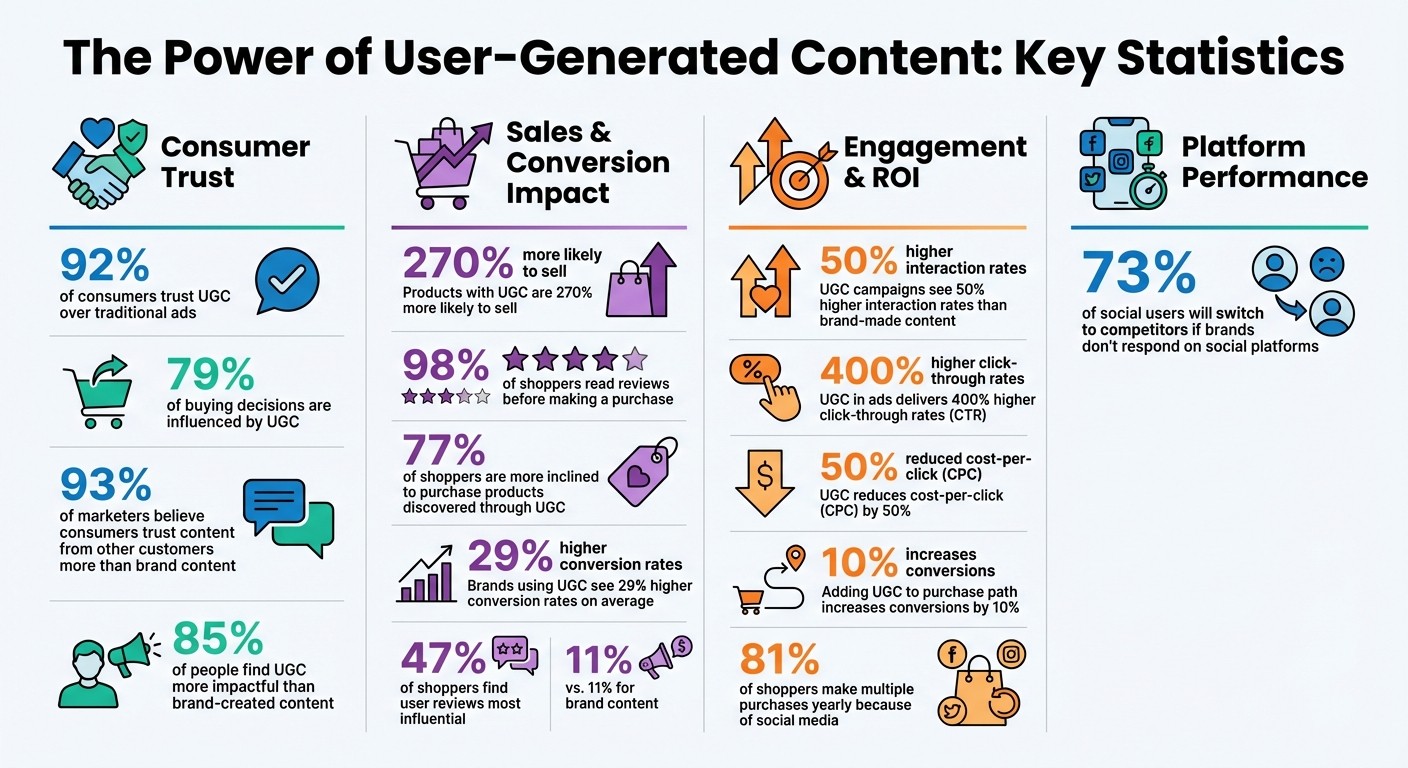
User-Generated Content Statistics: Trust, Engagement, and Conversion Impact
What Is User Generated Content (UGC) & How to Use It
What Is User-Generated Content (UGC)?
User-Generated Content (UGC) refers to material created by customers, employees, or fans - think photos, unboxing videos, reviews, and testimonials - that showcases genuine experiences with your products. Unlike the polished ads your brand produces, UGC comes directly from real people, giving it an authentic and relatable feel.
The main difference between UGC and traditional brand-created content is straightforward: UGC is created by peers, not by a company. When someone posts a photo of themselves using your product, it acts as a modern version of word-of-mouth marketing. It’s raw, personal, and credible - which is why 93% of marketers believe consumers trust content from other customers more than content from brands.
UGC falls into two categories: organic and paid. Organic UGC happens naturally when customers share their love for your product without any incentives. Paid UGC, on the other hand, involves hiring content creators to produce genuine-looking content for your brand. These creators focus on crafting relatable material you can use across your marketing efforts, and their compensation reflects their expertise, not their social reach.
Key Characteristics of UGC
Understanding UGC’s unique qualities helps explain why it resonates so strongly with audiences. What makes it so effective? It’s all about authenticity and relatability. Unlike polished ads, UGC shows your products in real-world scenarios - like a home kitchen, an unfiltered unboxing, or a before-and-after moment. This raw, unedited feel connects with consumers who are tired of overly produced marketing. In fact, 85% of people find UGC more impactful than content created by brands.
UGC also serves as social proof, a psychological concept where people look to others’ actions to guide their own decisions. When potential customers see real people enjoying your product, it reinforces your brand’s credibility in a way traditional ads can’t match.
Another standout feature of UGC is its ability to address practical questions. It provides the answers buyers are actually looking for. For example, a customer review explaining how a jacket fits or a video demonstrating how to assemble a product builds trust and offers useful insights. This is why 47% of shoppers find user reviews on retail websites to be the most influential content during their research phase, compared to just 11% who say the same about brand-generated content.
Where UGC Performs Best
UGC shines on platforms that emphasize visual storytelling and community interaction. Here’s a closer look at where it thrives:
Instagram: Perfect for curated customer photos, shoppable galleries, and Stories that showcase real experiences. Its visual format is ideal for displaying products in everyday life.
TikTok: A hub for raw, unfiltered video content. TikTok’s algorithm rewards authenticity, making it an excellent platform for unboxing videos, product demos, and viral challenges. For example, Rhode Skin’s Lip Phone Case launch in early 2024 generated $8.3 million in Earned Media Value and achieved a 31.9% engagement rate on Instagram, largely thanks to unscripted content from micro-influencers.
YouTube: Great for long-form UGC like in-depth product reviews, tutorials, and "haul" videos where customers showcase multiple purchases.
Ecommerce sites: UGC in the form of reviews, ratings, and Q&A sections can significantly impact buying decisions. Products with at least five reviews are 270% more likely to be purchased than those without reviews.
These platforms highlight how UGC builds trust and credibility in real-world contexts. A standout example is Wahl Professional, which has been curating UGC by tracking hashtags like #Wahl and #WahlPro since 2015. By resharing content from professional barbers, the brand boosted Instagram engagement by 4,307% and grew their follower count by 84,788.
Why UGC Matters for Modern Brands
Today's consumers prefer content that feels real over glossy advertisements. Seeing a friend unbox a product on TikTok or reading a genuine review from a verified buyer resonates in a way that no high-budget ad campaign can replicate.
UGC, or user-generated content, isn't just relatable - it delivers results. Brands leveraging UGC experience an average of 29% higher conversion rates, and 77% of shoppers are more inclined to purchase a product they discover through UGC. Take Petco's "Spotted" sampling program as an example. Between late 2022 and early 2023, they sent products to a carefully selected group of pet owners. The result? A 405% jump in review volume and a 48% increase in revenue per visit, all with a 90% response rate.
Let’s dive into how UGC builds trust, drives engagement, and fosters real connections.
Building Trust Through Social Proof
Social proof works because people trust other people. When potential customers see real-life users showcasing a product - whether in a casual photo or an unpolished video - it reinforces the brand's promise in a way that traditional ads often can't.
For instance, products with abundant reviews instill confidence. In fact, 98% of shoppers read reviews before making a purchase. A great example is Dr. Squatch, which featured raw customer video reviews on its homepage. This approach led to a 9.9% conversion rate and over $750,000 in sales directly tied to viewers of those videos.
Increasing Engagement and ROI
UGC doesn’t just build trust - it’s also cost-effective and highly engaging. While localized influencer marketing campaigns can cost anywhere from $25 to $25,000 per post, organic UGC is often free or requires minimal incentives like discounts. Plus, it outperforms brand-created content, with social campaigns featuring UGC earning 50% higher engagement rates.
Nutrisense, a health-tech company, paired UGC with social media insights between July 2021 and December 2022. The result? A 45% boost in social media engagement and a 496% growth in their community, reaching over 130,000 followers.
Creating Genuine Brand Connections
UGC goes beyond metrics - it strengthens emotional ties between a brand and its customers. By featuring a customer’s photo or video on official channels, brands not only showcase authentic content but also validate the customer’s experience. This gesture makes customers feel like they’re part of the brand’s journey. 81% of shoppers say they make multiple purchases each year because of social media.
"No one tells our story better than our members. The Well Traveled community is the key here. Whenever we can let their experiences shine, we do."
– Laura DeGomez, Director of Partnerships & Brand Marketing, Well Traveled
This kind of interaction is essential. 73% of social users will switch to a competitor if a brand doesn’t respond to them on social platforms. By engaging with customer content, brands deepen loyalty and create a sense of community that goes far beyond transactions.
Types of UGC for Brands
User-generated content (UGC) plays a key role in building trust and driving engagement. But to make the most of it, you need to understand the different formats it comes in and how to source it effectively. From casual photos to live shopping videos, each type of UGC offers unique benefits, and knowing how to use them can help you allocate your resources smartly.
Common UGC Formats
Photos and carousels offer a glimpse of your products in real-life settings - whether it’s a coffee mug on a kitchen counter, a backpack on a hiking trail, or a toy in a family’s living room. These visuals are perfect for Instagram posts, email marketing, and product pages, as they give a relatable, lifestyle-oriented perspective that polished studio shots often lack.
Short-form video is a powerhouse for engagement, especially on platforms like TikTok, Instagram Reels, and YouTube Shorts. These quick, 15-to-60-second clips showcase authentic recommendations that feel real and relatable. A great example? In 2021, Dr. Squatch used unpolished customer video reviews on their homepage, achieving a 9.9% conversion rate and generating over $750,000 in direct orders. The raw, unscripted nature of these videos builds trust in a way polished ads simply can’t.
Reviews and ratings are essential during the decision-making process. Text reviews address specific questions and concerns, while star ratings provide quick, visual reassurance. Products with at least five reviews are 270% more likely to be purchased than those without. With nearly 98% of shoppers reading reviews before buying, this format is a must-have for driving conversions.
Testimonials go beyond simple ratings, offering detailed accounts of customer experiences. Often featured on brand websites, they add credibility and authority. For instance, in 2021, performance wear brand Apolla showcased video testimonials from nurses, dancers, and hikers, which resulted in a 21.4% increase in video engagement and a 12.9% average conversion rate.
Livestream and shoppable video take UGC to the next level by combining product demonstrations with real-time purchasing options. This format turns passive viewers into active buyers, creating a seamless shopping experience.
Employee-generated content (EGC) gives a behind-the-scenes look at your brand, showcasing company culture and humanizing your business. As Roshni Patel, Director of Social Media at Zappi, puts it:
"Zappi employees are our brand's biggest champions... I'm also focused on educating and empowering our employees to build their personal brands while sharing their authentic experiences".
Organic vs. Paid UGC
The source of your UGC - whether organic or paid - can shape your strategy just as much as the format. Your choice depends on factors like budget, brand maturity, and the level of control you need.
Organic UGC comes from customers who voluntarily share content about your brand. It’s authentic and trusted by 92% of consumers more than traditional advertising. However, it’s unpredictable - you can’t control the volume or the messaging.
Paid UGC, on the other hand, involves working with creators to produce content that looks authentic but aligns with your creative brief. You’re paying for their skills, not their audience size, which gives you more control and scalability. This approach works well for product launches or ad campaigns where consistent messaging is crucial.
Feature | Organic UGC | Paid UGC |
|---|---|---|
Cost | Free or small incentives | Commission fees or product gifting |
Authenticity | High - genuine and voluntary | Designed to look authentic |
Brand Control | Low - unpredictable messaging | High - follows creative briefs |
Scalability | Limited - depends on customers | High - content on demand |
Primary Use | Social proof, community building | Paid ads, product launches |
Newer brands often start with paid UGC to quickly build a library of content, while established brands with active communities can lean on organic UGC. The best strategies combine both: use organic UGC to build trust and authenticity on your product pages, while leveraging paid UGC for targeted social media ads where polished execution and specific messaging matter most.
UGC Strategies for Ecommerce and Social Media
Once you're familiar with the different types of user-generated content (UGC), the next step is setting up a system to gather, organize, and use it effectively across your marketing channels. The most successful brands don't just wait for UGC to appear - they actively seek it out at every interaction with their customers and use it strategically.
How to Collect UGC
The most effective UGC strategies are ongoing efforts, not one-off campaigns. Start by integrating collection points throughout your customer journey. These could include checkout pages, follow-up emails, SMS reminders, or even QR codes on product packaging. Many brands have seen boosts in engagement and conversions by embedding these collection points at multiple touchpoints.
Incentives don’t always have to be monetary. Offering loyalty points, contest entries, or public recognition can also encourage submissions. Take GoPro's "Million Dollar Challenge" as an example. They invited users to submit raw footage for a shot at a $1 million prize, leading to over 42,000 submissions from 170 countries and driving about 25,000 product transactions. Customers who interacted with this UGC converted at a rate three times higher than others.
However, there's a common pitfall here: only 16% of brands provide clear instructions, even though over 50% of consumers prefer specific prompts for creating content. Instead of asking for generic "photos", guide your customers. Whether it’s unboxing videos, styling tips, or action shots of your product in use, be specific. Branded hashtags, like #rareroutine, can help organize submissions and make them easier to track.
One often-overlooked but essential step is securing legal rights to the content. Just because a customer tags your brand doesn’t mean you automatically own the rights to their post. You need explicit permission - whether through a direct message, a comment, or a formal agreement - before using their content for commercial purposes. Automating this process with tools that send DMs for permission and store approvals in a Digital Asset Management (DAM) system can save time and ensure you're legally protected.
Once you have the content, the next step is using it strategically across your marketing channels.
Repurposing UGC Across Channels
The value of UGC lies not just in collecting it but in using it across multiple platforms. A single customer video can be repurposed as a TikTok ad, an Instagram Story, an email banner, or even a product page feature. For instance, Dr. Martens added shoppable UGC galleries to its homepage and product pages, which led to a 1.6x boost in conversion rates and 6 million customer interactions.
Tailor the content format to match the buyer's journey. Social posts work well for building awareness, detailed reviews help during the consideration phase, and shoppable videos can drive purchases. Ads featuring UGC often outperform traditional ads, delivering 400% higher click-through rates (CTR) and cutting cost-per-click (CPC) by 50%. Adding UGC to your purchase path can also increase website conversions by 10%.
For paid ads, consider using "whitelisting" or "Brand Partner" ads, where you promote content directly from a creator’s profile. These ads often perform better than traditional branded ads because they retain the original post's authenticity while giving you control over targeting and budgeting. Experiment with A/B testing to identify which user-generated videos work best in ads or on landing pages, maximizing your return on investment.
Scaling UGC with TwinTone
Traditional UGC collection has its limitations. It relies on customer participation and often involves lengthy processes to secure rights and edit content. TwinTone changes the game by letting brands generate AI-powered UGC at scale using AI versions of real creators.
Instead of waiting weeks for a creator to produce content, TwinTone enables instant generation of product demos, unboxing videos, and shoppable livestreams in over 40 languages. This is especially useful for brands with extensive product catalogs or global audiences. Through API access, TwinTone automates content creation across SKUs and campaigns, transforming UGC production into a streamlined workflow.
The platform also supports AI-hosted livestreams on platforms like TikTok, Amazon, YouTube, and Shopify. This creates round-the-clock social commerce opportunities without the logistical challenges of coordinating live talent. TwinTone preserves the tone, style, and personality of real creators while offering the scalability and efficiency of AI. Real-time analytics track engagement, conversions, and ROI, helping you identify which AI creators and content formats deliver the best results for your brand.
Measuring UGC Success and Ensuring Brand Safety
Collecting user-generated content (UGC) is just the beginning. To truly benefit from it, you need to measure its performance and navigate potential legal risks. Without clear metrics and proper compliance processes, you risk wasting resources on content that doesn’t deliver results while exposing your brand to copyright or legal challenges.
Key Metrics for UGC Performance
To gauge the success of UGC, track metrics that reflect both awareness and engagement. Awareness metrics include reach, impressions, and branded hashtag volume, while engagement metrics focus on likes, shares, comments, and total user posts. Beyond these, conversion metrics are critical: monitor click-through rates (CTR), UGC-driven sales, customer acquisition cost (CAC), average order value (AOV), and customer lifetime value (CLV).
For website performance, compare metrics like time on page and conversion rates for UGC-enhanced pages versus those without UGC. Tools like UTM links, unique coupon codes, and dedicated landing pages can help you directly attribute revenue to specific UGC. Platforms like TwinTone streamline this process, offering real-time dashboards to track watch time, CTR, and purchase completions, saving you from manual tracking.
Metric Category | Manual UGC Tracking | Automated Solutions |
|---|---|---|
Discovery | Manual hashtag and mention searches | AI-powered aggregation across platforms |
Rights Management | DMs and manual record-keeping | Permission templates and digital archives |
Performance Analysis | Spreadsheets and manual data entry | Real-time dashboards for CTR and conversions |
Moderation | Human review of every post | AI filtering with human escalation |
Data source:
While these metrics help quantify the value of UGC, maintaining brand safety and compliance is equally important.
Brand Safety and Compliance
Tracking performance is only part of the equation - protecting your brand from legal and reputational risks is just as critical. Under the U.S. Copyright Act of 1976, creators automatically own the rights to their content as soon as it’s created. This means that even if someone tags your brand or uses your branded hashtag, you don’t have the right to repurpose their content for commercial purposes without explicit permission.
Permission can be obtained in several ways:
Express consent: Through direct messages, signed agreements, or form submissions.
Implied consent: When users participate in contests with terms that grant usage rights.
Opt-in consent: For email or SMS communications.
Always document proof of consent - whether it’s a screenshot, a signed agreement, or a digital file - and store it in a centralized Digital Asset Management (DAM) system. This ensures your team can verify usage rights before deploying content.
Additionally, secure permissions from all identifiable individuals featured in photos or videos to avoid privacy violations under laws like the Privacy Act of 1974. If videos include music, confirm the tracks are cleared for commercial use or replace them with royalty-free alternatives.
"Lawsuits and marketing to rebuild a bad public image are expensive." - Bazaarvoice
Platforms like TwinTone simplify compliance by automating rights requests and storing approvals alongside your UGC. For AI-generated UGC, these tools come with built-in compliance features, ensuring proper rights are secured without requiring individual permissions.
Finally, establish clear brand safety protocols to filter out low-quality images, typos, misinformation, and content that violates community guidelines. Use AI-powered moderation to flag inappropriate content or fraudulent reviews, especially as AI-generated "fake" UGC becomes more common. And don’t forget to credit original creators appropriately.
Conclusion: The Future of UGC for Modern Brands
User-generated content (UGC) is no longer just a bonus in a brand's marketing strategy - it's become a critical driver of growth. As we've seen throughout this guide, research consistently highlights how much authenticity influences consumer trust and buying habits. UGC not only builds trust but also delivers a stronger return on investment (ROI) and forges connections that traditional advertising simply can't replicate.
Looking ahead, the UGC landscape is shifting quickly. By 2026, projections suggest that as much as 90% of online content could be AI-generated. This makes genuine human voices even more essential. At the same time, AI is reshaping how brands scale their UGC efforts. For instance, Iconic London embraced UGC-focused strategies in 2024, achieving a 126% boost in conversion rates and an 11% increase in average order value over just one year.
"AI-generated content (AIGC) will be crucial for scaling UGC production, enabling brands to produce personalized content without large teams." - Amandeep Padda, Paid Social Specialist, Impression
Tools like TwinTone are already helping brands streamline UGC management by automating tasks such as AI-driven content creation, rights management, and real-time performance tracking. This eliminates the need for manual coordination and permission handling. With these advancements, brands can build scalable, pre-approved content libraries that fuel everything from social media to product pages.
To stay competitive, brands must treat UGC as a structured, measurable asset rather than a random collection of posts. The winning formula will combine authentic customer voices with smart automation, maintain strict brand safety standards, and constantly test what resonates with audiences. By doing so, you can turn your happiest customers into a powerful, scalable marketing force.
FAQs
How can brands legally use User-Generated Content (UGC)?
To use User-Generated Content (UGC) legally, brands must get clear permission from the creator. This usually means asking for written consent or obtaining a license that details how the content will be used, altered, or shared for marketing purposes.
It's important to be upfront about your intentions - explain exactly where and how the content will be featured. Keeping a record of permissions is also key. Many brands rely on tools to simplify the process of requesting and managing usage rights, ensuring they stay within legal boundaries while respecting the creator's work. Following these steps not only protects your brand but also builds trust with your audience.
What’s the difference between organic and paid user-generated content (UGC)?
The main distinction between organic and paid UGC lies in how the content comes to life and reaches an audience. Organic UGC happens naturally - it’s created by real users who genuinely want to share their experiences with a brand. Think of customer reviews, snapshots on Instagram, or an unprompted shoutout on social media. This type of content tends to feel more genuine, which helps build trust with audiences.
Paid UGC, on the other hand, is produced by individuals who are compensated by the brand. This gives brands the ability to shape the message, maintain quality, and generate content at scale for specific campaigns or promotions. While organic UGC is fantastic for building credibility and nurturing community connections, paid UGC offers a level of control and precision that’s ideal for achieving targeted marketing goals. Both approaches bring unique advantages, and the choice between them depends on what your brand aims to achieve.
How does TwinTone use AI to improve UGC strategies for brands?
TwinTone leverages AI to revolutionize how brands approach user-generated content (UGC), making the process quicker, more streamlined, and engaging. With its AI-driven platform, brands can create professional-grade videos and images in a fraction of the time, significantly cutting production costs. This means businesses can scale their UGC campaigns effortlessly while keeping content authentic and relatable.
What sets TwinTone apart is its ability to tailor content to a brand's unique style. It can generate scripts or even select AI actors that align perfectly with a brand’s voice and messaging. Plus, its real-time content creation feature allows brands to react swiftly to trending topics or customer interactions. This not only amplifies existing UGC but also motivates customers to participate, knowing their contributions can be transformed into polished marketing assets. By combining efficiency and personalization, TwinTone helps brands foster trust and boost engagement through dynamic UGC strategies.