Localized Influencer Strategies for Emerging Markets
How to build a futureproof relationship with AI
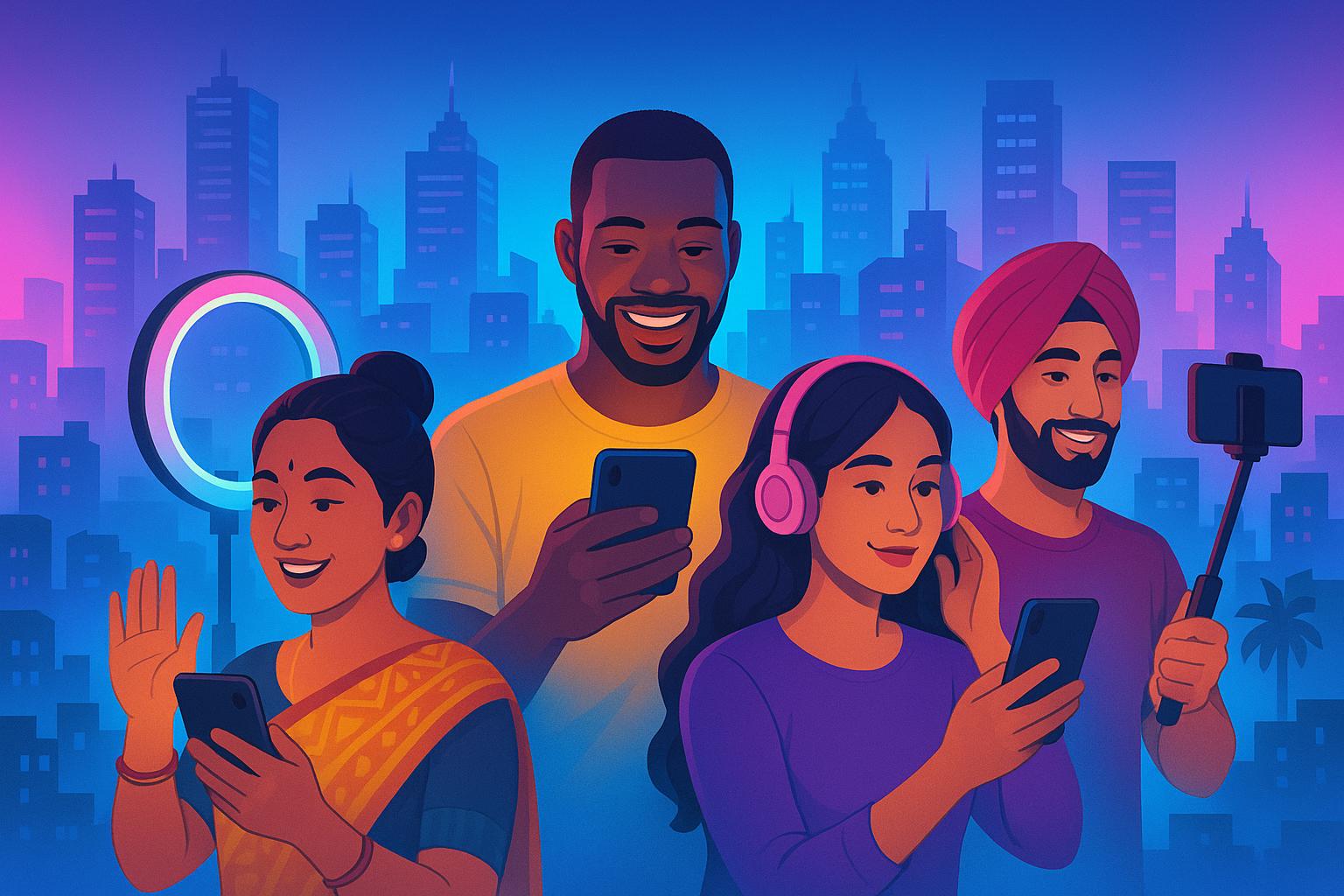
Emerging markets offer huge opportunities for brands, but generic global campaigns often fail here. Why? These regions are defined by diverse communities, mobile-first habits, and trust in local voices. Brands that work with influencers who understand local languages, traditions, and daily life see better engagement, faster trust-building, and smarter budget use. Here’s the key takeaway: Localization is not optional - it’s the foundation for success in these markets.
Key Insights:
Mobile-first behavior: Many emerging markets skipped desktops entirely. Social platforms dominate discovery and purchasing decisions.
Local influencers matter: They connect with audiences better than global celebrities by addressing regional norms, slang, and challenges.
Tailored content wins: Campaigns that reflect local holidays, pricing, and cultural habits resonate more deeply.
Micro-influencers shine: Smaller creators often deliver higher engagement and trust than larger influencers, especially in niche markets.
AI tools scale efforts: AI-powered solutions like TwinTone help brands create localized content efficiently, leveraging influencer likenesses for 24/7 engagement.
Quick Overview:
Market readiness: Look beyond population numbers - focus on smartphone adoption, social media usage, and e-commerce infrastructure.
Influencer selection: Prioritize engagement over reach, and ensure creators align with local values and audience demographics.
Content creation: Partner with influencers to craft relatable, region-specific stories instead of relying on rigid scripts.
Measuring success: Track metrics like local engagement, conversions, and sentiment to refine strategies.
Localized campaigns outperform generic ones by building trust and relevance. Start small, test strategies, and scale with tools and insights tailored to each market.
Real Micro-Influencer Marketing Strategy for 2025: Small Audiences, Big Profits
How to Identify and Prioritize Emerging Markets
When evaluating emerging markets, it’s crucial to look beyond just population numbers. Factors like digital infrastructure, consumer behavior, and social media activity play a huge role in determining market readiness. For instance, regions with high smartphone usage, growing e-commerce adoption, and active creator communities are often fertile ground for localized influencer campaigns.
But here’s the tricky part: balancing potential with practical challenges. A market might boast millions of social media users, but fragmented payment systems or unreliable logistics can derail even the best campaigns. On the other hand, a region with strong e-commerce infrastructure but limited creator diversity might struggle to deliver the authenticity needed for effective localization. To make smart decisions, focus on metrics like smartphone penetration, social media engagement, and e-commerce readiness rather than just the size of the population. These foundational insights guide the deeper criteria outlined below.
Market Selection Criteria
Start by assessing smartphone penetration and mobile internet access. Markets with widespread smartphone adoption and affordable mobile data offer fertile ground for influencer marketing. For example, countries like Indonesia, Nigeria, and Brazil have seen a surge in affordable smartphones, creating massive social media audiences. As mobile internet becomes more accessible, influencer marketing transitions from niche to mainstream.
Social media adoption rates are another key metric. A smaller country with high social media penetration often presents more opportunities than a larger one with low penetration. Look at daily active users to measure engagement. Markets where people spend three or more hours daily on social platforms - like many in Southeast Asia - signal strong potential for influencer-driven discovery.
Understanding platform preferences is equally important. For example, short-form video thrives in India, while messaging apps dominate parts of Latin America. Knowing which platforms drive product discovery helps focus resources on the right creators. Don’t assume global trends apply everywhere - local habits often differ.
E-commerce readiness is another critical factor. Markets with robust digital payment systems and efficient delivery networks are better suited for influencer-driven commerce. Look for regions embracing in-app purchasing and other social commerce features, as these signal a readiness to support influencer campaigns.
Regulations also matter. Advertising disclosure rules, content restrictions, and data privacy laws can shape how campaigns are executed. Research local guidelines on sponsored content and influencer partnerships to avoid compliance issues. Markets with clear and stable regulations are easier to navigate.
Economic factors like disposable income growth and spending patterns also help determine market suitability. For example, a luxury brand might target regions with expanding middle classes, while an affordable product line might focus on areas with broad consumer bases. Trends like urban migration and category-specific growth offer valuable clues about market potential.
Lastly, consider the competitive landscape. If major brands are already running successful influencer campaigns in a market, it’s a sign of readiness - but also a cue to differentiate your strategy. Conversely, a lack of activity might indicate untapped potential or structural challenges.
Language and cultural diversity can also impact campaign complexity. Countries with a dominant language and relatively uniform culture are often easier to enter. In contrast, markets like India, with its many languages and regional nuances, may require separate strategies for different audiences.
Understanding Local Creator Ecosystems
After identifying a promising market, map out its creator ecosystem. This involves researching who the key influencers are, what platforms they use, and which content formats resonate most. Local insights are invaluable here.
Start by analyzing platform dominance and content preferences. Observe what types of content - whether polished and professional or raw and authentic - perform best in your target market. For example, live shopping streams might work well in one region, while short tutorials or long-form storytelling could be more effective elsewhere. Tailor your content strategy to fit local preferences.
Creators come in different tiers, and even nano- or mid-tier influencers can hold significant sway in emerging markets. Mid-tier creators, with followers ranging from 50,000 to 500,000, often maintain strong community connections and are more accessible for partnerships, making them ideal for authentic engagement.
Content categories also vary by region. In some markets, generalist lifestyle influencers dominate, while in others, niche creators specializing in areas like beauty, tech, or parenting command more trust. Look at follower metrics, engagement rates, and past brand collaborations to identify creators who align with your target audience.
Consider both urban and regional influencers. While urban creators might have larger followings, regional influencers often connect better with rural or suburban audiences. Including both can help you reach diverse sub-markets effectively.
Creator professionalism can differ widely. In well-established markets, influencers often have managers, media kits, and set rates. In emerging markets, many creators are still building their operations, which means brands may need to invest more in relationship-building and clear communication about expectations, content rights, and disclosure requirements.
Audience demographics and behaviors also differ among creators. Request detailed insights, such as audience location, age, and engagement patterns, to ensure a creator’s followers align with your target customer profile.
In many emerging markets, cultural gatekeepers - creators with smaller but highly influential followings - play a significant role. These individuals often set trends and spark conversations, building trust that translates into consumer action.
Platform-specific tools and monetization features also shape the local creator landscape. In regions with robust monetization options, creators tend to operate more professionally. In areas where such features are limited, brand partnerships become a crucial income source, giving brands more negotiating power.
Finally, research local creator networks and agencies. Many markets have collectives or talent agencies that connect brands with vetted influencers. While these intermediaries can simplify market entry, they may also drive up costs and limit access to lesser-known talent. Balancing agency relationships with direct outreach can help uncover both established and emerging creators.
AI tools like TwinTone can simplify the process of discovering and managing creators, enabling brands to scale their influencer campaigns efficiently across different regions.
How to Select the Right Influencers
Once you've mapped out the creator landscape in your target market, the next step is finding influencers who can genuinely connect your brand with local audiences. This isn't just about picking people with a massive following - it’s about choosing creators whose audience aligns with your target customers, who have real engagement, and who can deliver your brand’s message in a way that feels natural within the local context. Getting this wrong can derail your campaign.
Influencer Evaluation Criteria
Start by focusing on audience relevance. An influencer might have a huge following, but if their audience lives outside your target market or doesn’t match your customer profile, the partnership won’t work. Request detailed audience insights, including location, age, gender, and interests, to ensure a good fit.
Today, about 50% of brands prioritize engagement rate over follower count when selecting influencers. And it makes sense - engagement shows whether an audience is actually interested in the content. Check the ratio of likes, comments, and shares compared to their follower count, and compare it to regional benchmarks. For example, a creator with 50,000 followers and 5,000 likes per post may offer more value than one with 200,000 followers and the same level of engagement.
Dive into the comments on recent posts. Look for meaningful interactions - comments that use local language, share personal stories, or ask questions. These are signs of a genuine community. Be cautious of red flags like sudden spikes in followers without new content, followers from unrelated regions, or generic comments like "Nice post!" or strings of random emojis.
Cultural fit is as critical as metrics. Review the influencer's past content to see how they engage with local traditions, holidays, and sensitive topics. Influencers who naturally weave local festivals, slang, and everyday experiences into their posts can make your brand feel more relatable. Research shows that campaigns aligned with local customs and values can increase consumer connection to a brand by about one-third.
If your team isn’t based in the target market, consider involving local partners or team members to review content for cultural appropriateness. Another option is to request a "content audition", where the influencer creates a sample piece around a local theme. This will show how well they can adapt your message to the local context.
Brand alignment is another key factor. Look at how the influencer incorporates sponsored content into their feed. Does it blend seamlessly, or does it feel forced? Check their past collaborations to ensure their values align with your brand. Avoid influencers who overload their feeds with sponsored posts, as this can hurt their credibility. Ideally, select creators whose style, tone, and visuals naturally complement your brand.
Choose influencers based on your campaign goals. For awareness campaigns, focus on mid-tier or upper micro-influencers with a strong presence in your target market. For educational or consideration campaigns, look for creators who excel at detailed content like tutorials or reviews. For conversion-driven campaigns, prioritize influencers whose followers frequently ask for product details, discount codes, or purchase links. Request performance data, such as click-through rates or sales, to evaluate their ability to deliver results.
Lastly, consider content format strengths. Some influencers thrive with short-form videos and Stories, perfect for quick product demos or awareness campaigns. Others excel at live streams or long-form content, which work better for in-depth education or community engagement. Match their natural style to your campaign needs for the best results.
By combining these assessments, you can select the right mix of influencers to maximize both reach and credibility.
Mixing Influencer Tiers for Better Results
Blending nano, micro, and mid-tier influencers can help you achieve a range of campaign goals. Relying on just one tier often limits results, especially in emerging markets. The most effective strategies use a mix of nano, micro, and mid-tier influencers to balance broad reach with community trust.
Picture it like a pyramid: Use a small number of mid-tier influencers (100,000–500,000 followers) to create broad awareness and establish legitimacy. Then, activate a larger group of micro (10,000–100,000 followers) and nano (under 10,000 followers) influencers to drive deeper engagement in specific neighborhoods, languages, or subcultures.
For example, a brand launching in a new city might partner with 1–2 mid-tier lifestyle influencers for major announcements, while engaging 15–30 micro and nano influencers to spark localized conversations. This approach creates multiple touchpoints with consistent messaging while keeping costs manageable - nano and micro influencers are typically more affordable and open to co-creating content.
Micro-influencers, with fewer than 100,000 followers, are often seen as a "sweet spot" because they’re affordable, highly engaged with their audience, and great for niche markets. User-generated content from influencer campaigns influences purchase decisions for about 80% of people, and hyperlocal creators often achieve higher engagement and conversions than broader campaigns.
Each influencer tier offers unique advantages:
Nano influencers feel like trusted friends to their followers. Nearly 90% of consumers trust recommendations from people they know. They’re great for testing new markets, gathering feedback, and driving word-of-mouth, though their reach is limited.
Micro influencers strike a balance between engagement and reach. They’re often experts in specific niches - like beauty, tech, or parenting - and their audiences trust their opinions. However, managing multiple micro-influencers can be time-intensive.
Mid-tier influencers provide broad visibility and help establish a brand’s presence in new markets. They’re ideal for regional campaigns, though their engagement rates are often lower than those of nano and micro influencers, and their fees are higher.
When mixing tiers, match content formats to each influencer’s strengths. Short-form videos and Stories work well for mid-tier influencers driving awareness, while live streams and long-form content suit micro and nano influencers whose audiences expect more interaction. Campaigns that engage influencers across the customer journey tend to boost engagement by around 40% compared to traditional media-only campaigns.
For brands scaling this approach, tools like TwinTone can enhance influencer collaborations. For example, a mid-tier influencer could license their likeness through TwinTone, enabling 24/7 product demos or live Q&A sessions, while focusing on high-impact content drops. Nano and micro influencers can drive traffic to these AI-powered experiences, share discount codes, and offer personal commentary.
To measure performance, use unique links, discount codes, or dedicated landing pages for each influencer. Track metrics like cost per thousand impressions for mid-tier influencers, cost per engaged user for micro influencers, and community indicators like sentiment for nano influencers. After each campaign, analyze which tier delivered the best results and adjust your strategy for future efforts.
Operationally, tailor contracts to each influencer tier. For mid-tier influencers, include clauses on exclusivity, content ownership, and whether content can be repurposed for ads or AI formats. For micro and nano influencers, contracts can be simpler but should still clearly outline deliverables, timelines, and compensation. Consistent guidelines on brand safety, disclosure rules, and content usage should apply across all tiers.
Creating Content That Resonates with Local Audiences
Once you've chosen the right influencers, the next step is to craft content that feels genuine and relatable to the local audience. Avoid relying on literal translations or generic depictions of local culture. Instead, collaborate with creators to tell stories that feel natural - stories that use everyday language, highlight familiar places, and tap into moments that matter to the community. When done well, your brand becomes part of the local conversation. Miss the mark, and it can come across as an outsider trying too hard to fit in.
Localized Storytelling Methods
Building on your influencer partnerships, focus on creating content that seamlessly integrates your brand into the local culture.
The cornerstone of localized storytelling is language - not just the official language, but the specific dialects, slang, and even code-switching patterns that people use in casual conversations. In emerging markets, audiences can quickly sense when content feels imported or out of place. Authenticity is key; the moment something feels scripted or foreign, trust begins to erode.
One approach is to define three language zones:
Always-on: Standard language and widely understood slang.
Situational: Context-specific slang tied to particular moments or subcultures.
Prohibited: Terms or phrases that could offend or alienate the audience.
This framework gives creators the freedom to speak naturally while ensuring your brand's messaging stays appropriate. For instance, a creator in Lagos might mix English with Pidgin in captions, adding subtitles for viewers outside Nigeria. Similarly, a Jakarta-based creator might switch between Indonesian and English for tech-related terms, mirroring how their audience communicates.
When using captions or on-screen text, prioritize clarity. Subtitles can help make local idioms or expressions understandable for broader audiences.
Beyond language, cultural symbols and daily routines bring stories to life. Hyperlocal influencers excel at showing how your product fits into real, everyday moments. Encourage creators to draw from their own lives - whether it’s a morning trip to the market, a weekend soccer game, or preparing a traditional meal. For example, a beauty influencer could demonstrate a makeup routine during a São Paulo metro commute, while a food creator might share an iftar preparation in Cairo. These aren’t touristy snapshots; they’re authentic moments that resonate with the audience.
Recurring content tied to the local calendar also performs well. Think back-to-school guides, Ramadan preparation tips, festival gifting ideas, or payday budgeting advice. These formats allow your brand to support traditions or address everyday challenges without overshadowing them. Campaigns built around local insights and trends have been shown to strengthen connections with new audiences by nearly one-third.
Some high-performing formats in emerging markets include:
Price comparison videos that evaluate global brands against local alternatives (using local currency).
Challenges that adapt global trends to local realities.
Mini-series or micro-dramas that explore relatable themes like family life, work, or relationships.
Tutorials addressing practical local needs, like styling for humid weather, cooking with common ingredients, or optimizing prepaid data usage - all enriched with local references.
Visuals matter just as much as language. Incorporating familiar elements such as local payment methods, public transit, street food, or regional sports can signal that your brand truly understands the audience's world. Generic imagery simply won’t have the same impact.
Before briefing influencers, outline market-specific guidelines: topics to avoid (like politics, sensitive religious themes, or divisive social issues), required disclosures for paid partnerships, and any local advertising regulations. Within these boundaries, encourage creators to tackle local concerns - such as financial pressures, beauty standards, or gender roles - through relatable stories that remain respectful of cultural sensitivities.
Content Co-Creation Workflows
To turn these insights into scalable, localized content, adopt a structured co-creation process.
Scaling localized content requires balancing brand consistency with creative freedom. The most effective workflows treat influencers as strategic partners who help shape the narrative, rather than just executing pre-written scripts.
A typical workflow includes four key stages:
Co-briefing: Align on objectives, target audience, and what authentic content should look like in the local context.
Concept Alignment: Let creators pitch hooks, formats, and scenarios tied to local events and cultural moments.
Lightweight Pre-Review: Review scripts for clarity and compliance, keeping revisions minimal to avoid delays. Shared workspaces with clear status tags (e.g., "pending approval", "needs edits") can help streamline the process across time zones.
Post-Production Review: Check for accurate claims, proper logo usage, and required disclosures to ensure compliance with local regulations.
Using a concise creative brief template can keep everyone on the same page. This brief should include the campaign goal, target audience, key messages, dos and don’ts, and mandatory assets - all on a single page. Additionally, define language preferences (primary language and any code-switching elements), visual guidelines (like logo placement and color schemes), and relatable local scenarios (like commuting, family gatherings, or street food settings) to ground the content in everyday life.
After each campaign, review performance using a simple scorecard that tracks metrics like engagement rates, video completion rates, shares, and audience sentiment. During debriefs with creators, discuss what worked, what felt forced, and where approval processes caused delays. This feedback will help refine future campaigns, ensuring a better balance between brand safety and creative freedom.
For brands managing localized content across multiple markets, tools like TwinTone can streamline production. Creators can use AI Twins to record product explainers, FAQs, and evergreen videos in local languages without needing to be on set for every project. Creators maintain control by approving scripts, tone-of-voice settings, and visual elements, while brands efficiently scale their output to maintain a strong, locally relevant presence.
This structured process ensures every piece of content aligns with your localized strategy, building trust and deeper connections with audiences.
Using AI to Scale Localization and Creator Engagement
After establishing solid co-creation workflows with local influencers, the next hurdle is scaling your efforts. Managing creators across various time zones, languages, and cultural nuances can quickly drain resources. This is where AI steps in, streamlining repetitive tasks and extending the reach of creators without overworking them or compromising the authenticity of the content. By integrating AI into these workflows, brands can ensure that localized content remains genuine while scaling effectively.
AI-Powered Content Creation with TwinTone

Tools like TwinTone are revolutionizing the way brands approach local storytelling. With AI, influencers can now have digital versions of themselves - known as AI Twins - that produce content and interact with audiences 24/7. TwinTone creates these AI Twins by replicating an influencer’s likeness, voice, and personality to automatically generate branded content and host live shopping events.
Here’s how it plays out: Imagine a brand collaborating with a trusted local influencer in São Paulo. Instead of requiring constant filming or live appearances, TwinTone trains an AI Twin using approved data from the creator. This AI Twin can then generate localized product explainers, answer frequently asked questions, and even host live shopping streams in Portuguese. Meanwhile, the human creator can focus on more strategic tasks, like brainstorming new campaigns or engaging with their most dedicated followers.
Creators maintain control by approving scripts and setting boundaries, ensuring the AI Twin aligns with their personal brand. This setup not only enhances authenticity but also opens up additional revenue streams for creators, who can earn from their AI Twin’s work without always needing to be "on."
From a brand’s perspective, this approach solves several challenges. For example, UGC-style videos can be produced at scale across multiple markets without juggling dozens of creator schedules. TwinTone supports content generation in over 40 languages, adapting to local slang and cultural nuances. Features like "Dress Your Creator" allow brands to modify AI Twins’ outfits to align with local trends and preferences. AI Twins can even host live sessions at optimal times in each region, showcasing products during peak hours while the human influencer rests.
This model is especially effective in emerging markets, where mobile-first audiences expect constant engagement. Brands can experiment with different messaging, offers, and formats by generating multiple AI-powered content variations. Once the most effective versions are identified, they can be scaled quickly without the need for additional shoots or scriptwriting. A single concept from a trusted local influencer can be transformed into dozens of tailored variations - each with specific hooks, calls-to-action, and references suited to different neighborhoods or audience segments.
The process is straightforward: brands onboard influencers in key markets, establish clear contracts for AI usage rights and compensation, and gather high-quality training data such as videos, voice samples, and scripts. They then work with creators to build detailed profiles for their AI Twins. After configuring templates, localization rules, and approval workflows, brands launch pilots in select markets with clear metrics like cost per content asset, engagement rates, and incremental sales. Based on these results, they refine the approach and expand to additional markets, creating a standardized playbook with checklists, sample scripts, and quality assurance protocols.
Compensation typically includes a base fee for training and licensing the AI Twin, along with performance-based incentives tied to metrics like the number of AI-generated assets used, hours of live sessions hosted, or revenue generated. Dashboards provide creators with transparency, showing how their AI Twin is performing across regions. Regular reviews and the ability to update guidelines ensure that creators remain active collaborators in the process.
Scaling Localization Across Multiple Markets
AI doesn’t just help create more content - it helps create better content by leveraging real-time data to refine local messaging. Traditional localization often stops at translation, but AI-powered tools go further, learning which phrases, formats, and approaches resonate most with specific audiences.
Brands can use AI to produce multiple variations of a campaign tailored to different regions, demographics, or platforms. These variants are tested with controlled budgets, and performance data is fed back into the AI system. The AI then identifies the best-performing versions and scales them while discarding underperforming ones. This approach ensures campaigns are both efficient and impactful, without overburdening creators.
For instance, an influencer’s AI Twin might generate product tutorials in several localized versions to match regional shopping behaviors. Brands track which versions drive the most engagement and conversions, then use those insights to inform future campaigns in other areas. This feedback loop allows brands to adapt quickly to audience preferences and stay ahead of the curve.
AI social listening tools enhance this process by monitoring local comments, messages, and sentiment data in real time. If a specific phrase or reference resonates in one market, AI can suggest incorporating it into content for similar regions. Conversely, if a topic sparks confusion or negative reactions, the system flags it so messaging can be adjusted before scaling further. This dynamic approach ensures localization remains relevant and responsive, rather than static and outdated.
To maintain consistency across markets, brands rely on centralized guidelines, product details, and messaging frameworks. AI uses these as a foundation to generate localized content that aligns with the brand’s core identity while reflecting regional nuances. For example, AI can create localized versions of "30-second unboxing" videos or "live shopping scripts", adapting details like pricing in U.S. dollars or local currencies, time-sensitive promotions, and culturally relevant hooks. Approval workflows and compliance checks ensure the content meets brand standards and legal requirements.
For brands operating in multiple emerging markets, this centralized yet flexible approach simplifies campaign management. Local teams can quickly launch AI-powered influencer programs by adapting established templates and letting AI handle tasks like content creation, translation, and distribution across platforms like TikTok, Instagram, and YouTube.
The result? A scalable system where one creator’s expertise can resonate across dozens of markets, engaging audiences in their language and cultural context - without requiring the creator to work around the clock. Brands achieve the consistency and volume needed to thrive in fast-paced markets, while creators enjoy fair compensation and the freedom to focus on what they do best: building trust and crafting stories that connect.
To measure the effectiveness of AI-assisted localization, brands should track metrics like content production speed, engagement rates, conversion rates, and revenue per impression. Additional metrics like language and region coverage, creator satisfaction, and sentiment analysis in comments can offer deeper insights. Comparing results before and after AI implementation can highlight improvements in ROI and reach.
Ultimately, AI should complement, not replace, human-led influencer relationships. The best strategies combine AI-powered, always-on content with scheduled appearances by the human influencer. This blend ensures audiences get the convenience of 24/7 engagement alongside the genuine connection that only a real person can provide. By serving as an extension of influencer partnerships, AI helps brands maintain local relevance while scaling their efforts effectively.
Measuring and Improving Localized Campaigns
Running localized influencer campaigns in emerging markets generates a wealth of data. But the real challenge lies in figuring out which metrics truly matter and using them to make smarter decisions. Basic dashboards that only display impressions or follower counts often fall short in regions with diverse currencies, platforms, and consumer behaviors.
What you need is a measurement framework that mirrors how people in each market discover, consider, and purchase products. This involves moving beyond surface-level metrics and tracking the entire journey - from initial exposure to final purchase. By doing so, you can fine-tune your strategy for each market, ensuring that your influencer efforts align with the unique dynamics of the region.
Tracking Region-Specific Metrics
Start by defining key performance indicators (KPIs) tailored to each region. These might include reach, local engagement rates, click-through rates (to measure audience actions), conversion rates, cost per acquisition, and return on ad spend. Segment these metrics by market and influencer tier for deeper insights.
For instance, a micro-influencer in Brazil might deliver more cost-effective conversions compared to a mid-tier creator in Indonesia, even if engagement rates seem higher in one market. Such granular analysis helps identify which campaigns are truly efficient.
It’s also essential to break results down by country, city, and platform while accounting for local behaviors. A campaign in India might emphasize WhatsApp referrals and cash-on-delivery purchases, while one in Brazil could focus on Instagram Reels and ensuring checkout is in local currency.
Tracking local language keywords adds another layer of insight. Monitor brand search volume before, during, and after campaigns, and pay attention to queries that pair your brand with city names (e.g., "best skincare Jakarta" or "comprar zapatos Buenos Aires"). On social media, keep an eye on localized hashtags, mentions, and comments that reflect regional slang or cultural references. This helps you understand what resonates with the audience and where adjustments may be needed.
Different platforms often require tailored measurement strategies. For example, on regional apps or livestream platforms, metrics like watch time, repeat viewers, chat activity, and wishlist adds can be more insightful than likes or follower counts. By mapping each platform’s metrics to stages of the customer journey - such as using long session durations to measure consideration and coupon redemptions to track conversions - you’ll get a clearer picture of campaign performance.
Regular testing is crucial for improvement. A/B testing can help you pinpoint what works best, whether it’s the type of creator, content format, or call-to-action language. You might find that adding subtitles in the local language or using region-specific humor significantly boosts video completion rates. These insights can guide future budget allocation and creative direction.
AI tools like TwinTone can make this process even more dynamic. By testing multiple content variations simultaneously, AI-powered platforms can quickly identify which formats, messages, and posting times work best in each region. This creates a feedback loop where data continuously informs and improves your campaigns.
Attribution Across Multiple Platforms
Once your metrics are in place, understanding cross-platform attribution becomes vital. Customer journeys in emerging markets often span multiple social platforms, messaging apps, and ecommerce channels. Add to that shared devices and varied payment methods, and traditional attribution models can fall short.
To navigate this complexity, use practical tools like unique tracking links, promo codes, and UTM parameters for each influencer and platform. Combine these with platform analytics and ecommerce data to connect influencer content - whether a TikTok video or a livestream event - with actions like product page visits, cart additions, and purchases.
Employ multiple attribution models - first-touch, last-touch, and assisted - to fully capture an influencer’s impact. For example, an influencer’s YouTube review might be the first point of contact for many customers, even if it doesn’t directly lead to a purchase. Recognizing its role in the journey can justify continuing the partnership, even if last-click returns seem modest.
Consider a scenario where a customer in Manila sees an Instagram Story from an influencer, clicks through to your website, but doesn’t purchase right away. Days later, they search for your brand on Google, read reviews, and finally buy the product after seeing a retargeting ad on Facebook. Different attribution models would credit different touchpoints, highlighting the value of a comprehensive approach.
Regular reviews are essential. Weekly or biweekly check-ins with cross-functional teams can help you analyze local dashboards, identify which creators are excelling, and decide on next steps - whether reallocating budgets or refining creative briefs. Documenting these learnings in playbooks ensures that future campaigns build on past insights, rather than starting from scratch.
It’s also important to look beyond the numbers. If a campaign in Thailand shows high engagement but low conversions, dig deeper. Are customers dropping off due to limited payment options, confusion over pricing in U.S. dollars, or long shipping times? Combining attribution data with customer feedback can help uncover the root cause.
Platforms like TwinTone can analyze vast amounts of content and performance data to spot trends and offer actionable suggestions. By identifying which content variations perform best in each region, you can continuously refine your campaigns.
The goal isn’t to achieve perfect attribution - it’s about gaining actionable insights to guide smarter decisions. By combining consistent tracking tools, flexible attribution models, and regular reviews, you can build a practical measurement system that captures the complexity of localized campaigns while staying manageable for day-to-day use.
Conclusion
Emerging markets are among the most dynamic opportunities for brands today, but success requires more than simply repurposing global campaigns. Localized influencer strategies have become essential - they're the cornerstone for building trust, staying relevant, and achieving growth in regions where consumers rely on community voices rather than corporate messaging.
The brands that excel in these markets share a few key practices: they embrace local nuances, nurture long-term partnerships with creators, and use clear processes and technology to streamline localization. By collaborating with creators who are fluent in local slang, understand shopping habits, and are familiar with preferred platforms and community norms, brands can establish credibility quickly and avoid costly mistakes that could harm their reputation before gaining traction.
Campaigns tailored to specific cultural contexts consistently outperform generic global content. They generate higher engagement, more word-of-mouth buzz, and lower customer acquisition costs. Consumers’ trust in local voices amplifies these benefits. This trust leads to tangible results: better conversion rates, repeat customers, and stronger brand equity across diverse markets. Brands that invest in understanding local audiences and selecting the right creators upfront often see these advantages multiply over time, while those who rely on unmodified global assets frequently struggle to connect.
Technology is a game-changer in scaling localization without losing authenticity. Tools like TwinTone enable brands to leverage the influence of real creators by producing localized content on demand. These AI-powered platforms can adapt scripts, product pitches, and calls-to-action for specific markets while maintaining the familiar face and style of local creators. This approach ensures creators are compensated fairly while providing brands with consistent, scalable content that feels genuine.
The key to long-term success lies in ongoing refinement. No localized strategy is flawless from the start. The most successful brands treat each market as a dynamic system, regularly reviewing metrics like save rates, comment sentiment, and localized conversion rates. They hold frequent optimization sessions with local partners and retire underperforming tactics. By running small tests - experimenting with different creators, messaging hooks, or offers - and applying those insights to improve strategies, brands foster a culture of constant improvement.
For those seeking to justify investments in localization to stakeholders, the benefits are clear: lower acquisition costs, faster market entry, higher customer retention, and more efficient content production. Engagement remains the primary factor when selecting influencers. Localized creator strategies also help brands reduce risks during expansion by leveraging trusted voices, minimizing the chances of costly missteps.
Turning these strategies into actionable steps is critical. Start with a focused plan by selecting one or two key emerging markets. Map out the local creator landscape, study audience behaviors, define localized themes, explore AI-driven scaling tools, and set measurable goals. Plan a 30–60 day pilot to test your approach, document successes, and create a playbook that can be adapted for other markets. This method transforms strategy into action with clear timelines, roles, and deliverables.
Finally, remember that effective localization is about both impact and respect. Work with local legal and compliance experts, ensure transparency around sponsored and AI-generated content, and establish fair terms for compensation and data use. Being upfront with creators and audiences safeguards trust and strengthens your brand’s reputation over time.
FAQs
What steps can brands take to identify and focus on the right emerging markets for influencer campaigns?
To zero in on promising markets for influencer campaigns, brands should dive into market data like population growth, internet access rates, and social media usage patterns. These metrics reveal regions brimming with potential for digital engagement.
From there, it's crucial to examine the local dynamics - things like consumer preferences, spending habits, and cultural nuances. Crafting campaigns that align with these factors ensures they feel genuine. Partnering with local influencers who already have a strong bond with their audience can amplify your message and boost trust.
Lastly, keep an eye on your competitors' strategies. Where are they focusing their influencer efforts? This can uncover gaps your brand can fill or areas where you can differentiate yourself.
Why should brands use micro and nano influencers for localized campaigns instead of mid-tier influencers?
Micro and nano influencers bring distinct benefits when it comes to localized campaigns. For starters, they often boast higher engagement rates and create closer personal bonds with their followers. This connection fosters trust and makes their recommendations feel more genuine and relatable to their audience.
Another key advantage is their affordability. These influencers are generally more budget-friendly compared to mid-tier influencers, allowing brands to allocate resources wisely while focusing on specific communities. Their ability to connect with niche audiences ensures that campaign messages align with local contexts and resonate on a deeper level. This targeted approach not only improves ROI but also encourages authentic brand loyalty in local markets.
How can AI tools like TwinTone help brands scale and optimize localized influencer strategies?
AI tools such as TwinTone are transforming how brands approach localized influencer strategies. This platform allows creators to produce AI-powered content with ease, giving brands the ability to generate on-demand user-generated content (UGC) and host 24/7 live product showcases featuring AI representations of real creators.
By using TwinTone, brands can deliver consistent and engaging content tailored to specific market preferences. This streamlined approach not only helps businesses connect with wider audiences and boost sales but also keeps interactions personal - even at scale. Plus, it opens up fresh opportunities for creators to monetize their influence in innovative ways.