Influencer Marketing in 2026: What’s Changed?
How to build a futureproof relationship with AI
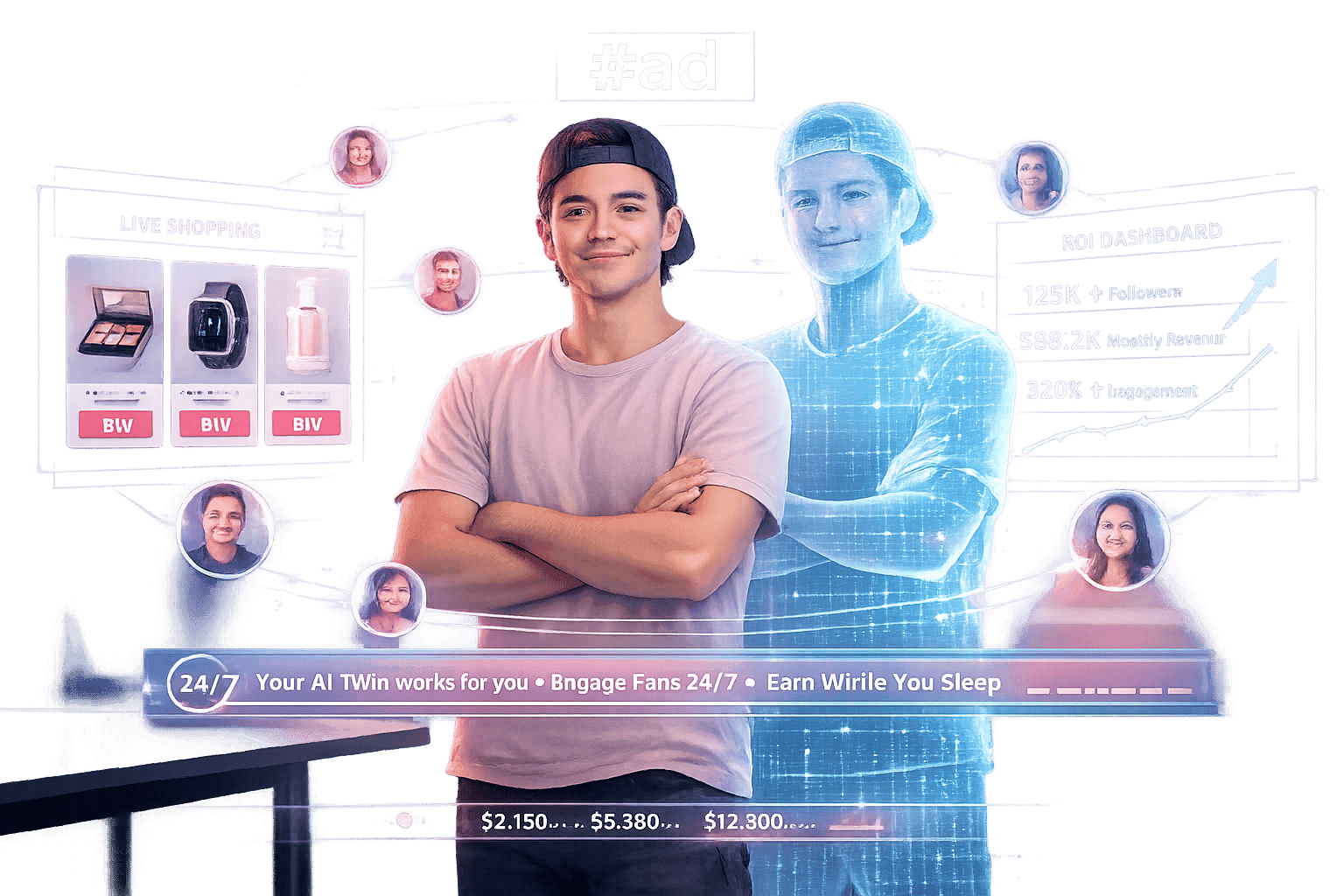
Influencer marketing has evolved into a data-driven, ROI-focused strategy, blending AI tools with human creators to drive measurable results. Here's what you need to know:
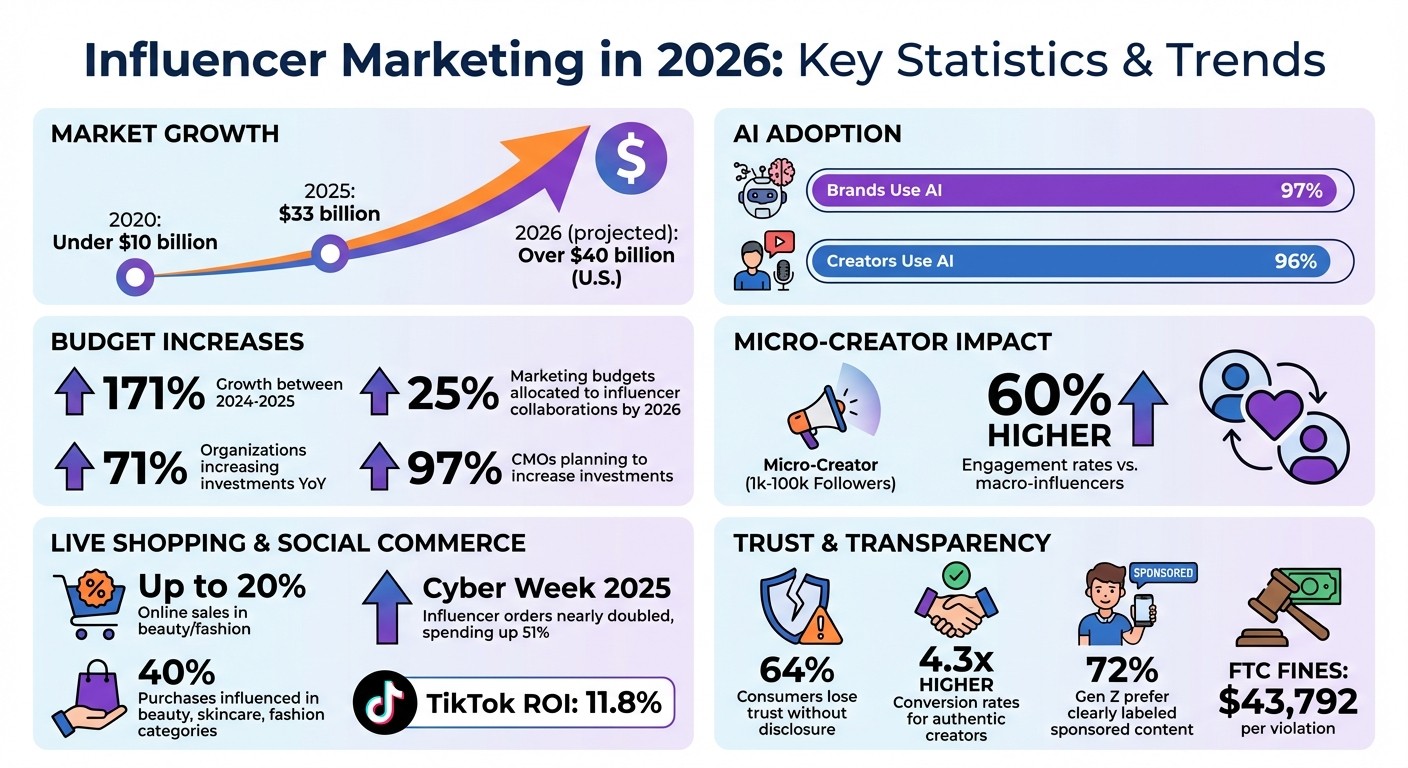
Market Growth: From under $10 billion in 2020 to $33 billion by 2025, with projections exceeding $40 billion in the U.S. by 2026.
AI Integration: 97% of brands and creators use AI for content creation and campaign optimization. Tools like TwinTone’s AI Twins enable scalable, multilingual content production.
Shift in Metrics: Metrics like customer lifetime value and full-funnel attribution now matter more than likes or shares.
Budget Increases: Influencer marketing budgets grew 171% between 2024 and 2025, with 71% of organizations increasing investments year-over-year.
Micro-Creators on the Rise: Smaller creators (1,000–100,000 followers) achieve up to 60% higher engagement rates and are now key partners for brands.
Live Shopping Growth: Social commerce, driven by influencers, accounts for up to 20% of online sales in industries like beauty and fashion.
Ethical Concerns: Transparency in AI usage and disclosure of partnerships is critical, with the FTC enforcing stricter guidelines.
The takeaway? Combining AI efficiency with human storytelling is the key to success in today’s influencer landscape. Brands that prioritize trust, long-term partnerships, and measurable ROI are leading the way.
Influencer Marketing Statistics and Growth 2020-2026
How Influencer Marketing Really Works in 2026 | Brand Insider Secrets with Megan Vasquez
In the video, Megan discusses how brands are now leveraging AI tools for localized influencer campaigns to ensure content resonates across different regions.
AI Tools Changing Creator Content
AI has shifted from being a novelty to a necessity in creator marketing. By 2026, 97% of brands and 96% of creators will be using AI in some form. Why? Because AI takes over repetitive tasks, freeing creators to focus on strategy and storytelling. Brands no longer have to deal with delays caused by scheduling shoots or waiting for responses. Instead, AI tools streamline these processes, allowing for faster and more efficient content production.
TwinTone's AI Twins for UGC at Scale
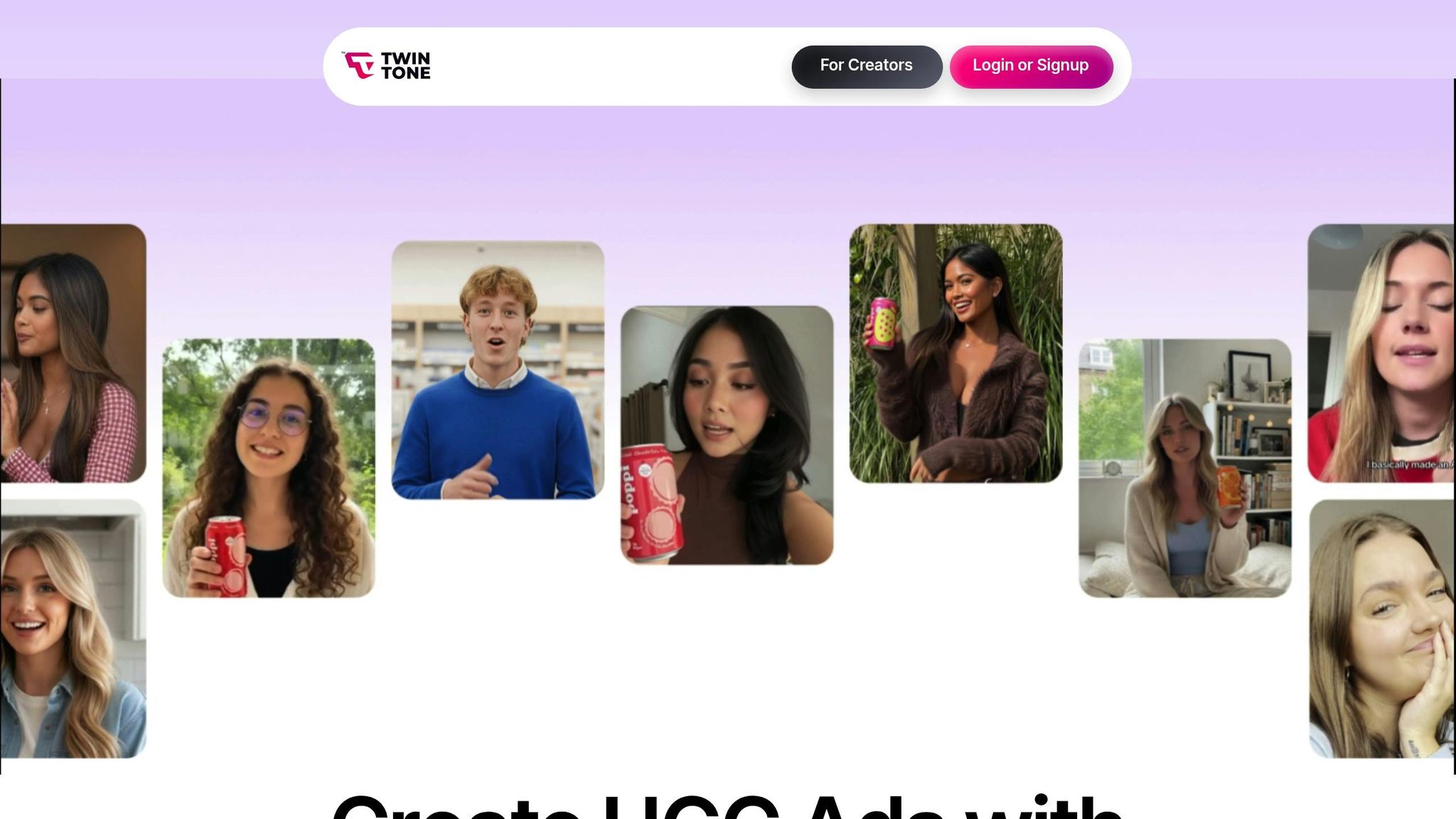
TwinTone has introduced a game-changer: AI Twins. These are digital versions of real creators that replicate their voice, mannerisms, and style. Brands can use these AI Twins to produce product demos, unboxing videos, or shoppable content instantly, skipping the usual hurdles like scheduling conflicts or rate negotiations. They can even host live shopping streams 24/7 on platforms like TikTok, Amazon, YouTube, and Shopify, answering audience questions in real time.
The biggest advantage? Scalability. A single creator can only produce a limited amount of content manually. With an AI Twin, that same creator can generate an endless number of videos tailored to different products, languages, and audience segments. Brands get the best of both worlds: the personality and authenticity of a real creator combined with the efficiency and volume that traditional influencer partnerships can't achieve.
Creating Personalized Content at Scale
AI doesn’t stop at automation - it excels at personalization. Brands now have the tools to instantly adapt their messaging across languages and contexts, making global campaigns far easier to manage. For example, TwinTone supports 40+ languages, enabling a single AI Twin to deliver the same message in English, Spanish, Mandarin, or any other language, all while maintaining the original creator's tone.
AI also tracks audience sentiment in real time, tweaking content to maximize engagement. If a specific product feature resonates with one demographic, AI can highlight that feature in videos targeted at similar groups. This level of precision was impossible with traditional content creation, which required separate shoots and edits for every variation.
TwinTone’s pricing plans make these advanced personalization features accessible to brands of all sizes.
TwinTone Pricing Plans Comparison
Plan | Price | AI UGC Videos | Key Features |
|---|---|---|---|
Starter | $110/mo | 10 videos | Real creator avatars, multilingual output, up to 60-second videos |
Pro | $220/mo | 20 videos | Expressive gestures, advanced voice styles, multilingual variations |
Enterprise | Custom | 50+ videos | Premium creators, AI livestreaming access, priority support, API integration |
The Enterprise plan stands out with its API integration. This feature allows brands to seamlessly incorporate TwinTone into their marketing workflows. Imagine automatically generating product videos for every SKU in your catalog or creating new content based on inventory changes, seasonal trends, or campaign performance - all without lifting a finger. This level of automation and customization brings a whole new level of efficiency to content marketing.
New Trends in the Creator Economy
The creator economy is shifting gears in a big way. By 2026, brands are expected to allocate around 25% of their marketing budgets to influencer collaborations, with 97% of CMOs planning to increase these investments even further. But this isn’t just about throwing more money at influencers - it’s about making smarter choices. Instead of obsessing over follower counts, brands are focusing on building genuine, long-term partnerships with creators who truly understand and connect with their audiences. This shift has brought micro-creators into the spotlight as key players in fostering real engagement.
Why Micro-Creators Are Growing
As brands lean into relationship-driven marketing, micro-creators - those with followings between 1,000 and 100,000 - are proving to be invaluable partners. Audiences are turning away from overly polished, aspirational content and gravitating toward creators who feel more relatable and authentic. Micro-creators thrive in this space because they often hold niche authority, commanding smaller, more focused communities where their influence feels personal and meaningful.
Take TikToker Ashton Moon (89,000 followers), for example. In late 2025, she highlighted a potential shipping issue with the fashion brand Sézane. The brand’s thoughtful and community-focused response didn’t just resolve the issue - it earned them trust and loyalty that extended well beyond the immediate situation. Another major shift is how brands collaborate with these creators. The outdated "pay-to-post" model is being replaced by a "creator-as-counsel" approach, where influencers are brought into the fold during product development and marketing planning. For instance, the jewelry brand Heaven Mayhem launched a "community design panel" in late 2025, inviting influencers to directly contribute to the design and promotion of a new collection. This approach ensures products resonate with audiences before they even hit the market.
Private Communities and Creator-Led Platforms
As social media platforms become increasingly crowded and unpredictable, brands and creators are exploring alternative spaces for more meaningful engagement. Platforms like Substack, Discord, and Patreon are emerging as hubs for private communities, offering a direct connection to highly engaged fans while bypassing the chaos of social media algorithms. These controlled environments allow for deeper, data-driven interactions and help brands build lasting partnerships with creators.
The strategy is paying off. Creators who invest in private communities can focus on "depth, taste, and substance" rather than churning out high-volume, low-impact content. Substack has even introduced integrated advertising, enabling brands to place ads directly in creator newsletters. This setup combines the reach of traditional ads with the added trust of a creator’s voice. It’s a win-win: creators diversify their income streams, and brands connect with audiences who are genuinely invested in the content.
Meanwhile, in-person events are making a strong comeback. For example, Gymshark's "LIFT:LDN" event in 2025 brought together ambassadors and fans for a multi-day fitness festival in London. This real-world experience didn’t just deliver unforgettable moments - it also sparked months of online storytelling, turning attendees into content creators themselves. Brands are recognizing that blending physical experiences with digital amplification builds loyalty in ways that purely online campaigns simply can’t match.
"The strongest strategies in 2026 will combine tastemakers, experts, and long-term brand advocates to build both cultural relevance and credibility." - Shana Davis, Founder, Ponte Firm
Live Shopping and Shoppable Content Growth
Live shopping is no longer just a trend - it's becoming a major driver of direct revenue. By 2026, social commerce is expected to be fully integrated into platforms like TikTok, Amazon, and YouTube, allowing customers to make purchases without leaving the content they're viewing. In sectors like beauty and fashion, live influencer-driven commerce already accounts for up to 20% of online sales. Meanwhile, social media creators influence as much as 40% of purchases in categories like beauty, skincare, and fashion.
The numbers speak for themselves. During Cyber Week 2025, influencer-driven orders almost doubled compared to the previous year, with spending in this area growing by 51% - all while commission costs stayed steady. TikTok even reported an impressive short-term ROI of 11.8% for influencer-led content that year.
Using Live Shopping as a Main Strategy
Brands are no longer treating live shopping as a side experiment. It's becoming a core sales channel. A great example of this shift is QVC Group's launch of the first 24/7 live social shopping experience on TikTok Shop in April 2025. By combining their expertise in live video with TikTok's discovery algorithms, they activated 74,000 TikTok creators to showcase products. The result? Higher conversion rates and increased average order values. Live shopping events also create a sense of urgency with exclusive, limited-time offers, which encourages shoppers to act quickly.
"Live shopping events are a great way for shoppers to get special discounts or access to very limited supplies of items in a competitive online event." – Olivia Savage, Senior Marketing Strategist, impact.com
Some brands are taking things even further by moving beyond one-off events. For instance, Olipop achieved a staggering 982% ROI by combining product seeding with performance commissions. Their creator community now drives 12% of their total sales. Similarly, Moonboon partnered with over 300 creators across five markets, generating more than $1 million in affiliate sales. Their "Ambassador Family" contributes about 10% of monthly net sales, with an average ROI of 6.5x on creator activations. To align creator incentives with actual sales, many brands are now shifting to compensation models that include a base payment plus 10–15% commissions and tiered bonuses.
Creating Shoppable AI Content with TwinTone
TwinTone is taking live shopping to the next level with its AI-powered platform. It allows brands to scale their live shopping and shoppable content efforts without the hassle of complex coordination. Using AI Twins of real creators, TwinTone helps brands produce authentic user-generated content (UGC) videos and run continuous AI livestreams on platforms like TikTok, Amazon, YouTube, Twitch, and Shopify.
With TwinTone, brands can create shoppable videos where AI creators present products using engaging visuals. They can also optimize content for platform-specific algorithms with captions and on-screen text. Plus, livestream highlights can be repurposed into paid ads or email campaigns, cutting down on production costs.
TwinTone offers flexible pricing to meet different needs:
Starter Plan: $110/month for 10 AI UGC videos featuring real creator avatars and multilingual output.
Pro Plan: $220/month, doubling the video capacity while adding expressive gestures and advanced voice styles.
Enterprise Plan: Custom pricing for large-scale campaigns with 50+ videos, AI livestreaming, and premium creator options tailored to specific brands.
"The traditional lines between 'brand' and 'performance' budgets finally blur. Creators aren't just building awareness. They're driving trackable revenue." – Sanchit Sareen, RVP of Influencers & Creators, impact.com
Ethics in AI Marketing
Trust is one of the biggest hurdles as AI becomes more integrated into influencer marketing. Less than half of consumers are willing to trust AI, and that number has dropped since 2022. In fact, brand collaborations with AI-driven social accounts fell by about 30% in the first eight months of 2025 compared to 2024, reflecting growing skepticism toward synthetic content.
Trust also takes a hit when influencers fail to disclose their brand partnerships. A striking 64% of consumers say they lose trust in influencers who don’t disclose relationships with brands. On the flip side, influencers who maintain authenticity see conversion rates that are 4.3 times higher than those of inauthentic creators. For brands, over-reliance on AI vs. human influencers or overly polished synthetic content can alienate audiences, who increasingly value genuine human connections. This creates a delicate balance between embracing AI innovation and preserving authenticity.
Keeping Creator Authenticity Intact
Given these trust issues, preserving the human element in content creation is critical. The ethical use of AI lies in enhancing, not replacing, human creativity. AI can assist with tasks like editing, brainstorming, or administrative work, but leaning too heavily on it risks making content feel artificial. The most successful strategies in 2026 involve working with human creators who use AI to amplify their reach while staying true to their "human edge" and maintaining trust within their communities.
Brands are also leaning into "mid-fi" content - casual, behind-the-scenes material that highlights the human effort involved in creation. This approach helps counter the monotony of overly polished, AI-generated content. For virtual or synthetic influencers, it’s important for brands to develop personas that reflect their core values and demonstrate thought leadership. Additionally, tools like AI-powered deepfake detection and pattern recognition are becoming essential for vetting influencer partners to ensure they’re not relying on fake engagement or deceptive AI-generated personas.
"The savviest creators are blending creative excellence with measurable impact, treating their influence as a business with a growth strategy." – Jeff Melton, Senior Director of Global Creator Community & Consulting, impact.com
To further support authenticity, brands should include clauses in influencer contracts that address key issues. These clauses can require verified follower counts, compliance with disclosure rules (like using #ad or #AI), and measures to prevent plagiarism. Regularly monitoring influencer partners for sudden changes in tone, style, or values can also help catch instances where content might have been outsourced to AI or third parties.
Being Transparent About AI Influencer Campaigns
Transparency about AI usage isn’t just a regulatory box to check - it’s a way to maintain audience trust and campaign effectiveness. The FTC ramped up enforcement in 2025, taking action against 15 influencers and brands in the first half of the year - a 40% increase from 2024. The penalties are steep, with civil fines for non-disclosure violations reaching $43,792 per violation as of 2025. The FTC’s December 2024 guidance made it clear: creators and brands must disclose when AI is used to generate or significantly alter endorsement content.
Disclosures need to be clear and prominent. They should appear in the first three lines of captions or at the start of video content, and for livestreams, both verbal and on-screen disclosures are required. Using platform-native tools - like Instagram’s Branded Content Tag, TikTok’s partnership labels, or YouTube’s "Paid Promotion" marker - alongside text disclosures such as #ad or #AI is considered best practice.
Here’s a breakdown of disclosure requirements across major platforms:
Platform | AI/Sponsored Disclosure Requirement |
|---|---|
Branded Content Tag + "#ad" or "#AI" in the first 3 lines of caption | |
TikTok | "Shop Collaboration" label or #ad/#partner in the first 3 lines |
YouTube | "Paid Promotion" label + "#ad" in the title or first line of description |
Livestreams | Verbal disclosure at the start + periodic on-screen text overlays |
Stories | Built-in brand sticker or high-contrast text overlay |
Interestingly, 72% of Gen Z audiences prefer clearly labeled sponsored content over undisclosed promotions. Being upfront about AI use doesn’t harm engagement - it actually strengthens trust. To ensure disclosures are effective, test them on mobile devices to confirm they’re visible and not hidden behind "see more" links or platform design quirks. Additionally, keeping a detailed partnership log that tracks relationships, compensation, and disclosure methods for each post can help brands stay audit-ready.
How to Succeed in 2026
The brands leading the way in 2026 aren't choosing between human creators and AI - they're combining the strengths of both. With influencer marketing budgets up by 171% since 2024 and the U.S. creator economy projected to surpass $40 billion by 2026, brands are under pressure to scale their efforts while maintaining trust. The key? Adopting a hybrid model that blends human creativity with AI-driven efficiency. Here’s how this approach, along with precise ROI tracking, can set brands up for success.
Using a Hybrid Creator Model
A hybrid creator model combines the personal touch of human influencers with the scalability of AI-powered tools. This approach strikes a balance between authentic storytelling and operational efficiency. Human creators bring valuable insights that resonate deeply with their communities, while AI tools streamline the process by generating content like voice-overs, creating personalized variations of user-generated content (UGC), and even managing engagement 24/7.
Forward-thinking brands are already integrating AI into their workflows for tasks like concept creation, influencer selection, and performance analysis. At the same time, they’re giving creators the freedom to shape the narrative. Currently, 40% of brands employ this method, allowing influencers to act as strategic partners rather than just content distributors.
This "creator-as-counsel" strategy engages influencers in the early stages of product and marketing development. Take Kopari Beauty, for example. By collaborating with model Ella Halikas, they identified product features that resonated with their audience, which led to impressive conversion rates in the prestige skincare market.
To maximize impact, brands should structure their influencer partnerships into tiers. Micro-influencers (10,000–100,000 followers) often achieve engagement rates 5.2× higher than macro-influencers. Tools like TwinTone allow these micro-creators to produce a single authentic demo, which AI can then adapt into dozens of variations tailored by language, platform, or messaging. This ensures both authenticity and scalability.
"The strongest strategies in 2026 will combine tastemakers, experts, and long-term brand advocates to build both cultural relevance and credibility." – Shana Davis, Founder, Ponte Firm
Locking in creators with 12-month retainers can also save brands 20–40% on costs while securing consistent output.
As AI simplifies content production, the focus shifts to tracking ROI to ensure campaigns deliver measurable results.
Tracking ROI in AI-Driven Campaigns
Measuring ROI in influencer marketing has always been tricky. In fact, 73% of marketers find it difficult to evaluate performance, and 50% of marketing leaders cite ROI tracking as a major hurdle. Thankfully, AI analytics tools are changing the game, offering 75–85% accuracy in predicting campaign performance by analyzing factors like historical data, audience demographics, and creator size.
To get a clearer picture of ROI, brands should move beyond last-click attribution. Multi-touch models like Time-Decay or U-Shaped attribution give credit to influencers who impact various stages of the customer journey. Tools like UTM parameters and unique promo codes can further refine attribution. For example, in 2025, beverage brand Olipop used performance-based tracking to attribute 12% of total sales to influencer traffic, achieving a staggering 982% ROI.
Rather than focusing on vanity metrics, prioritize actionable insights. Key metrics include sentiment analysis, share-to-like ratios, video completion rates, and cost per conversion. Platforms like TwinTone offer real-time dashboards to monitor these metrics, making it easier to adjust strategies on the fly.
Setting SMART goals - specific, measurable, achievable, relevant, and time-bound - before launching campaigns is critical. For instance, aim to increase website traffic by 25% or reach a 12:1 return on ad spend (ROAS). Use industry benchmarks as a guide: B2B influencer campaigns generally hit an 8:1 ROAS, while ecommerce campaigns average 12:1. If click-through rates dip below 0.5%, it’s time to tweak your call-to-action or creative.
Fraud detection is another essential component. With influencer fraud costing brands $1.3 billion annually and up to 28% of followers potentially being fake, it’s vital to use AI tools to analyze engagement patterns. Contracts should include terms requiring influencers to maintain at least 95% authentic followers.
Lastly, embrace first-party data attribution using server-side tracking to navigate the challenges posed by the loss of third-party cookies. Baby accessory brand Moonboon used this approach with Shopify's infrastructure, working with over 300 creators across five European markets. The result? Over $1 million in affiliate sales and a 6.5× average ROI. These strategies ensure not only accurate measurement but also a competitive edge in the evolving creator economy.
Conclusion: Staying Competitive in 2026
Influencer marketing has become a driving force for measurable growth. Between 2024 and 2025, budgets for influencer campaigns surged by 171%, and a staggering 97% of CMOs plan to allocate even more resources in this area. Partnering with creators is no longer optional - it’s essential. The brands that thrive in 2026 will combine the efficiency of AI with the authenticity of human creators. Tools like TwinTone make it possible to scale personalized UGC while ensuring creators remain central to key strategies. This shift calls for a more thoughtful approach to working with creators.
A successful strategy now positions creators as true partners in product development, not just as content distributors. Micro-creators, in particular, are making waves with targeted engagement rates that can be up to 60% higher than those of macro-influencers. At the same time, live shopping and shoppable content are redefining how consumers discover products, with creator-driven commerce projected to account for as much as 20% of online sales in certain industries.
Earning trust through transparency, ethical practices, and genuine storytelling is more important than ever. As Eve Lee, Founder of The Digital Fairy, explains:
"AI can't read the room or capture the nuance of human emotion. It relies on data sets from the past to create more of the same".
This highlights why a hybrid approach - where AI handles scaling while humans bring creativity and emotional nuance - is so effective.
To succeed in 2026, brands must focus on three key actions: embracing AI tools that enhance rather than replace creators, building lasting partnerships instead of relying on one-off collaborations, and using the precise tracking capabilities of paid media to measure ROI. By blending AI and human creativity, fostering long-term relationships, and keeping a close eye on performance metrics, brands can stay ahead in the evolving digital marketplace.
As the creator economy continues to grow, adapting to these trends will be crucial. Businesses that act now to refine their strategies will be well-positioned to turn creator marketing into a reliable system for driving results.
FAQs
How is AI technology like TwinTone reshaping influencer marketing in 2026?
AI tools such as TwinTone are changing the game in influencer marketing, allowing creators to connect with their audiences on a more personal level - at scale. By leveraging advanced AI, TwinTone enables real-time conversations that feel emotionally in tune and customized to individual preferences, even accounting for subtle cultural differences. This creates stronger, more genuine bonds between influencers and their followers.
On top of that, platforms like TwinTone are reshaping workflows by automating tasks like live-streaming, delivering personalized content, and analyzing audience sentiment. These capabilities free up creators to focus on fostering trust and loyalty within their communities. Meanwhile, brands benefit from campaigns that feel more relatable and resonate more deeply with audiences. By 2026, AI isn’t just streamlining influencer marketing - it’s raising the bar to meet the shifting expectations of modern audiences.
Why are smaller creators becoming more influential in marketing?
Micro-influencers, or smaller creators, are becoming a key part of marketing strategies because of their ability to connect closely with niche communities. Their followers tend to be highly engaged and trust their recommendations more compared to larger influencers. This trust translates into stronger relationships and better engagement rates.
With consumers leaning more toward authentic content and moving away from traditional advertising, brands are increasingly partnering with these creators. Micro-influencers have a knack for building trust and loyalty within their audiences, making them a valuable asset for companies aiming to create meaningful connections through relatable and genuine content.
What ethical challenges should brands be aware of when using AI in influencer marketing?
When using AI in influencer marketing, brands must carefully navigate ethical challenges to uphold trust and maintain a genuine connection with their audience.
Transparency is a top priority. People should always be aware when AI is behind content creation or interactions. If this isn't disclosed, it can come across as deceptive, ultimately damaging a brand's credibility.
Another key issue is authenticity. AI-generated content can sometimes feel impersonal, lacking the human touch that audiences often connect with. If the content seems artificial, it risks alienating the very people it aims to engage. Additionally, brands need to watch out for bias in AI algorithms, as these systems can unintentionally perpetuate stereotypes or spread inaccurate information if not properly managed.
Finally, consumer privacy must be safeguarded. AI tools often analyze personal data to tailor experiences, but this should be done responsibly. Ensuring human oversight is critical to prevent unethical practices, like misleading endorsements or exaggerated claims, which could erode trust and tarnish a brand's reputation. AI should enhance marketing efforts, not replace ethical judgment.