How Creators Monetize with AI Access
How to build a futureproof relationship with AI

AI tools are reshaping how creators earn from their content. Instead of losing revenue to AI systems scraping their work, creators can now use AI access control to manage and monetize this activity. This system allows creators to:
Charge AI bots per request (e.g., $0.001 per HTTP request).
Block or allow bots based on their purpose.
Track and analyze bot traffic to identify opportunities for revenue.
Tools like TwinTone take this further by creating AI "Twins" of creators, automating content production, hosting livestreams, and generating income through subscriptions, affiliate sales, and licensing deals. By combining pay-per-crawl frameworks and AI-driven automation, creators can turn unauthorized use of their content into steady income streams.
The key to success lies in leveraging analytics to refine pricing, using AI tools to scale production, and balancing free and premium content to attract and retain paying audiences. Early adoption of these strategies can help creators stay ahead in the growing AI economy.
The NEW Creator Economy : How to Monetize in the AI Age
How AI-Driven Access Control Works
Recovering lost revenue from AI scraping requires a smart, tech-driven system that can automatically identify, categorize, and monetize bot traffic. AI access control systems do just that - they determine who can access your content and at what cost. Unlike traditional content delivery methods, which serve the same content to all users, these systems specialize in detecting different types of traffic, especially AI bots and crawlers, and applying custom rules based on their behavior.
Using real-time traffic signals like request patterns, user agents, and IP addresses, the system distinguishes between legitimate users, authorized AI agents, and unauthorized scrapers. When a bot attempts to access your content, the system quickly categorizes the traffic and directs it to the appropriate access tier or paywall, enabling monetization opportunities automatically. This is the foundation of how AI access control operates.
What Is AI Access Control?
AI access control leverages advanced detection and behavior analysis to identify and manage bots. Once a bot is detected, it’s classified into one of three categories: allowed, monetized, or blocked. This process happens automatically, even for thousands of access requests, without requiring constant manual intervention.
This system goes far beyond the basic bots.txt file by offering detailed bot mitigation strategies. It gives you a clear view of which bots are accessing your content and how they’re using it. With AI access control, you can manage bots in three key ways:
Allow: Trusted or authorized bots gain free access, ensuring your content remains discoverable.
Charge: Require bots to pay for access, turning unauthorized scraping into a revenue source.
Block: Deny access to unwanted bots to protect your intellectual property.
Why Creators Benefit from AI Access Control
Automating the detection, classification, and monetization of bot traffic allows content creators to focus on what they do best - creating content - while ensuring their pricing policies are enforced. This system ensures that data-gathering activities contribute fairly to your income, turning what was once uncompensated traffic into a new revenue stream.
Real-time dashboards provide insights into bot traffic patterns and the specific content being targeted. This helps ensure that only authorized bots enjoy full access, while others are monetized appropriately.
The system also offers flexible pricing models, letting you tailor policies based on usage type or client needs. For example, you can implement pay-per-crawl, aggregation-based fees, or outcome-based pricing models - giving you more options than standard subscription paywalls. Importantly, it maintains content discoverability for authorized AI agents while blocking malicious ones.
AI Access Control vs Standard Paywalls
Traditional paywalls often struggle to adapt to the complexities of bot traffic, offering a one-size-fits-all approach designed for human users. AI access control, on the other hand, is built to handle the nuances of bot activity. Here’s how they compare:
Feature | AI-Driven Access Control | Standard Paywalls |
|---|---|---|
Bot Detection | Advanced detection of both known and unknown bots | Limited, often manual identification |
Granular Control | Customizable policies for different bots with behavioral analysis | Uniform access for all visitors |
Monetization | Flexible pricing models for bots (allow, monetize, block) | Fixed subscription or basic paywall |
Real-Time Insights | Dashboards tracking bot activity and content usage | Minimal visibility into bot behavior |
Scalability | Automatically scales with increased AI traffic | Requires manual adjustments |
This comparison highlights how AI-driven systems provide better tools for managing bot traffic and monetizing content. With real-time personalization and detailed insights, you can negotiate licensing deals tailored to specific usage scenarios. The reporting features also help you make smarter decisions about partnerships and pricing.
AI access control integrates easily with your existing infrastructure, requiring only simple configuration updates. It works alongside your current content delivery and security systems to handle authentication, verification, and payment processing - all while offering a centralized dashboard for monitoring and insights.
Emerging standards, like the IAB Tech Lab's AI Content Monetization Protocols (CoMP), are also helping to establish frameworks for authentication, payment systems, and content management in AI-driven environments.
Building Your Exclusive Content Strategy
Crafting an exclusive content strategy that works starts with understanding what your audience finds valuable enough to pay for. The key is to identify content that drives revenue, set pricing that reflects its worth, and strike a balance between free and premium offerings.
Which Content Types Generate Revenue
Certain types of exclusive content resonate deeply with audiences and encourage subscriptions:
Tutorials and educational content: People are willing to pay for step-by-step guides, insider tips, or specialized knowledge they can’t easily find elsewhere. This type of content provides real value by solving problems or teaching new skills.
Behind-the-scenes content and early releases: Audiences love feeling like insiders. Sharing your creative process, sneak peeks, or preliminary drafts builds excitement and a sense of exclusivity.
Live streaming and real-time content: Live events like Q&A sessions, workshops, or product launches stand out because they’re interactive and time-sensitive. This immediacy often justifies a premium price.
Curated collections and compilations: Organized, themed collections save time and offer a clear learning path, making them appealing to those seeking convenience and structure.
The secret to making these formats work lies in their uniqueness and scarcity. Your premium content should deliver something that free content doesn’t - whether it’s deeper insights, earlier access, or a more engaging experience. Once you’ve nailed down the types of content that generate revenue, the next step is setting the right price.
How to Set Pricing and Access Tiers
Pricing your content effectively involves weighing production costs, market demand, and the value it provides to your audience. Here are two common approaches:
Flat-rate pricing: This straightforward model works well if you’re offering a single level of access. It’s simple for both you and your audience to understand.
Tiered pricing structures: With this model, you can create multiple access levels. For example:
A basic tier might include standard content.
A premium tier could unlock exclusive materials.
A top-tier option might offer perks like personalized consultations or early access.
Each tier should clearly outline its benefits so subscribers see the value in upgrading. For instance, AI monetization platforms have shown how pricing can be granular, charging per access or per use, which helps reflect the true value of the content. Experimenting with A/B testing can also help you find the sweet spot between pricing and subscriber growth.
Once your pricing is set, the next challenge is deciding how to divide your content between free and paid offerings.
Balancing Free and Paid Content
Striking the right balance between free and premium content is crucial for attracting new viewers while retaining paying subscribers. Free content plays a critical role as a gateway - it draws people in, builds trust, and showcases your expertise. Without enough free material, potential subscribers may never see what you bring to the table.
A good rule of thumb is to aim for 70–80% free content and 20–30% premium content. This ratio ensures you’re reaching new audiences while still generating revenue from exclusive offerings.
Placement matters, too. Use free content to establish trust and credibility before introducing gated, advanced material. Time-based exclusives can also add value - offering new content to subscribers first creates urgency and rewards loyalty.
Your approach may need to evolve depending on where you are in your journey. If you’re just starting out, offering more free content can help you build credibility and grow your audience. On the other hand, established creators with a loyal following can lean more heavily on premium content. Keep an eye on conversion rates - how many free viewers become paying subscribers - and adjust your strategy to optimize both growth and revenue.
Monetizing with AI Tools Like TwinTone
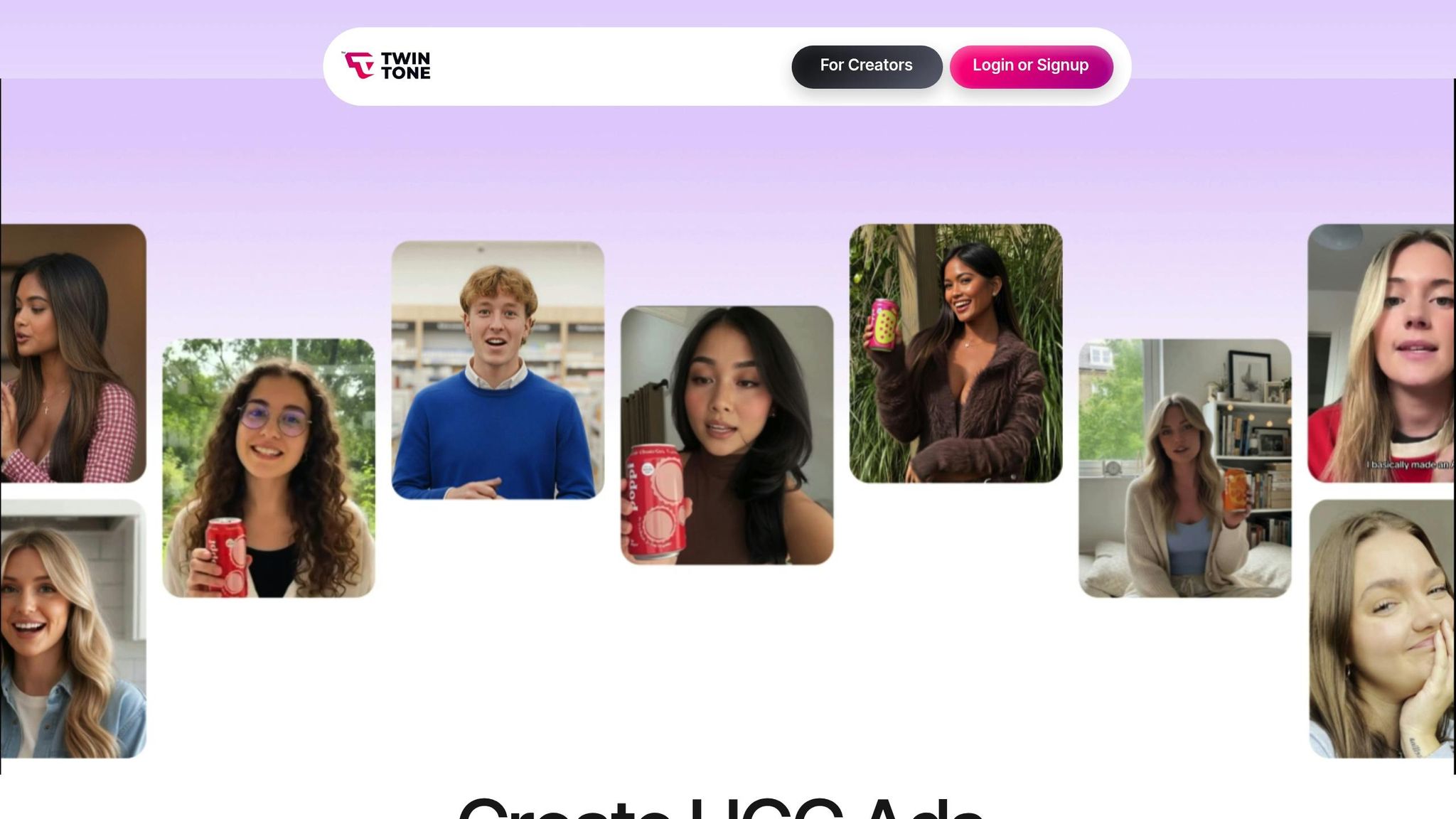
Expanding on the idea of AI-driven content management, TwinTone offers a practical example of how creators can directly monetize their work using AI tools. By combining automation with your personal style, TwinTone helps scale your content output while keeping that all-important personal connection intact. This approach naturally complements the monetization strategies we've already explored.
TwinTone creates an AI Twin of you - essentially, a digital version of yourself - that can generate branded content and host live streams automatically. Imagine being able to "appear" in multiple places at once: creating content for various brands, hosting live streams across different time zones, or engaging with audiences around the clock, even while you're asleep.
Using AI Twins to Scale Content Creation
The standout benefit of AI Twins is their ability to keep producing content without pause. TwinTone lets you generate on-demand user-generated content (UGC) and run 24/7 live product showcases, all while maintaining your unique voice and style.
Your AI Twin can handle multiple tasks at once, such as demonstrating different products for various brands, each with tailored messaging. While you focus on strategic tasks or creating unique content, your AI Twin can manage routine tasks like product demos, tutorials, and livestreams.
The technology behind TwinTone is trained on your best content, learning your communication style, favorite phrases, and visual preferences. This ensures the content it creates feels like you, not a generic AI output. You remain in control of what the AI Twin produces, benefiting from its ability to scale your efforts without sacrificing your personal brand.
This setup works best when you let your AI Twin handle high-volume, repetitive tasks, while you step in for moments that require a more personal touch. For instance, your AI Twin can take care of product demonstrations, but you might want to personally handle major announcements, community Q&As, or deeply personal content that strengthens your connection with your audience.
Revenue Models with AI-Generated Content
AI-generated content opens up several revenue opportunities, allowing you to diversify your income streams.
Subscription-based access: Offer exclusive AI-generated content to paying members. Subscribers can pay monthly or annually for premium content created by your AI Twin. You could even introduce tiered subscriptions, with higher-paying members receiving more personalized or detailed content.
Pay-per-view events: Charge for individual content pieces or special live events. This model is ideal for specialized tutorials, product launches, or other exclusive, time-sensitive material.
Affiliate sales: Earn commissions when your AI Twin promotes products in livestreams or videos. The AI Twin can highlight features, demonstrate usage, and share affiliate links, earning you a percentage of each sale.
Shoppable videos: Integrate direct purchase links into your AI-generated content. This makes it easy for viewers to buy products directly from the video, reducing friction and boosting conversion rates.
Licensing deals: Partner with brands that want to use your AI Twin's likeness in their content. This creates sponsored opportunities where you earn based on usage metrics, giving you a scalable income source as your audience grows.
You can experiment with these models to find the best fit for your audience. Monitor performance, test different approaches, and adjust your AI Twin's content focus to maximize results.
Example: AI Livestream Shopping
One practical application of these revenue models is AI-powered livestream shopping, an innovative way to boost sales and engagement.
Your AI Twin can host livestreams showcasing products, answering common questions, and creating urgency with limited-time offers - all while sounding like you. This is especially useful for e-commerce creators who want to reach audiences in multiple time zones without being tied to a rigid schedule.
Imagine your AI Twin running continuous product showcases on platforms like TikTok, Amazon, YouTube, or Shopify. Viewers can interact with the stream, explore products, and make purchases directly - all in real time. The AI Twin can even adapt its presentation based on viewer engagement, focusing on the products that generate the most interest.
This approach allows you to capture sales opportunities around the clock, even when you're busy creating other content, spending time with loved ones, or simply taking a break. For creators new to this concept, start by training your AI Twin with products you're already familiar with. This ensures the AI has strong, relevant data to work with. Pay attention to viewer feedback through comments and reactions to fine-tune your AI Twin's style and performance.
The goal here isn’t to replace you but to extend your reach. Let your AI Twin handle the repetitive, time-consuming tasks so you can focus on building deeper connections with your audience and tackling the moments that matter most.
Scaling Your Content Production with AI
Once your AI Twin is up and running, and revenue is flowing, the next step is figuring out how to scale your content production without losing the quality and authenticity your audience loves. The goal here isn't to replace yourself entirely but to expand your reach and output while keeping your unique voice front and center. This means automating repetitive tasks so you can focus on the creative and strategic aspects that truly matter.
Automating Content Production
Time is often the biggest hurdle when it comes to creating content. You can't be everywhere at once, and manually producing content for every platform, product, or audience segment can quickly become overwhelming. This is where AI automation steps in, taking care of repetitive, high-volume tasks so you can focus on what you do best.
Some content types are perfect for automation. Think product demos, tutorial videos, social media posts, and routine livestreams - formats that follow predictable structures. For example, a typical product demo might include an introduction, a rundown of features, a usage demonstration, and a call to action. Your AI Twin can handle these tasks seamlessly, freeing you up to focus on strategy, community engagement, and content that requires your personal touch.
Tools like TwinTone make this process even easier. With TwinTone, you can quickly turn product images into on-demand UGC videos, skipping the need for extensive filming and editing. Even better, your AI Twin can produce content in over 40 languages and distribute it across platforms like TikTok, Instagram, and YouTube.
One smart way to work is to batch your creative efforts during your most productive hours and let your AI Twin handle the repetitive production tasks. This ensures a steady stream of content without requiring you to be "on" around the clock. For instance, instead of filming 20 product demos yourself, you can provide your AI Twin with images and key talking points. While the AI generates those videos, you can focus on planning your next campaign or building deeper connections with your audience.
As automation increases your content output, it's crucial to ensure your unique voice isn't lost in the process.
Keeping Your Voice in Automated Content
A common worry with automation is that it might dilute your authenticity. After all, your audience connects with your personality, your style, and your perspective. The challenge is to ensure that AI-generated content reflects these qualities.
To maintain your voice, start by feeding your AI Twin examples of your best-performing content. Include a mix of formats like casual social media posts, in-depth product reviews, storytelling videos, and educational tutorials. This variety helps the AI learn how you adapt your tone for different contexts while staying true to your core personality.
Document the key elements of your style - your go-to phrases, your sense of humor, the values you emphasize, and even the topics you avoid. These details should be part of your AI Twin's training materials, ensuring it feels like an extension of your brand, not a separate entity.
You can also customize the visual style of your AI-generated content. TwinTone, for instance, allows you to change your AI creator's outfits, keeping your content fresh and aligned with your brand. This visual consistency reinforces your identity across all platforms.
When you're just starting with AI-generated content, it's a good idea to review everything before publishing. Spot-check videos, listen to audience feedback, and tweak your AI Twin's training as needed. Over time, you'll gain confidence in which tasks your AI Twin can handle independently and which ones require a personal touch.
Think of AI as a tool to amplify your voice, not replace it. While your AI Twin handles the high-volume tasks, you stay in control of the messaging, strategy, and content that matters most.
Segmenting Audiences for Personalized Content
Not all followers are the same, and that's where audience segmentation comes in. New followers might need introductory content, while loyal fans crave deeper insights. Different demographics also respond to different styles of messaging. AI makes it possible to tailor content for these varied groups at scale - something that would be impossible to do manually.
AI-powered audience segmentation analyzes behavior, engagement patterns, demographics, and preferences to create distinct audience groups. From there, your AI Twin can generate multiple versions of the same core message, tweaking tone, pacing, or focus to suit each segment.
This personalized approach leads to higher engagement. When your audience feels like the content is made just for them, they're more likely to interact, share, and even convert into paying customers. And higher engagement often means better monetization opportunities.
TwinTone's multilingual capabilities are especially helpful for geographic segmentation. Your AI Twin can present the same product demo in over 40 languages, reaching global audiences without the need for translators or separate content creation. This opens the door to a much larger audience while keeping your voice consistent across all languages.
Platform-specific segmentation is another key factor. For example, TikTok users expect faster pacing and more casual content than YouTube viewers. Your AI Twin can automatically adjust content format and style to suit each platform, ensuring it performs well everywhere.
You can also use AI-driven creative testing to refine your segmentation strategy. Generate multiple content variations for different groups, track which ones perform best, and use those insights to improve future content. This data-driven approach helps you understand what resonates with each segment, making your content feel personal yet scalable.
Measuring and Improving Your Revenue
When scaling AI-generated content, accurately measuring revenue is crucial for making informed decisions. Without clear metrics, you might rely on guesswork instead of data-driven strategies. Thankfully, modern AI monetization platforms offer detailed analytics to track both content performance and revenue sources. These tools help creators monetize AI-driven access while maintaining the exclusivity of their content.
Which Metrics to Track
To maximize revenue, focus on the metrics that directly influence your bottom line and shape your content strategy.
Conversion Rate: This measures the percentage of visitors or AI agents that pay for access. For instance, if 50 out of 1,000 visits result in subscriptions, your conversion rate is 5%. A low rate might indicate issues like unclear value propositions, high pricing, or unmet content expectations.
Average Revenue Per User (ARPU): This metric shows how much each paying customer contributes on average. For example, earning $5,000 monthly from 100 subscribers results in an ARPU of $50. If this figure is lower than expected, consider introducing premium tiers or upselling opportunities.
Subscriber Retention Rate: Retention measures how many paying users continue their subscriptions over time. Retaining customers is usually more cost-effective than acquiring new ones. If you start the month with 100 subscribers and end with 92, your retention rate is 92%. A drop in retention could signal issues with content quality or perceived value.
Cost Per Acquisition (CPA): CPA tracks how much you spend to gain a new subscriber, including ad costs, platform fees, and other expenses. Spending $500 on ads to gain 25 subscribers means a CPA of $20. Comparing CPA to ARPU helps assess profitability.
Platforms like TollBit and Cloudflare’s pay-per-crawl system provide real-time dashboards that display traffic from bots and crawlers, showing exactly which paths they target. Analyzing these patterns can reveal which content types drive engagement and revenue. Additionally, monitoring churn rate - the percentage of subscribers canceling - can help identify and address potential problems before they significantly impact revenue.
Using Analytics to Improve Results
Analytics aren’t just for tracking - they’re for action. Use them to make immediate, data-driven improvements. For example, pricing elasticity can be gauged by studying how demand shifts after price changes. If your analytics show high traffic from AI agents but limited monetization, it might mean your pricing is too high or your access model isn’t clear.
Segmenting data by AI agent types - like ChatGPT, Claude, or Gemini - can provide deeper insights since different agents may have varying willingness to pay. Identify which content pieces attract the most scraping activity. If premium or specialized content is in high demand, consider pricing it higher or moving it behind a paywall.
Pay attention to how price changes affect access volume. If raising prices results in only a slight drop in traffic, you might have room for further increases. Conversely, a significant traffic decline could indicate pricing above market tolerance. Platforms like TollBit allow you to enforce payment policies based on usage type, client, or content age, enabling more precise, analytics-driven pricing strategies.
Comparing ARPU across pricing tiers and content types can highlight your strongest performers. Detailed consumption reports showing which content paths AI agents target can guide adjustments to your pricing structure for better results.
A/B Testing for Better Performance
A/B testing takes the guesswork out of optimization. Instead of wondering if a pricing change will work, test it on a small audience segment and measure the outcome before applying it broadly.
Flat-Rate vs. Tiered Pricing: Platforms like Cloudflare’s pay-per-crawl system let you test domain-wide pricing to see which model generates more revenue. Don’t just look at immediate revenue - factor in long-term retention since a lower upfront price might lead to higher lifetime value.
Access Ratios: Experiment with different allow/block/charge ratios. For example, compare scenarios where 30% of AI agents gain free access versus only 10%. Measure which scenario maximizes revenue rather than total access.
Content Segmentation: Test pricing variations for different content categories. Charge more for exclusive reports or in-depth analysis, while keeping other sections more affordable. Platforms allow pricing adjustments based on usage type, client, or publish date, giving you the flexibility to find the best structure.
Messaging and Transparency: Experiment with how you communicate access requirements. Some creators see better conversions with clear messaging about authorization for bots, while others benefit from discreet paywall redirects.
Time-Based Pricing: Adjust rates for newer versus older content. AI developers may value up-to-date information more, so this strategy could increase revenue without significantly reducing access.
Record your tests with clear metrics, and run them long enough - usually at least two weeks - to gather statistically reliable data. Once you identify the best-performing variation, roll it out across your content and continue testing new variables. Regular testing should become part of your workflow.
Real-time dashboards make this process faster. Instead of waiting for monthly reports, you can monitor conversion rates as they happen and quickly evaluate pricing changes. This immediate feedback loop allows for short-term tests and rapid iteration.
Conclusion
AI-driven access control is reshaping how content creators monetize their work. Instead of sticking to outdated free content models or rigid paywalls, creators can now implement flexible approaches that generate revenue from AI usage. This shift ensures a fair exchange - your content powers AI systems, and you receive appropriate compensation for it.
To make this work, focus on three key strategies:
Tiered access control: Decide whether to block, allow, or monetize bot traffic based on your goals.
Analytics-driven adjustments: Use data to track crawler activity and refine your pricing strategies.
AI-powered production tools: Leverage platforms like TwinTone to scale content creation.
TwinTone, for example, solves a common challenge for creators: the production bottleneck. By creating an AI Twin that mirrors your likeness, you can generate branded content and host automated livestreams 24/7. This not only keeps your content pipeline flowing but also opens up new revenue opportunities through AI access control, licensing deals, and brand collaborations.
Timing is everything. Industry experts at the 2024 DealBook Summit highlighted the importance of early adoption, especially as initiatives like the IAB Tech Lab's AI Content Monetization Protocols (CoMP) work toward standardizing monetization methods. Early movers stand to gain a significant competitive edge.
To put these ideas into action, start by auditing your content to identify high-value assets. Choose a platform that aligns with your goals, set initial pricing conservatively, and fine-tune using metrics like bot traffic and revenue per AI agent.
Finally, don’t rely solely on traditional advertising. By diversifying with sustainable AI monetization models, you can create a revenue stream that complements your human audience and positions you for long-term success in an AI-driven world.
FAQs
How is AI access control different from traditional paywalls for monetizing content?
AI access control takes content monetization to the next level by moving beyond the standard paywall model. Instead of just charging a flat fee for access, AI-powered tools allow creators to offer dynamic, tailored experiences. This could mean unlocking exclusive content, adding interactive features, or even providing personalized AI-driven interactions designed for individual users.
Take TwinTone, for instance. This platform lets creators monetize their personal brand by developing AI Twins - virtual versions of themselves that can create branded content or even host live streams automatically. This method not only opens up new revenue possibilities but also enables creators to deliver unique and scalable engagement experiences that traditional paywalls simply can't provide.
How can creators benefit from using AI Twins like TwinTone?
TwinTone gives creators the ability to turn their likeness into AI Twins, allowing them to produce branded content and even host live streams automatically. This means creators can connect with their audience in a genuine way while expanding their reach - without the need to be online around the clock.
With AI Twins, creators can tap into fresh revenue opportunities by monetizing their personal brand more efficiently. At the same time, brands gain access to high-quality, ready-to-go content that feels authentic and engaging. It's a powerful tool for creators aiming to boost their income and for brands looking to build meaningful connections.
What’s the best way for creators to set pricing for AI-powered content?
To figure out the best pricing for your AI-driven content, start by getting a clear picture of your audience’s preferences and how much they’re willing to spend. Think about things like how exclusive your content is, the value it delivers, and how it stacks up against similar options in your niche. You might want to try out tiered pricing or subscription plans to appeal to different groups within your audience.
You can also use tools like TwinTone to create AI-generated content that feels more personal and engaging, which can increase its perceived worth. Unique offerings, like AI Twins hosting live events or producing branded content, can help you justify higher prices while boosting your revenue potential.