How AR Enhances UGC Campaigns
How to build a futureproof relationship with AI
Augmented Reality (AR) is changing the game for user-generated content (UGC) campaigns. Here's why it matters:
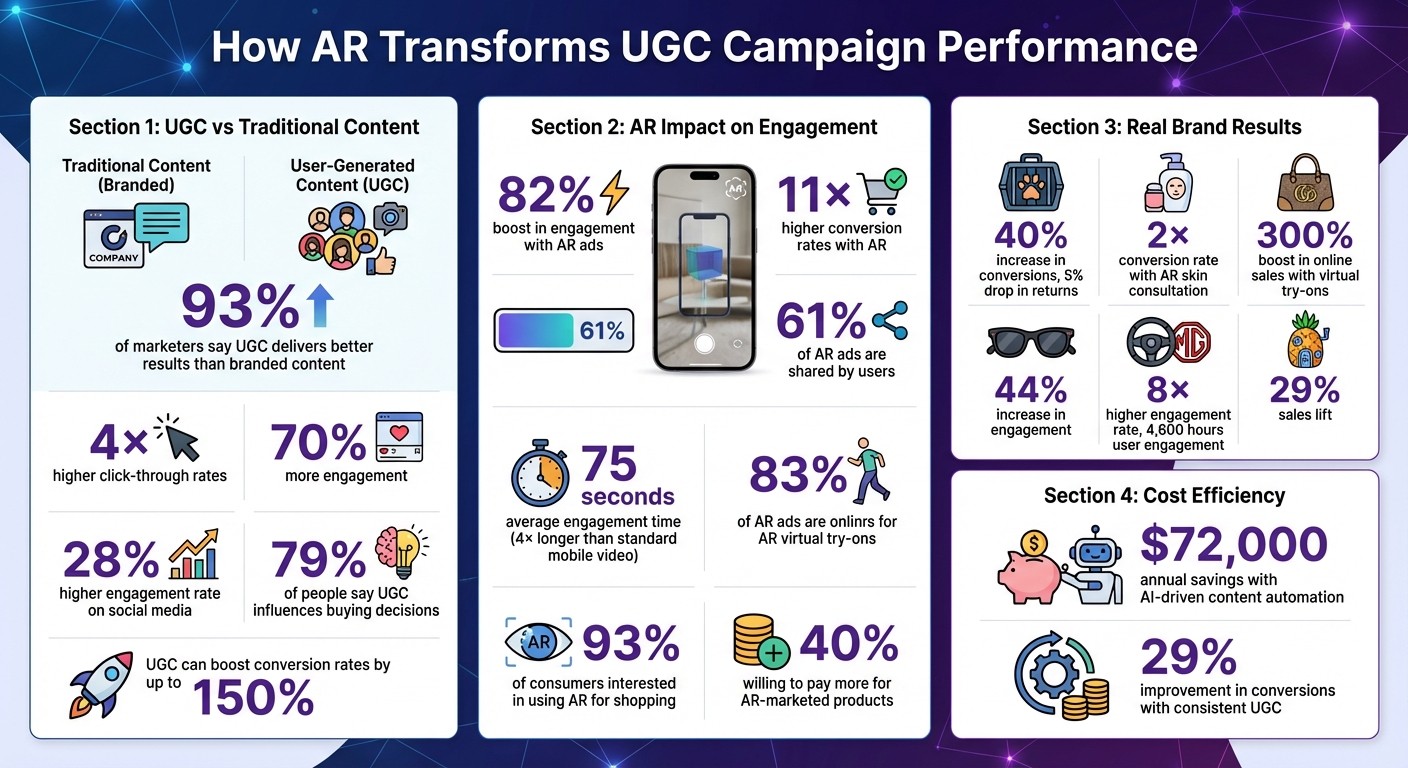
UGC outperforms traditional branded content: 93% of marketers say UGC delivers better results, with 4× higher click-through rates and 70% more engagement.
Challenges with UGC: Repetitive formats (like unboxings or selfies) and weak product visuals often fail to engage audiences or drive conversions.
AR as the solution: AR tools like filters, virtual try-ons, and gamification make UGC interactive, helping brands stand out. AR ads boost engagement by 82% and drive 11× higher conversion rates.
Key benefits of AR in UGC campaigns:
Higher engagement: AR filters and lenses encourage users to create and share content.
Better product visualization: Virtual try-ons help customers make confident purchase decisions.
Ongoing participation: Gamified AR keeps audiences involved through challenges and rewards.
AI tools like TwinTone scale AR-enhanced UGC by automating content production, ensuring consistency, and enabling 24/7 shoppable livestreams. Brands using AR report higher sales, reduced return rates, and improved customer confidence. If you're looking to elevate your campaigns, AR might be the missing piece.
AR and UGC Campaign Performance Statistics: Engagement, Conversion, and ROI Data
Oreo Our Way: South Africa Marketing Campaign | AR Experience, UGC, Fan-Contest & more!
Common Problems in UGC Campaigns
User-generated content (UGC) has shown it can outperform traditional branded content in many ways. Yet, brands often encounter hurdles that can limit its impact. These issues can directly affect conversion rates, engagement on platforms, and overall return on investment (ROI).
Low Engagement and Repetitive Content
When UGC starts looking the same, it fades into the background of crowded social feeds. Even when the quality is decent, repetitive formats - like unboxing videos, product selfies, or straightforward testimonials - fail to stand out. Without a creative twist or an interactive element, it’s tough to grab attention or inspire people to share. The lack of emotional connection or fresh storytelling can make campaigns feel flat.
Weak Product Visualization
Static images or plain videos often don’t do enough to show products in real-world or personalized settings. This is especially problematic for industries like beauty, fashion, furniture, and accessories. For example, if a customer can’t see how a lipstick shade works on different skin tones or how a couch looks in a particular living room style, they may hesitate to buy. On the other hand, product pages featuring UGC can boost conversion rates by up to 150% compared to those without it.
Inconsistent Content Volume
Keeping a steady flow of fresh UGC can be tricky. Factors like creator motivation or logistical hiccups often disrupt the process, leading to irregular posting schedules. This inconsistency can hurt performance on platforms where algorithms favor steady content output. For instance, consistent UGC has been shown to improve conversions by 29%, so an unreliable content pipeline can slow down campaign results.
These challenges highlight the need for innovative solutions, paving the way for AR to transform UGC campaigns.
How AR Solves UGC Campaign Problems
Augmented reality (AR) tackles common issues in user-generated content (UGC) campaigns by replacing repetitive formats with dynamic, interactive experiences. With AR, users can explore branded effects, try products virtually, and participate in engaging activities that encourage creativity and sharing.
AR Filters and Lenses for Higher Engagement
AR filters and lenses transform passive viewers into active participants. By using fun effects, trying on virtual outfits, or altering their surroundings with branded elements, users are more likely to create and share unique content. This boosts engagement and keeps campaigns fresh and exciting.
Take the AR filter developed by FFFACE.ME for the movie Dune. It allowed users to embed themselves into the movie trailer using Deepfake AR technology. The result? Hundreds of thousands of impressions as audiences eagerly shared their personalized experiences. Coca-Cola also saw success in the FMCG sector with a Christmas-themed AR game. Users collected virtual bottles to earn rewards, effectively increasing both engagement and brand visibility.
Virtual Try-Ons for Better Purchase Decisions
Virtual try-ons offer customers the chance to experience products from the comfort of their homes. These tools provide a 360° view of items, helping users assess quality, size, and fit before making a purchase. This added clarity not only boosts buyer confidence but also reduces return rates and drives higher conversions.
AR Gamification for Continuous Participation
Gamified AR takes content creation to the next level by turning it into a game. Features like points, leaderboards, challenges, and achievements make creating content feel less like a chore and more like an adventure.
For example, AR scavenger hunts, branded mini-games, and team challenges bring users together with shared goals, fostering a sense of community. As Genies explains:
"Gamification keeps users engaged by transforming routine activities into exciting experiences. Incorporating points, leaderboards, and achievements into UGC platforms makes content creation feel less like work and more like play." – Genies
AR-powered UGC games allow users to bring their creations to life and interact with others in real time. This approach ensures ongoing engagement and keeps audiences coming back for more.
When combined with AI-driven creator tools, AR further amplifies these interactive experiences, making them even more dynamic and scalable.
Scaling AR-Enhanced UGC with AI Creator Twins
Augmented Reality (AR) has proven to be a game-changer for user-generated content (UGC), but scaling its use presents some hurdles. Managing creators, timelines, and maintaining brand consistency can be tough. Enter AI creator twins - the solution to automate and simplify the process. Here's how they help brands produce scalable, AR-enhanced UGC.
AI-Powered UGC for Seamless Production
AI creator twins take the hassle out of traditional creator partnerships by generating UGC on demand. Tools like TwinTone transform real creators into AI-powered versions of themselves, capable of producing content 24/7 while preserving their unique style, tone, and personality. This means brands can instantly create product demos or shoppable videos for various SKUs without worrying about delays or scheduling conflicts. The result? Consistent content that aligns with brand messaging and eliminates the usual bottlenecks of outreach.
Infusing AR into AI-Generated Content
By adding features like virtual try-ons, 3D views, and in-home product visualization directly into AI-generated content, brands can make shopping experiences more interactive. This approach not only scales immersive content production but also enhances customer confidence. Shoppers get a realistic feel for products, which can lead to fewer returns and higher satisfaction rates. Plus, AI’s ability to test and tweak multiple AR variations based on performance data gives brands a powerful tool to optimize their strategies efficiently. It’s a seamless way to create dynamic, engaging content that resonates with audiences.
Always-On Shoppable AI Livestreams with AR
AI-powered livestreams are redefining how brands engage with their audiences. Operating 24/7 on platforms like TikTok, Amazon, YouTube, and Shopify, these streams allow brands to maintain continuous interaction and monetization without constant oversight. Personalization takes center stage, with AI tailoring content to individual viewer preferences and even supporting multiple languages, making campaigns accessible to a global audience. Add AR filters and interactive elements, and you transform passive viewers into active participants who create and share branded content. It’s a win-win for engagement and reach.
Measuring AR-Enhanced UGC Campaign Performance
AR technology doesn’t just make content more engaging - it also provides measurable ways to track success. To evaluate the performance of AR-enhanced UGC campaigns, focus on metrics like engagement, reach, and conversions.
Engagement metrics - such as session duration, interaction rate, and completion rate - reveal how users interact with AR experiences. For example, AR ads often perform exceptionally well, with users sharing 61% of AR ads they view and spending an average of 75 seconds engaging - four times longer than with standard mobile video. Reach metrics, including impressions, unique users, and social shares, measure visibility and the potential to attract new audiences.
When it comes to conversion metrics, these link AR directly to business outcomes. For instance, Gunner Kennels used AR to help customers choose the right pet crate size, leading to a 40% increase in order conversions and a 5% drop in return rates. Similarly, Olay Cosmetics implemented an AR skin consultation tool that doubled their conversion rates by providing tailored product recommendations. These metrics not only highlight the effectiveness of AR but also help refine future campaigns by pinpointing what works.
Key Metrics for AR and UGC Campaigns
To truly understand your campaign’s performance, focus on metrics that go beyond surface-level numbers. For engagement, track likes, shares, comments, object manipulation rates, and time spent using AR features. Cost-efficiency metrics like cost-per-engagement (CPE), cost-per-click (CPC), and cost-per-acquisition (CPA) show how effectively your budget is being spent. Additionally, sentiment analysis and user feedback can offer valuable insights into content quality.
To track performance more precisely, use tools like unique UTM parameters, creator-specific discount codes, and affiliate links. This level of tracking can reveal which AR elements are driving traffic, purchases, and redemptions. It’s worth noting that UGC shared on social media generates a 28% higher engagement rate than brand-created content, and 79% of people say UGC influences their buying decisions.
Testing AR vs. Standard UGC
Want to see how AR stacks up against traditional UGC? Conduct side-by-side tests. For example, MG Motor partnered with Poplar Studio to create a 3D AR ad for a car launch, achieving an 8x higher engagement rate than non-AR benchmarks and logging 4,600 hours of user engagement. Similarly, an AR effect developed for ViacomCBS to promote The SpongeBob Movie led to a 29% sales lift compared to campaigns without AR.
To keep track of these comparisons, set up a UGC dashboard. Use it to monitor engagement, cost metrics, and conversions across various formats and creators. By presenting side-by-side data, you can clearly identify where AR delivers the most value and adjust your strategy accordingly.
Using Data to Improve Campaigns
Performance data isn’t just for tracking - it’s a tool for improvement. Start by benchmarking your results and reallocating budgets to the best-performing AR elements. Pay attention to recurring themes in user comments and reviews to refine products, messaging, or customer experiences. Share these insights with your marketing, product, and customer service teams to create a feedback loop that benefits the entire organization.
Experiment with different AR features like filters, virtual try-ons, or gamification to see what resonates most. Then, repurpose your top-performing UGC into other formats, such as brand ads, landing pages, or email campaigns, to maximize its impact. The ultimate goal? Use what you learn to make every campaign better than the last and ensure your AR investments are driving meaningful results.
Conclusion
AR technology is reshaping UGC campaigns, turning passive content into dynamic, interactive experiences that deliver real results. When brands incorporate AR filters, virtual try-ons, and gamified elements into their strategies, the impact is clear: 93% of consumers express interest in using AR to explore and purchase products, and 40% are willing to pay more for items marketed with AR. Take Gucci, for example - their virtual sneaker try-on led to a 300% boost in online sales, while GUESS Eyewear saw engagement rates climb by 44% thanks to their AR campaigns.
The real hurdle for brands isn’t proving AR’s effectiveness - it’s figuring out how to scale it efficiently. That’s where tools like TwinTone come into play. By leveraging AI, TwinTone allows brands to create on-demand UGC videos, run 24/7 AI-powered livestreams, and instantly produce shoppable content. Its API enables seamless, programmatic content creation across multiple SKUs and campaigns, all while preserving the authenticity of real creators and meeting the demand for AR-enhanced UGC at scale.
Experts in the field highlight this evolution:
"When people have the intent to shop without physically being able to touch and see a product, the more options you can give them to create that confidence [the better]."
– Sarah Sheldon, Senior Director of Global Ecommerce and Digital, Rebecca Minkoff
The brands that succeed will be those that combine AR’s immersive interactivity with AI’s efficiency. AR makes products feel tangible and shareable, while AI ensures content is created consistently and cost-effectively - saving companies as much as $72,000 annually. Leaders like Rebecca Minkoff, Sephora, and Arhaus have already demonstrated how AR-enhanced visuals build purchase confidence. With AI-driven automation, these strategies are now scalable for brands of all sizes.
As AR and AI continue to redefine UGC, the focus shifts from merely collecting content to crafting interactive, shoppable experiences. By blending creator ingenuity with AI’s capabilities, brands can meet growing consumer demand for immersive and personalized shopping journeys. Those who embrace these workflows today will set the pace in their industries, while others risk falling behind as expectations for engaging, tech-driven experiences only grow.
FAQs
How does augmented reality (AR) make UGC campaigns more engaging?
Augmented reality (AR) takes user-generated content (UGC) to a whole new level, turning ordinary posts into interactive, visually captivating experiences. With AR filters, effects, and 3D overlays, users can easily create fun, shareable content that grabs attention. These real-time, engaging elements naturally spark more likes, comments, and shares, encouraging people to participate and share spontaneously.
AR also plays a big role in driving campaign virality. By letting users personalize branded filters or effects and share them with their followers, AR turns participants into enthusiastic brand advocates. This kind of organic sharing spreads your message far and wide. Plus, AR experiences can be tied to specific actions - like virtually trying on a product or unlocking a discount - making the content both entertaining and goal-oriented. This blend of fun and functionality can boost conversions while keeping engagement high.
By making content creation easy and enjoyable, AR helps brands expand their reach, boost engagement, and transform passive viewers into active supporters.
How does AI help brands scale AR-powered UGC campaigns?
AI is reshaping how brands approach AR-enhanced user-generated content (UGC) campaigns by making it easier to deliver personalized, interactive experiences on a large scale. Instead of relying heavily on real creators, brands can now use AI to craft lifelike avatars and on-demand video assets that blend seamlessly into AR environments.
This shift means brands can roll out engaging, high-quality UGC faster and more efficiently, cutting down on time and resources. Tools like TwinTone push this innovation further, enabling instant product demos, shoppable videos, and creator-led content available 24/7. These advancements are redefining social commerce and streamlining marketing automation.
How can brands evaluate the success of AR in UGC campaigns?
To evaluate the success of AR-enhanced UGC campaigns, start by setting specific goals. Are you aiming to increase brand awareness, boost engagement, drive website traffic, or improve sales? Once your objectives are clear, monitor key metrics like reach, impressions, likes, comments, and shares. For AR-specific insights, track data points such as filter activations, average session duration, and completion rates for features like virtual try-ons or product visualizations. These details reveal how users interact with your AR content.
Next, connect these interaction metrics to broader business outcomes. Pay attention to figures like click-through rates (CTR), conversion rates, average order value (AOV), and return on ad spend (ROAS). To go deeper, consider using surveys or sentiment analysis to assess changes in brand perception and purchase intent. By blending these quantitative metrics with qualitative feedback, you’ll gain a well-rounded view of how AR impacts the ROI of your UGC campaign.