How AI Automates Fan Engagement Workflows
How to build a futureproof relationship with AI
Managing fan engagement manually is no longer practical for creators and brands with large audiences. AI automation solves this by handling repetitive tasks, delivering personalized experiences, and streamlining workflows across platforms. Here’s how AI transforms fan engagement:
Saves Time: AI automates tasks like responding to comments, creating content, and scheduling posts.
Personalization: It uses fan data to tailor interactions, recommend content, and predict preferences.
Global Reach: AI-powered translation tools enable instant multilingual content creation.
Real-Time Engagement: AI chatbots, sentiment tracking, and proactive notifications improve live and post-event interactions.
Cost Efficiency: AI reduces the need for large teams and speeds up campaign rollouts.
AI tools like TwinTone take this further by creating AI Twins - digital replicas of creators - that interact with fans 24/7, host live shopping events, and generate multilingual content. This approach ensures consistent, scalable fan engagement while freeing up time for creators and teams to focus on high-priority tasks.
Key Metrics to Track AI Impact:
Engagement rates, response times, and fan satisfaction scores.
Revenue per fan, conversion rates, and retention rates.
Efficiency improvements in workflow management.
Scoring Big In Fan Engagement With AI - Sportradar CONNECT
Evaluate Your Current Fan Engagement Processes
Before diving into AI automation, it’s essential to take a step back and evaluate how you currently interact with your fans. Many teams spend countless hours on tasks that could be automated, but without a clear understanding of their workflows, it’s hard to know where to begin. Mapping out these processes helps prioritize what to automate and ensures you're improving - not just digitizing - inefficient systems. This foundational step will help you zero in on tasks that drain resources without delivering much value.
Map Your Fan Touchpoints
Start by listing all the ways fans interact with your brand. This could include social media platforms like Instagram, TikTok, YouTube, and Twitter; email campaigns; mobile apps; live events; customer support channels; and e-commerce platforms. Each of these touchpoints represents a chance to connect with fans - and potentially a source of friction.
But identifying these touchpoints isn’t enough. You also need to understand how they work together. Fans expect smooth transitions across channels. For example, if a fan starts a conversation on your website’s chat feature, continues on your app, and later sends a text, they shouldn’t have to repeat their issue at every step. Unfortunately, many manual systems can’t maintain this continuity, leading to frustrating experiences that could push fans away.
To get a clear picture, audit your fan data infrastructure. Can your CRM system, ticketing platform, loyalty programs, and content management tools share information seamlessly? Consolidating this data is key to enabling AI-driven personalization that fans now expect.
Look closely at where fans encounter roadblocks. Common issues include delays in response times, problems with manual ticket transfers, receiving generic content that doesn’t match their preferences, or facing language barriers when reaching out from different regions. These pain points should be top priorities for automation.
Also, take note of the volume of interactions at each touchpoint. A creator with 500,000 followers might deal with thousands of comments daily, while a brand hosting live events could face hundreds of customer service inquiries during peak times. Understanding these numbers helps pinpoint where automation will make the biggest impact.
Once you’ve mapped everything out, identify which tasks are eating up time without adding real value.
Find Repetitive Tasks to Automate
With your touchpoints mapped, it’s time to focus on repetitive tasks that don’t contribute strategically. These high-volume, low-value activities are perfect candidates for automation.
One major time drain is content creation and customization. Manually producing product videos, promotional materials, or user-generated content (UGC)-style ads for every campaign can bog down your team. The same goes for tailoring content to different audiences - whether that means tweaking messaging for specific demographics, changing visuals, or translating material into multiple languages.
Another major bottleneck is managing creator collaborations. Reaching out to creators, negotiating deals, coordinating content production, and reviewing final deliverables can take up a significant chunk of time. These lengthy processes often delay campaign rollouts and limit how many variations you can test.
Live engagement and customer support is another area where resources are often stretched thin. Answering repetitive questions about products, providing event details, or handling basic inquiries can quickly overwhelm teams. If you’re running live streams or hosting product showcases, offering constant human coverage becomes expensive and unsustainable.
Automation can streamline these processes, speeding up tasks like content creation, approvals, translations, and multi-channel distribution. This, in turn, shortens campaign cycles and frees up your team for more strategic work.
Don’t forget about proactive care opportunities. Features like weather updates for outdoor events, gate congestion alerts, personalized content recommendations, or tailored product suggestions can elevate the fan experience. However, delivering these at scale is nearly impossible without automation.
Finally, take a hard look at your analytics workflow. If your team is manually tracking engagement metrics, sentiment analysis, or performance data across platforms, automating these processes can save significant time. Consolidating data into actionable insights allows your team to focus on strategy instead of routine reporting.
Of course, not everything should be automated. Sensitive customer complaints, high-level creative decisions, and building meaningful relationships with top-tier fans still require a human touch. But tasks like answering FAQs, scheduling posts, translating messages, creating standard video formats, or sending routine notifications are excellent candidates for automation.
To wrap up this evaluation, track how much time your team spends on these repetitive tasks and calculate the associated costs. This baseline will help you measure the return on investment once automation is in place.
Set Up AI for Fan Engagement Automation
After identifying engagement gaps through an audit, it's time to set up an AI system that addresses those challenges. The process involves consolidating data, integrating systems, and ensuring compliance to create a reliable foundation for automation.
Consolidate Fan Data
AI thrives on understanding your fans - who they are and how they interact with your brand. But when data is scattered across platforms like social media, ticketing systems, email lists, CRMs, and e-commerce tools, AI can't form the complete picture needed for personalized engagement.
Creating unified fan profiles is key. This means linking all touchpoints so AI can recognize that the fan who comments on your Instagram, buys merchandise, and attends events is the same person. To achieve this, you'll need to connect platforms using tools like identity and consent management, API connections for data sharing, and memory systems to store interaction history.
Start with a data audit to identify all sources of fan data and evaluate its accuracy and consistency. Be prepared to address issues like duplicates, outdated records, and formatting inconsistencies. Once the data is cleaned up, establish data governance policies to define how data is owned, used, and retained. Develop a schema that includes key details such as demographics, preferences, purchase history, and engagement patterns.
Consolidating data allows AI to provide fans with seamless experiences across channels. For instance, a Premier League soccer team that implemented an AI-powered personalization system in its app saw a 64% increase in app engagement and a 42% boost in content sharing among users under 25 within six months. Unified data also enables AI to predict fan behaviors, such as identifying who’s likely to renew memberships or who might need targeted offers to stay engaged.
Connect AI with Your Existing Tools
Once your data is unified, the next step is to integrate AI with your engagement platforms. This turns AI into a powerhouse that can automate workflows and improve fan interactions.
Identify the platforms where fan engagement happens, such as CRMs (like Salesforce or HubSpot), social media platforms, email marketing tools, ticketing systems, messaging channels (e.g., SMS or WhatsApp), and e-commerce platforms. Use APIs to ensure these systems communicate with your AI. For example, when a fan buys a ticket, an API can update their CRM profile, send a personalized email, and adjust content recommendations based on their purchase.
Pay special attention to mobile-first integration, as most fans engage through smartphones. AI workflows should deliver smooth mobile experiences, from automated content recommendations to interactive features. Real-time triggers can enhance engagement by responding to fan behaviors immediately. For example, if a fan posts about their favorite player, AI could send them a personalized highlight reel the next day. Similarly, if someone abandons their shopping cart, AI could follow up with tailored product suggestions.
Chatbots and AI assistants are another critical integration. These tools use natural language processing to provide instant support for questions about tickets, products, or stats, reducing the workload on human teams. They should be connected to your knowledge base and inventory systems to deliver accurate, personalized responses.
For live events or product showcases, integrate AI with streaming platforms and social commerce tools. Tools like TwinTone even allow creators to use AI-powered avatars for live streams, offering 24/7 product showcases in multiple languages without requiring constant human involvement.
Instead of automating everything at once, start small. Focus on a few high-impact integrations, test them thoroughly, and expand gradually. A hybrid approach, where AI suggests actions or content for human approval before full automation, often works best.
Maintain Compliance and Brand Safety
While automation offers efficiency, it also introduces risks. Safeguarding privacy and maintaining brand integrity are essential.
Data privacy compliance is non-negotiable. Regulations like GDPR and CCPA require explicit consent before using fan data for marketing or personalization. Implement consent management systems that explain data usage clearly and respect fan preferences automatically.
Limit access to sensitive data through role-based access controls, ensuring only authorized team members can perform critical actions like issuing refunds or accessing private information. Create strict policy enforcement mechanisms to prevent AI from exceeding approved boundaries, and require human oversight for decisions that fall outside predefined rules.
To maintain brand consistency, set up brand safety guardrails. For example, TwinTone allows brands to control the tone and style of AI-generated content, ensuring it aligns with their messaging. Use content moderation and sentiment analysis to monitor interactions, flag inappropriate behavior, and signal for human intervention when necessary.
Regularly audit AI decisions to catch any deviations from your policies. Set up alerts for unusual patterns, such as spikes in refund requests or negative sentiment, and review samples of AI-generated content to ensure quality.
Transparency is crucial for building trust. Let fans know when they’re interacting with AI and provide easy options to escalate issues to human support. By prioritizing privacy and maintaining clear communication, you show fans that they’re valued as individuals - not just data points. This commitment strengthens relationships and reinforces loyalty.
Implement AI-Driven Fan Engagement Workflows
Once your AI setup is ready, it’s time to put it to work by creating workflows that keep fans engaged throughout their entire journey. By leveraging unified data and AI tools, you can design interactions that feel timely and relevant at every stage - before, during, and after events. The trick is to align automation with each phase, ensuring fans get what they need without overloading your team.
Pre-Event Automation
The lead-up to an event sets the stage for fans' experiences, and AI can take care of much of the groundwork, helping fans feel informed and excited.
Personalized ticket suggestions: AI analyzes fan data - like past attendance and purchase behavior - to recommend events they’ll love. For instance, if someone prefers weekend games, AI skips sending them weekday promotions, ensuring every suggestion feels relevant.
Smart event reminders: These go beyond basic notifications. AI picks the best time and channel for each fan - some might get an email a week in advance, while others prefer a text the day before. Reminders can even include details like parking tips, gate info to avoid crowds, or weather updates.
Customized content previews: Build excitement by sharing tailored content, such as highlight reels or sneak peeks at exclusive products. Tools like TwinTone can create personalized videos in over 40 languages, making it easy to connect with diverse audiences.
Automated waitlist management: When tickets open up, AI notifies fans based on their priority and likelihood to buy, then processes transactions in seconds. This eliminates delays and boosts last-minute ticket sales.
These pre-event automations ensure fans arrive ready and eager, setting the stage for seamless real-time interactions.
Real-Time Engagement During Events
Live events bring unique challenges, from managing large crowds to delivering personalized experiences on the spot. AI steps in to handle these demands with ease.
AI chatbots: Available across platforms like apps, SMS, and WhatsApp, these bots answer questions about seating, concessions, restrooms, and schedules. They even remember past interactions, offering proactive assistance based on a fan’s location or history.
Venue navigation: AI provides step-by-step directions through stadiums, helping fans find their seats, food stands, or restrooms. During busy times, it can suggest alternate routes or less-crowded entrances.
Real-time sentiment tracking: AI monitors social media, app chats, and other channels to gauge fan mood. If a specific section reports issues - like delays or safety concerns - staff can step in quickly to resolve them.
Instant replays and highlights: Fans can receive clips tailored to their preferences. For example, a defense enthusiast might get footage of key stops, while a player-focused fan sees moments featuring their favorite athlete.
Interactive live streams: AI Twins, like those from TwinTone, can host live streams to answer questions, showcase merchandise, and engage fans in multiple languages. This creates a dynamic shopping and interaction experience without requiring constant human involvement.
Proactive updates: AI sends notifications about weather changes, gate congestion, or other important updates before fans even think to ask, ensuring a smoother experience.
With AI managing these tasks, fans can focus on enjoying the event while your team stays free to handle more complex issues.
Post-Event Retention Strategies
The event might end, but the connection doesn’t have to. AI helps extend the relationship by keeping fans engaged and building loyalty.
Personalized follow-ups: AI analyzes fan behavior - like merchandise they browsed or areas they visited - and sends tailored messages. For instance, a fan who visited the team store might get an exclusive discount, while someone who met the mascot could receive a photo compilation.
Custom highlight reels: Within hours, AI can create videos featuring moments that matter most to each fan. Tools like TwinTone allow creators to deliver these personalized clips, whether they’re thank-yous, event highlights, or promotions for future events.
Churn prevention: AI identifies fans at risk of disengaging, such as season ticket holders who’ve missed multiple games. It then triggers campaigns with personalized offers or content to re-engage them.
Loyalty program management: AI automates rewards, tracks points, and recommends perks based on fan preferences. Fans don’t need to worry about keeping tabs - AI does it all and surfaces opportunities when it’s most relevant.
Seamless follow-ups: AI remembers fan interactions, like unfinished ticket upgrades, and follows up with personalized options and easy checkout links.
Community moderation: AI monitors post-event discussions, ensuring a positive environment by flagging inappropriate content while letting fans share their experiences and connect with others.
Use TwinTone for Fan Engagement Automation
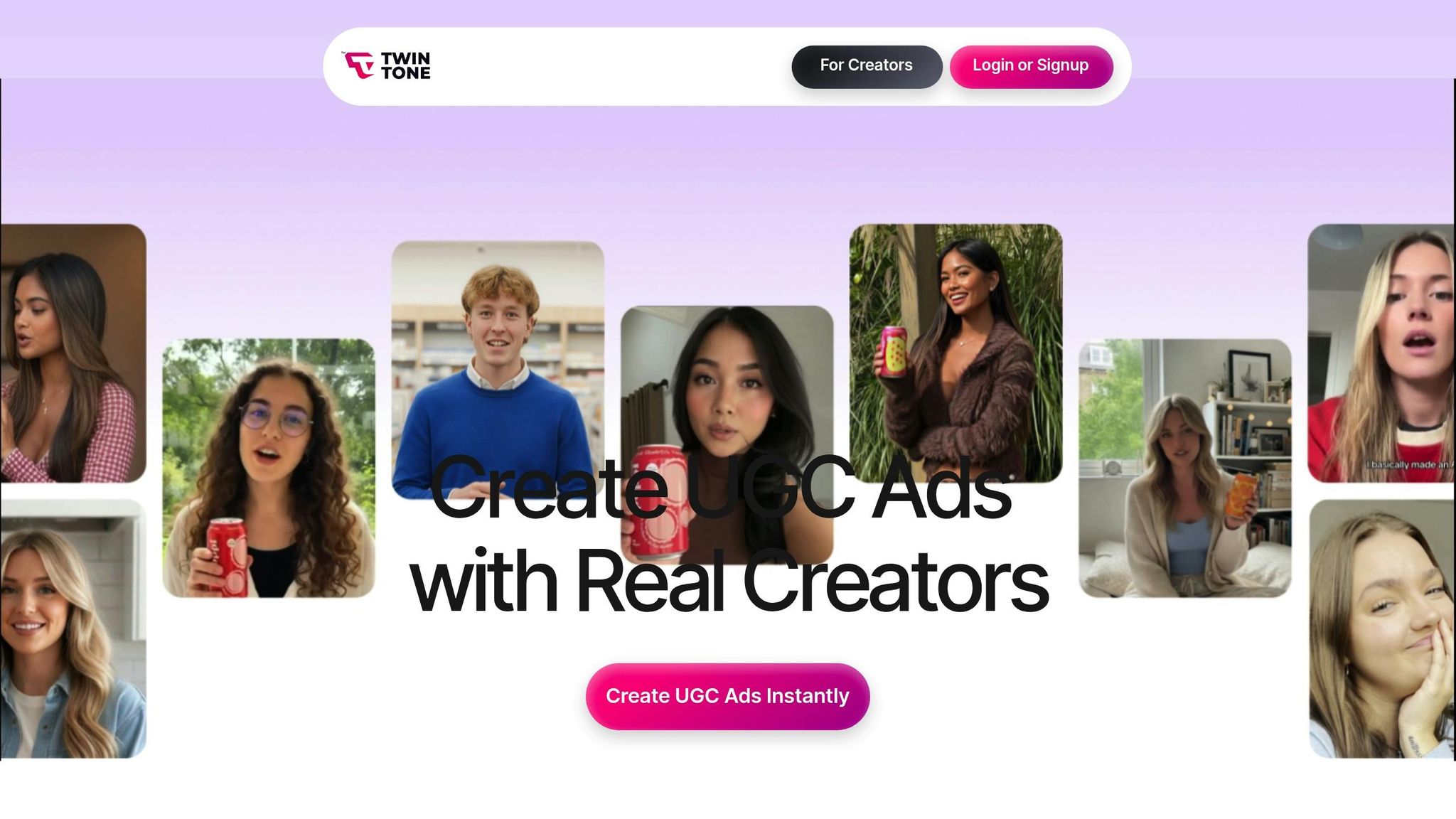
TwinTone steps in to solve a major challenge for creators and brands: how to keep fans engaged around the clock without exhausting time and resources. By creating AI Twins - digital replicas of creators - TwinTone ensures 24/7 interaction that feels personal and genuine. This means creators and brands can scale their engagement efforts without losing the unique touch that fans love.
Create AI Twins for Automated Engagement
AI Twins are designed to reflect the creator’s personality, tone, and style, making automated interactions feel natural and authentic. These digital versions take on tasks like responding to fans, creating content, and staying on top of trends - all without missing a beat.
TwinTone enables creators to produce branded content in over 40 languages, with turnaround times as quick as 2 minutes. Whether it’s a short clip or a gesture-rich video, the platform offers flexible options to suit different needs. Plus, AI Twins use team policies, FAQs, and past fan interactions to craft responses that are not just automated but also contextually accurate and relevant.
For brands, this means they can collaborate with multiple creators at once, bypassing scheduling headaches and delays. TwinTone even supports the creation of user-generated content on demand, ensuring creators are compensated fairly for their likeness and influence. Next up, let’s explore how TwinTone revolutionizes live shopping with its 24/7 live product showcase feature.
Run 24/7 Live Product Showcases
Live shopping events have traditionally required creators to be present, which limits how often these events can happen. TwinTone changes the game with its AI Live-shopping feature, allowing AI Twins to host live product showcases nonstop. These AI-powered streams not only present products but also engage viewers and answer their questions in real time, no matter the hour.
Brands interested in leveraging this feature can book a call with TwinTone to discuss custom pricing and implementation options. With its global capabilities, TwinTone ensures that AI Twins can connect with audiences worldwide, breaking down barriers of time zones and availability.
By removing the need for live coordination, this feature reduces costs and operational delays, making live shopping events more efficient and scalable than ever.
Integrate with Social Commerce Platforms
TwinTone seamlessly connects with major social commerce platforms like TikTok, Amazon, YouTube, Twitch, and Shopify. This means AI Twins can distribute content and host live streams directly where fans are already active and engaged.
The platform also consolidates fan data from various sources - ticketing systems, CRM platforms, social media, and merchandise sales - into a single, unified view. This ensures that every interaction and recommendation from the AI Twin is informed and relevant across all channels. For brands looking to integrate TwinTone into their existing systems, API access provides real-time product data, including inventory, pricing, and performance metrics.
To maintain security and brand integrity, TwinTone includes role-based access controls. These allow brands to define exactly what actions AI Twins can take, from handling orders and refunds to managing loyalty programs - all while adhering to compliance standards and respecting fan privacy.
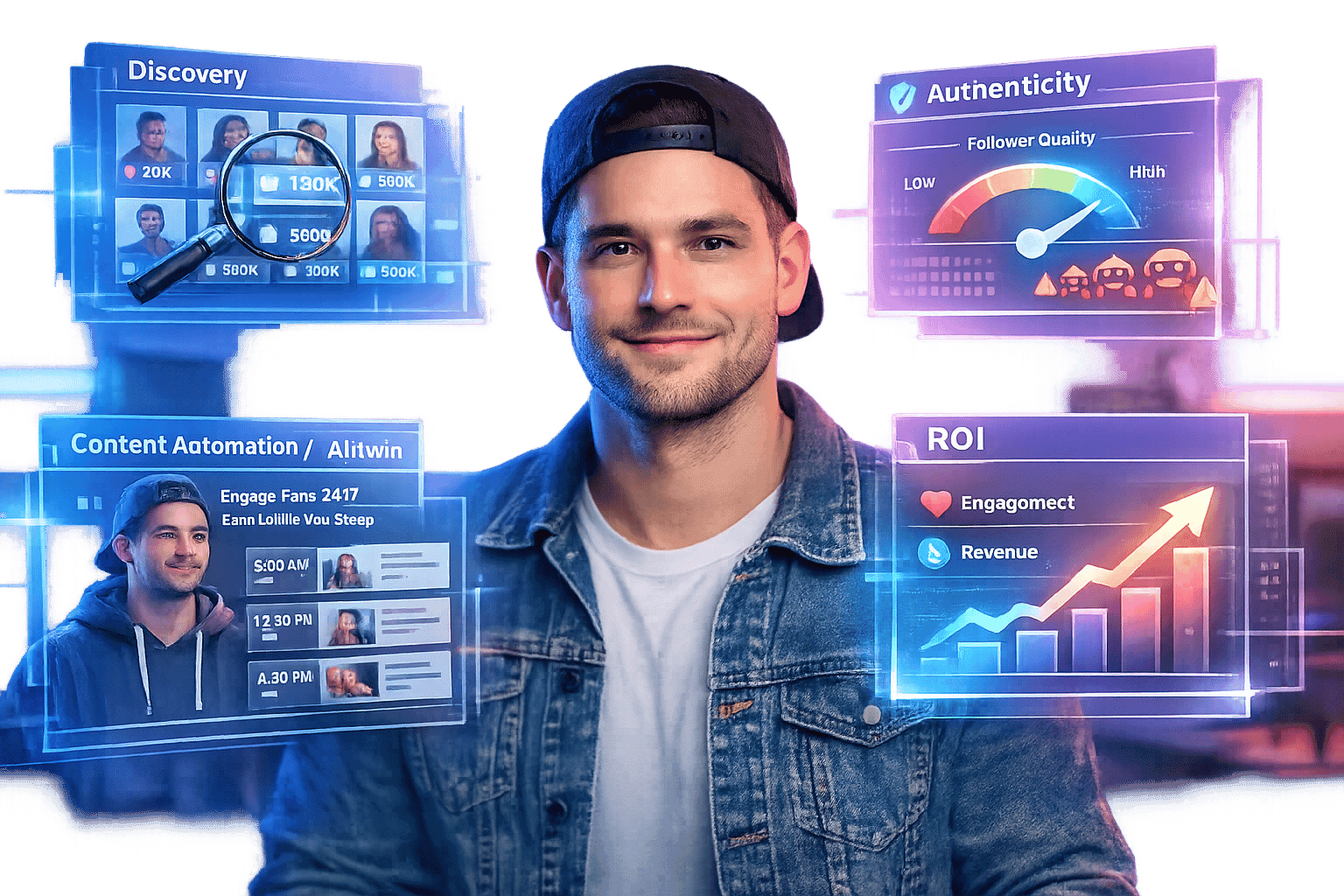
Real-time performance analytics track engagement, conversions, and ROI across platforms, giving brands the tools to fine-tune their AI Twin strategies and maximize results.
Measure the Impact of AI Automation
AI automation is just the beginning - it’s what you do with it that counts. To truly understand its value, you need to measure performance and identify areas where adjustments are needed.
Start by establishing a baseline. Document your current engagement metrics, like cost per interaction, response times, and engagement rates. Pull data from ticketing systems, CRM platforms, social media, and even merchandise sales to create a unified view of your audience. For instance, if your response time averages 4 hours and your engagement rate sits at 15%, these figures will serve as your starting point for evaluating the impact of AI automation.
Track Key Performance Metrics
To measure success, focus on metrics that directly impact your business rather than superficial statistics. These should cover every stage of the fan lifecycle, from acquisition to monetization.
Engagement metrics: Gauge how your audience interacts with AI-driven content. Track engagement rates, the time spent interacting with content, and sharing rates to see what resonates most.
Efficiency indicators: Assess whether automation is saving time and resources. Compare response times before and after AI implementation, track how many tasks fans complete per interaction, and determine which channels they prefer. If fans are hopping between platforms to achieve simple goals, it’s a sign your automation needs fine-tuning.
Revenue metrics: Link fan engagement to financial outcomes. Monitor metrics like revenue per fan, conversion rates from interaction to purchase, and average order value. For example, TwinTone uses Return on Ad Spend (ROAS) to measure the financial return of AI-generated content.
Retention measurements: Measure long-term relationship health through fan lifetime value (LTV), repeat interaction rates, and churn rates. These metrics provide a clearer picture of whether your AI workflows are fostering lasting connections or just driving one-time transactions.
Experience quality: Look at fan satisfaction scores, the number of steps required to complete tasks, and whether fans can transition seamlessly between channels without restarting conversations. Maintaining continuity across platforms is essential for a smooth experience.
Compliance and safety: Keep your brand protected by tracking policy violations, safety incidents, and consent capture rates. Tools like TwinTone’s role-based access controls help ensure AI Twins adhere to guidelines and regulations.
Metric Category | What to Track | Why It Matters |
|---|---|---|
Engagement | Engagement rate, interaction time, sharing rate | Shows content effectiveness |
Efficiency | Response time, tasks per interaction, channel preference | Highlights workflow improvements |
Revenue | Revenue per fan, conversion rate, average order value | Links engagement to financial outcomes |
Retention | Fan lifetime value, repeat interactions, churn rate | Measures relationship longevity |
Experience | Satisfaction scores, effort reduction, context continuity | Reflects quality of interactions |
Compliance | Policy violations, safety incidents, consent rates | Ensures brand safety and regulatory adherence |
By continuously monitoring these metrics, you can ensure that your automated interactions align with your fan engagement strategy. This data forms the backbone of ongoing improvements through systematic feedback.
Create Feedback Loops for Continuous Improvement
Once you’ve identified your key metrics, use real-time insights to refine your automation efforts. Measurement isn’t just about tracking - it’s about taking action. AI systems should monitor conversations across all touchpoints to understand fan opinions and preferences.
Sentiment analysis tools can be a game-changer here. These tools categorize interactions as positive, neutral, or negative, offering valuable insights into what’s working and what needs attention. For example, if fans express frustration with ticket transfer processes, you can prioritize automating that workflow. Similarly, recurring questions or interests can guide the creation of AI-powered content tailored to those needs.
Review sentiment trends on a monthly basis and adjust your AI recommendations to reflect evolving fan preferences. TwinTone’s performance tracking tools make it easier to uncover insights and fine-tune your AI Twins for better engagement, creating a feedback loop that drives consistent improvement over time.
Natural language processing (NLP) can also help by extracting themes from fan conversations. This allows AI systems to flag common complaints or frequently asked questions, enabling your team to address workflow gaps quickly. For instance, if fans often express confusion about a specific feature, you can update your AI Twin’s responses or introduce new automated content to resolve the issue proactively.
You can also assess proactive care metrics, like the adoption rates of weather notifications, engagement with gate congestion alerts, or click-through rates for personalized content. These indicators reveal whether your AI is meeting fan needs or simply adding to the noise.
It’s equally important to track inclusive access metrics, such as real-time translation usage, voice input adoption, and engagement with accessible design features. These measures show whether your automation efforts are reaching a broader audience or unintentionally excluding certain groups. Emotional resonance, measured through personalized content engagement rates, can also signal deeper fan connections beyond transactional interactions.
Don’t overlook context continuity. Fans should be able to switch seamlessly between platforms without having to repeat themselves. For example, if a fan starts a conversation with your AI Twin on Instagram and continues it on your website, they shouldn’t have to reintroduce their issue. Track how often this smooth transition occurs versus instances where fans encounter frustration due to starting over.
TwinTone’s real-time analytics provide a unified view of performance across all channels where your AI Twins operate. This holistic perspective helps you identify patterns and opportunities that might be missed when analyzing channels individually. Use this data to test new approaches, measure their impact, and ensure your workflows evolve alongside fan expectations and market trends.
Conclusion
AI automation is reshaping how creators and brands connect with their audiences by cutting out the repetitive, time-consuming tasks that often limit engagement on a large scale. Instead of spending countless hours on things like creating content, answering fan questions, or scheduling posts, you can now focus on making strategic decisions that truly make an impact. With automation, it’s possible to deliver consistent, personalized engagement that manual efforts simply can’t match.
What makes this shift so powerful is the ability to scale personalization without scaling your team. AI dives into fan behavior and preferences, delivering tailored content and offers that feel uniquely crafted for each individual. This level of customization meets the growing expectation for personalized experiences across every digital platform. Whether you’re engaging with thousands or millions of fans, automation ensures a high-touch experience that would otherwise be impossible to achieve manually.
The benefits are clear and measurable: better retention, increased customer lifetime value, and improved conversion rates. With AI, you can focus on key metrics that directly impact your success. By identifying patterns in behavior and emotions, AI enables predictive engagement, allowing you to meet fan needs before they even ask. Fans are rewarded for actions like attending events, watching streams, or sharing content, and they receive personalized perks like early access or exclusive offers. This builds loyalty that feels natural and rewarding, rather than transactional. Tools like TwinTone make these outcomes achievable, offering creators a way to seamlessly scale their engagement efforts.
For creators, platforms like TwinTone provide a game-changing solution by creating AI Twins that replicate your voice and style. These Twins can generate branded content, host live streams, and interact with fans around the clock. The result? You stay authentic while automating engagement and driving sales 24/7.
The competitive edge here is undeniable: speed, scale, and precision. Real-time content generation and instant personalization allow small teams to deliver experiences that rival those of much larger organizations. Automation bridges the gap, letting independent creators compete on the same level as big brands. By automating workflows before, during, and after events, you can build stronger fan loyalty and boost lifetime value. Satisfied fans don’t just stick around - they become advocates who bring in new audiences.
To get started, focus on integrating your data, optimizing for mobile-first experiences, and testing your strategies quickly. Take inspiration from examples like the NBA, which uses real-time video content creation to skip manual editing and publish highlights immediately after games. Your automation should aim for the same: grab attention instantly and keep fans engaged with personalized, continuous follow-up.
FAQs
How can AI help creators and brands personalize fan engagement more effectively?
AI is transforming fan engagement by making it more personal and efficient, giving creators and brands the ability to streamline essential tasks. Tools like AI Twins allow brands to generate customized user-generated content (UGC) and host live product showcases that come across as genuine and relatable. These AI-driven tools make it easier to deliver personalized interactions at scale, saving time while boosting engagement.
With AI, creators can stay consistently active, build meaningful connections with fans, and explore fresh ways to expand their audience - all while keeping things real and authentic.
How can AI help streamline fan engagement workflows for creators and brands?
AI makes engaging with fans easier by handling tasks that typically eat up a lot of time. This gives creators and brands more room to focus on forging genuine connections. Take TwinTone, for example - this tool lets creators turn their image into AI Twins. These AI Twins can produce branded content and even host live streams automatically. The result? Brands can showcase their products round-the-clock with content that feels real and relatable, while creators enjoy a steady stream of revenue without extra effort.
With AI, you can streamline your workflow, expand your reach, and create tailored experiences that truly connect with your audience - all while keeping things genuine.
How can brands use AI to engage with fans while ensuring brand safety and data privacy compliance?
To ensure brand safety and stay compliant with data privacy regulations while using AI for fan engagement, brands should consider these essential practices:
Choose AI tools that emphasize data protection and comply with privacy laws like GDPR or CCPA.
Be upfront with your audience about the use of AI, fostering transparency and building trust.
Consistently review and refine AI-generated content to ensure it reflects your brand values and avoids any unintentional missteps.
By following these guidelines, brands can effectively use AI to connect with fans while maintaining safety and compliance.