Best Practices for Multilingual AI Livestreaming
How to build a futureproof relationship with AI
Multilingual AI livestreaming lets you reach global audiences in real-time by breaking language barriers. It uses AI to translate speech into multiple languages instantly, offering audio and subtitles for a personalized experience. This approach boosts accessibility, audience engagement, and scalability, enabling creators and brands to connect with viewers worldwide.
Key Takeaways:
How It Works: AI converts live speech into text, translates it, and generates audio/subtitles in over 62 languages with minimal delay.
Benefits: Increases global reach, reduces costs, and simplifies operations for creators and brands.
Technical Setup: Requires reliable streaming platforms, quality hardware, and AI tools for speech recognition, translation, and voice synthesis.
Content Preparation: Use simple, clear language to avoid translation errors and ensure smooth communication.
Engagement Tips: Multilingual chat, Q&A systems, and culturally aware interactions help connect with diverse audiences.
Automation with TwinTone: AI Twins create 24/7 multilingual livestreams, cutting costs and expanding reach.
Multilingual livestreaming isn’t just a trend - it’s a practical way to grow your audience and deliver content globally, all while keeping costs low and operations simple.
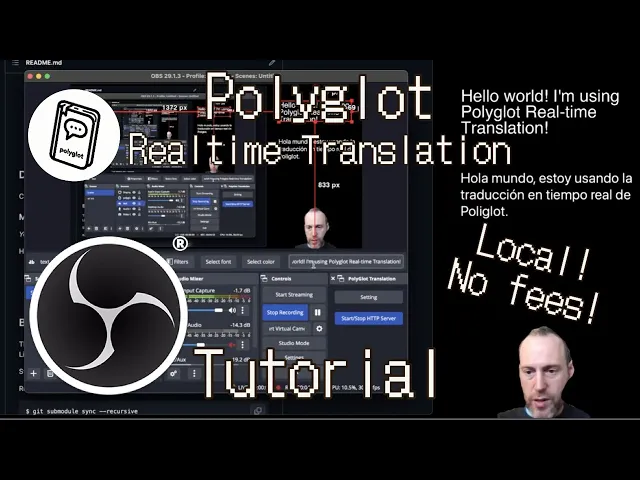
Polyglot AI Local Realtime Translation in OBS [Plugin Tutorial]
Setting Up Your Multilingual Livestreaming System
Creating a smooth multilingual livestream experience starts with a well-configured system. To pull this off, you’ll need to focus on three main areas: picking the right streaming platform, setting up reliable hardware and network infrastructure, and integrating AI translation tools. Each piece must work together seamlessly to deliver high-quality streams in multiple languages.
Selecting Streaming Platforms and Tools
The streaming platform you choose will shape your ability to reach a global audience. Look for platforms that support multiple audio tracks, real-time subtitles, and global content delivery networks (CDNs). These features make it easy for viewers to switch between languages while enjoying a smooth, high-quality stream.
When evaluating platforms, prioritize those offering APIs for custom workflows and user-defined language settings. This ensures viewers can switch languages mid-stream without interruptions.
For those looking for an all-in-one solution, TwinTone offers a platform that uses AI to deliver branded livestreams in over 40 languages, running 24/7. It’s a great option for brands aiming to simplify multilingual streaming.
CDNs are critical for maintaining stream quality. By distributing your video across servers worldwide, CDNs help reduce common issues like buffering, latency, and packet loss. This is especially important when syncing video, audio, and translations for a global audience.
Hardware and Network Setup for Smooth Streaming
Your hardware and network setup will serve as the backbone of your multilingual stream. It needs to handle high-quality video, multiple audio tracks, and real-time AI processing without a hitch.
Start with your network: a stable upload speed of at least 10 Mbps is recommended for HD video streams that include several language-specific audio channels. To minimize lag, use wired connections and limit other network activity during broadcasts.
Your encoder should support one video track and multiple audio tracks, ensuring everything stays in perfect sync. Hardware options like Teradek or software tools like OBS Studio can handle this efficiently. For audio clarity, set each track’s bitrate to 128 kbps or higher.
Since AI translation depends on clear audio, invest in high-quality directional microphones positioned 6–12 inches from the speaker. Add noise reduction software and maintain consistent mic placement throughout the stream to ensure optimal results.
Adding AI Tools for Real-Time Translation and Voice Synthesis
AI tools are what truly transform your livestream into a multilingual experience. These systems work together to process speech, translate text, and synthesize voice in real-time.
For a streamlined setup, consider platforms like TwinTone, which provide end-to-end solutions for integrating speech-to-text, translation, and voice synthesis APIs. Their system allows for customizable workflows and language preferences, making the integration process much simpler.
To keep translation delays under 2 seconds, use low-latency CDNs and fine-tune AI models. Regular updates based on user feedback can improve accuracy and speed over time.
Maintaining the speaker’s identity in translations is also key. Advanced AI models can capture regional accents, idioms, and other nuances, ensuring translations feel natural. Some platforms even adapt audio and visuals for local audiences, making the stream more relatable. For critical events, pairing AI translation with human oversight adds an extra layer of accuracy and sensitivity.
"Run branded live-streams & promote products with AI Twins of real creators in 40+ languages, 24/7. No delays. No inflated budgets." - TwinTone
TwinTone’s AI Twins replicate a creator’s voice in multiple languages, providing an authentic multilingual experience without the need for complicated setups.
Before going live, testing is essential. Run full system checks with all language options, verify audio and video synchronization, and ensure viewers can switch languages without issues. This careful preparation ensures a polished, professional broadcast for your global audience.
Preparing Content for Multilingual AI Livestreams
Once your system is ready, the next step is creating content that works seamlessly across multiple languages. Preparing for multilingual AI livestreams requires careful attention to detail. Well-prepared content ensures accurate and culturally appropriate translations, while poor preparation can lead to misunderstandings, awkward translations, and a frustrated audience that tunes out.
Writing Scripts and Avoiding Translation Issues
The key to successful multilingual livestreams lies in using simple, straightforward language. Complex sentences, idioms, and culturally specific references often confuse AI translation systems, leading to errors or misinterpretations that can alienate viewers .
When crafting scripts, focus on short, clear sentences with a direct intent. For example, instead of saying, "We're going to dive deep into this topic and really unpack everything", opt for, "We will explain this topic in detail." This ensures your message is easy to translate and understand across languages.
Avoid slang, wordplay, and humor that rely on cultural nuances. A joke that works in one language might fall flat - or worse, offend - in another. Replace local references with examples that resonate globally. For instance, use "holiday shopping discounts" instead of "Black Friday sales."
Before going live, pre-test your scripts using translation tools. Running key sections through AI systems can reveal unclear or awkward phrases, giving you a chance to revise them beforehand.
Collaborating with native speakers during script creation adds an extra layer of quality assurance. They can flag potential cultural sensitivities and suggest better alternatives for their audience.
If you're using TwinTone's AI Twins, the platform supports custom scripts in over 40 languages. This allows you to prepare content that feels natural and authentic in every market while maintaining consistent delivery and personality across languages.
Once your scripts are polished, turn your attention to audio quality to ensure your message comes through clearly.
Audio Setup for Clear Translation
Crystal-clear audio is essential for accurate AI translation. Poor sound quality can lead to speech recognition errors, which in turn cause translation mistakes, leaving your audience confused. Even the best AI systems struggle when the input isn’t clear.
Start with high-quality microphones and pop filters. Pop filters reduce harsh sounds like "p" and "b" and minimize breath noises that can interfere with AI processing. Position the microphone 6–12 inches away and maintain a consistent distance throughout the livestream.
Your speaking pace and clarity also play a big role. Speak at a steady, natural rhythm and enunciate clearly. Rushing or mumbling increases the chance of translation errors. Make sure your presenters are briefed on these techniques and rehearse to ensure smooth delivery.
To tackle background noise, combine technical tools and environmental adjustments. Use noise reduction software to filter out unwanted sounds, and select a quiet location free from distractions like air conditioners or heavy traffic. Adding soundproofing materials, such as foam panels, can further improve audio quality.
Audio Best Practice | Implementation | Impact on Translation |
|---|---|---|
Use pop filters | Place 4–6 inches from the microphone | Reduces plosives |
Maintain consistent distance | Keep 6–12 inches from the mic | Stabilizes audio levels |
Speak at a steady pace | Practice a natural rhythm | Minimizes recognition errors |
Reduce background noise | Combine software with a quiet environment | Improves AI translation accuracy |
Monitor audio levels during the livestream and adjust settings as needed to maintain a clean, stable signal. Test your setup thoroughly before each broadcast, especially if multiple microphones are involved, to ensure the AI translation system gets the clearest input possible.
Finally, conduct full rehearsals with native speakers to confirm that translations are accurate and natural. This attention to detail ensures your multilingual livestreams deliver a polished, professional experience for audiences worldwide.
Engaging Multilingual Audiences During Live Streams
Once your technical setup is in place, the next challenge is keeping your multilingual audience actively engaged. Connecting with viewers across different languages isn’t just about translation - it’s about creating meaningful interactions that transcend language barriers. To do this effectively, you need strategies that encourage participation while respecting cultural differences.
Setting Up Multilingual Chat and Q&A Systems
Real-time chat translation is a game-changer for engaging multilingual audiences. Your chat system should let viewers communicate in their preferred language while still participating in cross-language discussions. To make this work smoothly, assign moderators for each language. These moderators should not only be fluent in the language but also trained to catch translation errors and understand cultural nuances that could lead to miscommunication.
Integrate a translation system that allows audience questions to be translated for the presenter and tagged by language. This makes it easier to manage multilingual Q&A sessions. Keep an eye on connection quality and translation accuracy for each language stream, informing viewers about any delays or issues that might arise. It’s also smart to have backup plans ready for unexpected disruptions. Moderators should have the authority to clarify or remove messages if automated translations distort the intended meaning. Adding a slight delay before chat messages are displayed can give moderators time to review and ensure clarity.
In March 2023, an international conference used a multilingual live-streaming platform with real-time chat translation. This approach led to a 93% increase in viewer engagement compared to previous years, enabling participants from over 50 countries to interact in their native languages (Source: AIR Media-Tech Case Study, 2023).
Adapting Engagement Methods for Different Cultures
Engagement goes beyond just translating words - it’s about tailoring interactive elements to suit different cultural contexts. Features like polls, giveaways, and surveys should be designed with cultural sensitivity in mind. For instance, polls should use neutral language and steer clear of region-specific references that might not translate well. While some audiences enjoy active participation, others may prefer to observe quietly. Understanding these preferences is key.
When planning giveaways, keep in mind that what excites one audience might not appeal to another. Research regional preferences to ensure prizes resonate with each group. Similarly, survey questions should be relevant and culturally appropriate, avoiding assumptions that all audiences share the same experiences or values.
To avoid missteps, test all interactive elements in each target language before going live. Work with native speakers to review these features for cultural accuracy, ensuring that idioms, humor, or other localized expressions don’t get lost - or worse, offend.
Engagement Strategy | Cultural Considerations | Implementation Tips |
|---|---|---|
Polls and Surveys | Use neutral, inclusive language | Pre-test with native speakers |
Giveaways | Research regional prize preferences | Customize rewards for local audiences |
Q&A Sessions | Respect different communication styles | Allow both active and passive participation |
Interactive Games | Account for cultural gaming tastes | Offer flexible participation options |
Timing is another factor to consider. While some regions prefer real-time interaction, others may favor asynchronous participation. Keep track of engagement trends by language group and use this data to refine your approach over time.
TwinTone’s live-streaming solution offers a great example of how to implement these strategies. Their AI Twins engage viewers in real time, answering questions in each audience member’s native language. This automated system ensures consistent, culturally aware interactions while giving brands valuable data to improve future streams.
Finally, make sure your audience knows about your multilingual features. Highlight the availability of multiple languages in your promotional materials and during the live stream itself. Provide clear, intuitive language selection options so viewers can switch languages easily without disrupting their experience. Throughout the broadcast, remind viewers of the interactive tools available to them, encouraging participation across all language groups.
TwinTone: Automating Multilingual AI Livestreams
Running multilingual livestreams manually is no easy task - it demands constant coordination and often comes with frustrating delays. TwinTone takes the hassle out of the equation by automating the process with AI Twins. These AI-powered digital replicas of real creators can host live streams and even produce branded content, all without needing a live human host. The result? Seamless, synchronized broadcasts that enhance the livestreaming experience.
TwinTone Features for Multilingual Livestreaming
TwinTone’s platform is packed with tools designed to simplify multilingual livestreaming. Here’s how it works: after uploading video and audio samples, the platform creates an AI Twin that mimics the creator’s voice, personality, and delivery in over 40 languages. This means brands can reach audiences worldwide without having to record separate content for each market.
One standout feature is AI Live-streaming, which allows brands to showcase products 24/7, no matter the time zone. Traditional livestreams require careful scheduling to match human availability, but TwinTone’s AI Twins can broadcast around the clock. Whether it’s morning in Asia or evening in the Americas, potential customers can experience live product demonstrations during their prime shopping hours.
The platform also integrates live shopping features, enabling AI Twins to interact with viewers in real time. They can answer questions, make product recommendations, and guide purchases - all in the viewer’s native language. This creates a personalized shopping experience that feels natural, even though it’s fully automated.
TwinTone offers over 100+ AI Avatars modeled after real creators, giving brands a variety of personalities and presentation styles to choose from. These avatars can be customized with specific outfits, scripts, and even communication styles tailored to different regions. This ensures consistent messaging while adapting to local preferences, making global engagement feel authentic.
Benefits for Brands and Creators Using TwinTone
TwinTone isn’t just about cutting-edge tech - it delivers real business value. By automating livestreaming, it eliminates the logistical headaches of coordinating creators, interpreters, and technical setups. Brands can launch content instantly, across all time zones, while keeping costs low.
The financial upside is clear. Traditional multilingual livestreaming can cost thousands of dollars per broadcast, factoring in interpreters and separate production for each language. TwinTone simplifies this with a predictable monthly subscription, allowing brands to save money while significantly increasing their output.
For creators, TwinTone opens up new revenue opportunities. Instead of being limited by their availability, creators can earn passive income as their AI Twins generate content and drive sales. With a revenue-sharing model in place, creators are paid based on the engagement and sales their AI Twin produces - offering a steady income stream without additional effort.
The scalability TwinTone offers is a game-changer for global product launches. Imagine a U.S.-based fashion brand unveiling new designs simultaneously in North America, Europe, Asia, and Latin America. Each audience sees the same AI Twin, but with presentations tailored to their language and cultural preferences.
Real-time analytics further enhance the platform’s value, providing insights to optimize engagement and improve ROI across different languages. This data-driven approach helps brands refine their strategies for maximum impact.
TwinTone Pricing and Plans
TwinTone offers three pricing tiers, designed to meet the needs of businesses at various stages of growth:
Plan | Price | Videos Included | Key Features |
|---|---|---|---|
Starter | $110/month/user | 10 videos | Real creator avatars, 40+ languages, 60-second videos, ~2-minute delivery |
Pro | $220/month/user | 20 videos | All Starter features plus expressive gestures and enhanced customization |
Enterprise | Custom pricing | 50+ videos | VIP account manager, custom avatar cloning, early access to AI live-streaming |
The Starter plan ($110/month) provides access to real creator avatars, support for 40+ languages, and up to 10 videos per month with rapid ~2-minute delivery times.
For $220/month, the Pro plan adds more advanced features like expressive gestures, making AI Twins more engaging and lifelike. It also doubles the video allowance to 20 videos per month, while maintaining the same fast delivery and multilingual support.
The Enterprise plan is tailored for large-scale operations, with custom pricing based on specific needs. Enterprise users enjoy dedicated account managers, the ability to create custom AI avatars, and early access to cutting-edge features like AI live-streaming.
No matter the plan, all users benefit from TwinTone’s core multilingual capabilities, enabling global reach from day one. As brands scale their content needs, they can easily upgrade to plans with more features and higher capacity, ensuring a seamless growth journey.
Tracking Performance and Making Improvements
Getting multilingual livestreams off the ground is just the beginning. The real key to success lies in tracking performance and using data to make meaningful improvements. Without proper monitoring, you could miss out on opportunities to boost engagement or fix translation issues that might be driving viewers away.
Monitoring Translation Quality in Real-Time
Keeping an eye on translation quality as it happens is crucial to avoid errors that could throw off your livestream. A mix of automated tools and human oversight works best here. Automated systems can compare AI translations to reference standards and check for issues like audio-caption synchronization. Meanwhile, human reviewers can catch more nuanced problems, such as industry-specific terms or cultural mismatches.
Many streaming platforms use built-in speech-to-text and text-to-speech services to monitor accuracy and latency in real-time. These tools flag issues like delays between audio and captions or drops in translation accuracy, so you can address them on the spot.
During a broadcast, pay attention to key indicators like synchronization delays, confidence scores for translations, and viewer feedback trends. For instance, if you notice viewers leaving specific language tracks or complaining about translation quality in the chat, it’s a sign to investigate immediately.
Platforms like TwinTone simplify this process by tracking translation quality across more than 40 languages. This system identifies which languages are performing well and highlights areas that need improvement, all without requiring constant manual checks. These insights directly contribute to better engagement analytics.
Measuring Multilingual Engagement with Analytics
Accurate translations don’t just improve the viewing experience - they also make your engagement metrics more reliable. To understand how different language audiences interact with your content, focus on metrics like viewership by language, average watch time for each track, chat participation rates, and click-through rates on multilingual calls-to-action.
Segmenting your data by language and region can reveal which audiences are most engaged, helping you allocate resources more effectively. For example, if viewers in one language consistently drop off at a certain point, it might indicate a translation issue or a cultural disconnect rather than a problem with the content itself.
For U.S.-based brands, it’s helpful to format analytics dashboards in familiar ways - using commas for thousands (e.g., 1,000 viewers), periods for decimals (like 4.5% engagement), and a 12-hour clock (e.g., 2:30 PM EST). This ensures your team can quickly interpret the data and make adjustments in real time.
TwinTone takes it a step further by offering advanced analytics, including sales conversion rates by language. These insights help brands identify which markets are delivering the best return on investment.
Updating AI Translations Based on Feedback
Improving translations over time requires consistent feedback from your audience. Use tools like real-time feedback features, post-event surveys, and chat monitoring to gather insights. Real-time feedback should be simple - think thumbs up/down ratings for translation quality, with an option for viewers to add short comments. This approach provides immediate insights without disrupting the experience.
Post-event surveys can dive deeper, asking questions about comprehension, engagement, and suggestions for improvement. Break down this feedback by language and topic to uncover recurring issues.
AI translation models should be updated regularly - after major events or on a quarterly basis for ongoing streams. Immediate updates may be needed if you notice a spike in translation errors, negative feedback, or the introduction of new terminology that wasn’t part of the original training data. Modern AI systems can adapt with relatively small datasets, making it easier to address specific problems without starting from scratch.
To handle complex translations, train AI models with diverse datasets and use speaker identification algorithms for consistency when dealing with multiple speakers, accents, or rapid topic changes. For situations where AI struggles, having human interpreters ready ensures translation quality stays intact.
TwinTone’s system integrates audience feedback into its platform, refining AI performance over time. As the platform learns from user interactions, translations become more accurate and better suited to the audience, which leads to stronger engagement and higher conversion rates.
Conclusion: Growing Your Reach with Multilingual AI Livestreaming
Multilingual AI livestreaming opens the door for creators and brands to connect with audiences worldwide, breaking through language barriers in ways that were once unimaginable. Recent statistics highlight that running parallel multilingual streams can significantly increase traffic. Offering content in multiple languages isn’t just a nice-to-have - it’s a game-changer for expanding your reach.
While setting up the technical framework is key, crafting content that resonates globally is just as important. This means choosing the right streaming platforms, writing scripts in clear, straightforward language, and steering clear of idioms that might not translate well. Modern AI translation tools, now capable of supporting over 62 languages simultaneously, deliver impressive results by capturing subtleties like tone, pacing, and intonation. This level of detail ensures content feels natural and relatable, no matter the audience.
Real-time monitoring and feedback loops further enhance the process, making it possible to refine and improve continuously. Tools like TwinTone take automation to the next level, hosting AI-powered "Twins" that stream branded content in over 40 languages around the clock. This eliminates the long lead times of traditional production, allowing campaigns to launch in minutes while keeping costs down. These streamlined workflows also make it easier to track performance and adapt strategies for ongoing growth.
Approaching multilingual AI livestreaming as a process of continuous improvement is the key to long-term success. Regularly testing, gathering audience feedback, and fine-tuning AI translation models keep your content fresh and engaging. Meanwhile, machine learning algorithms ensure faster and more accurate translations over time.
For U.S.-based businesses aiming to go global, multilingual AI livestreaming provides a cost-effective way to tap into international markets. Whether it’s engaging viewers across time zones, answering product questions in real time, or driving sales with localized content, this technology is quickly becoming a cornerstone of modern digital marketing.
Brands that embrace multilingual AI livestreaming now are positioning themselves for global success. With thoughtful planning, cutting-edge tools, and a commitment to optimization, the opportunity to grow from a local presence to a global powerhouse is within reach.
FAQs
How can brands ensure accurate and culturally sensitive AI translations during multilingual livestreams?
Brands aiming for accurate and culturally aware translations can turn to AI-powered tools that mimic authentic human expression. By utilizing AI Twins modeled after real creators, companies can communicate effortlessly across multiple languages while preserving a conversational and natural tone. This method ensures messages are not just accurate but also culturally aligned, helping brands build meaningful connections with audiences around the globe.
What are the essential technical needs for setting up a multilingual AI livestreaming system?
To build a successful multilingual AI livestreaming setup, start with a dependable AI platform that can handle real-time translations in over 40 languages. It's equally important to ensure that your system delivers high-quality audio and video streaming to give your audience a polished and professional experience. And don’t overlook the basics - a fast, stable internet connection is essential to avoid delays or interruptions during your broadcast.
For creators and brands aiming to boost engagement, AI Twins of real creators offer a game-changing solution. These AI-powered hosts can run livestreams, present content, showcase products, and interact with viewers effortlessly. This means you can engage with a global audience 24/7, all while keeping that personal touch intact.
How does TwinTone's AI Twin technology boost engagement and expand the audience for multilingual livestreams?
TwinTone's AI Twin technology lets brands host live streams featuring AI replicas of real creators, delivering content in more than 40 languages, 24/7. This ensures your message connects with a wide range of audiences, overcoming language barriers and building stronger relationships.
With automated multilingual live streaming, brands can easily engage global audiences while maintaining the personal touch of creator-led content. This strategy boosts audience interaction, scales content delivery, and promotes meaningful viewer connections.