How AI Improves Video Call Engagement Metrics
How to build a futureproof relationship with AI
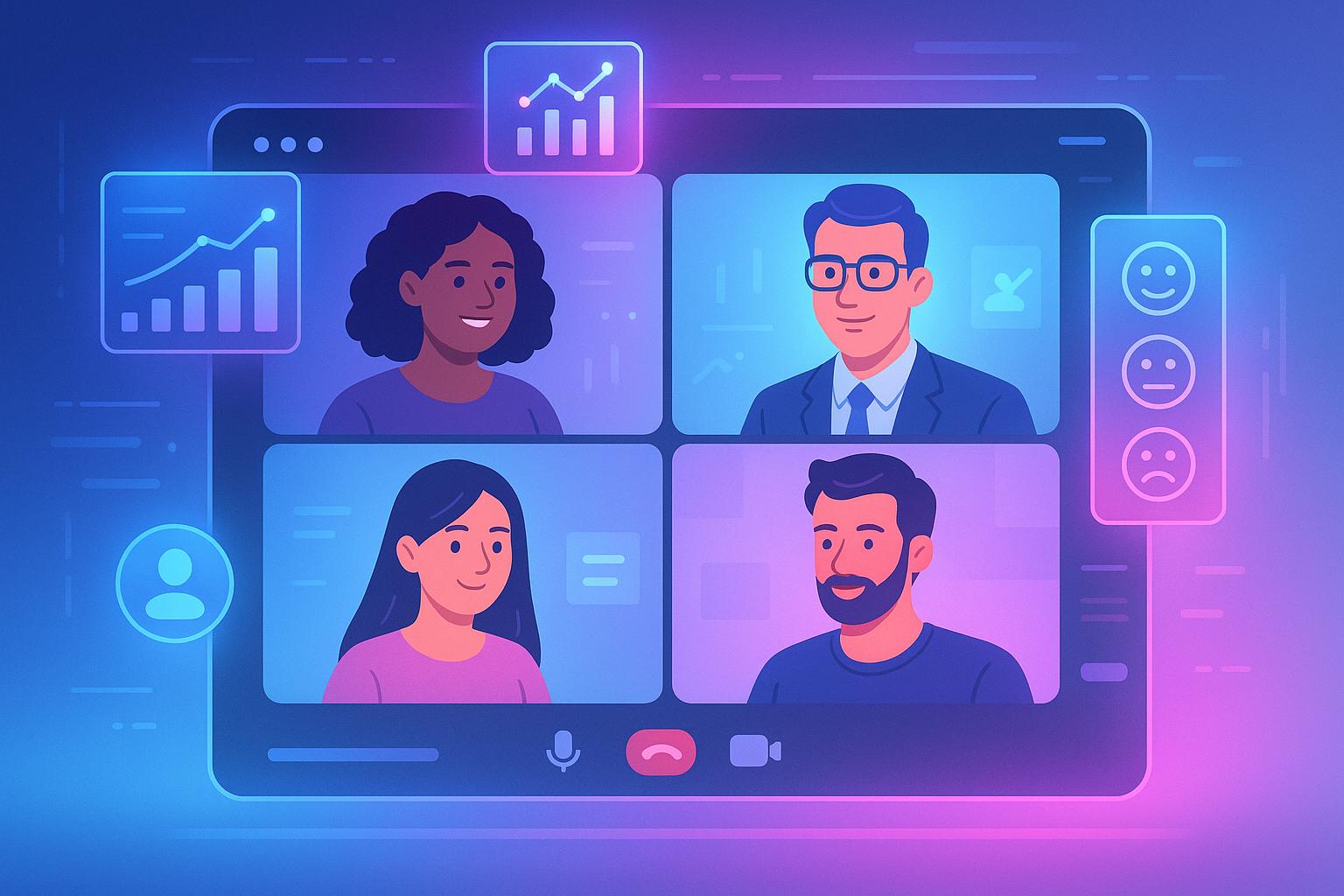
Video calls are no longer just about showing up - they’re about understanding how participants interact. AI is transforming this by analyzing behaviors, emotions, and preferences in real time. Here's how AI enhances virtual meetings:
Participation Tracking: AI predicts attendance and boosts engagement by identifying participants who may need extra encouragement.
Sentiment Analysis: Tools analyze tone, facial expressions, and body language to gauge emotions and prompt adjustments during calls.
Real-Time Feedback: AI captures live input through polls, chats, and reactions, helping hosts make on-the-spot improvements.
Retention Insights: Heatmaps and engagement curves reveal when and why participants disengage, offering actionable solutions.
Platforms like TwinTone take this further with AI-powered avatars that host live streams, answer questions, and create content, driving longer sessions and better outcomes. AI isn’t just tracking engagement - it’s reshaping how businesses connect with their audiences.
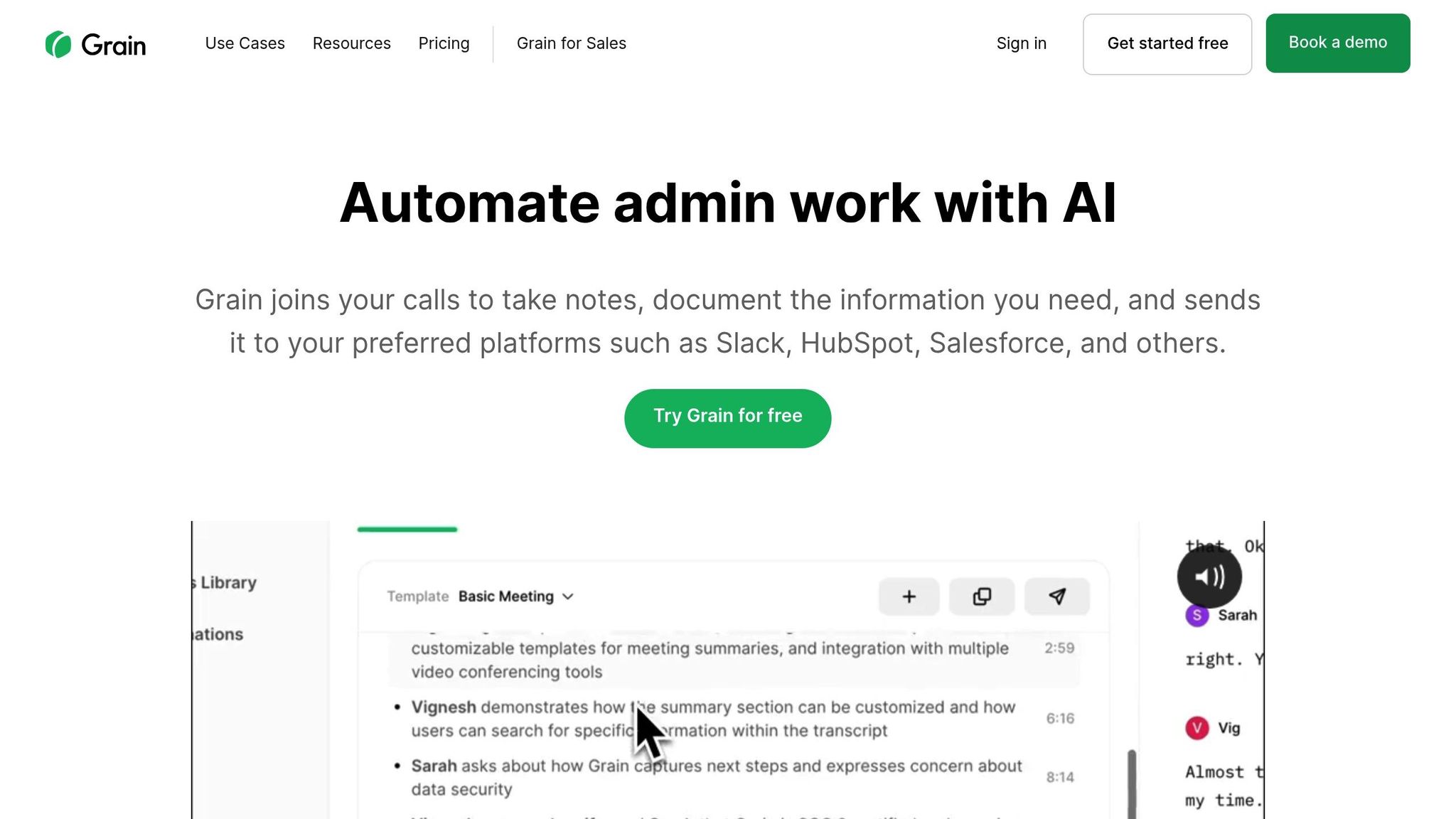
Maximize Sales Efficiency: AI-Driven Call Analysis with Grain and HubSpot
Key Metrics AI Improves in Video Calls
AI is changing how we measure and enhance engagement during video calls by delivering insights that go beyond traditional methods. By analyzing multiple data streams in real time, AI provides a clearer picture of how participants interact and engage. Here are some key metrics where AI makes a noticeable impact.
Participation Rates
AI plays a big role in increasing participation rates by using historical attendance data to optimize meeting logistics. For example, smart scheduling algorithms consider past attendance trends, time zones, and availability to recommend the best meeting times.
It doesn’t stop there. AI employs predictive attendance modeling, which forecasts not just who will attend but also who is likely to actively participate. By analyzing factors like speaking time, chat activity, and feature usage from previous calls, AI identifies participants who might need extra encouragement. Hosts can then take proactive steps to engage those individuals more effectively.
For brands and creators, this means consistently higher attendance and more active engagement during live sessions. With each interaction, the system learns and adjusts, making future recommendations even better.
Sentiment Analysis
One of AI’s standout contributions is real-time sentiment analysis. Using tools like natural language processing (NLP), speech analytics, and facial expression recognition (FER), AI evaluates participant satisfaction and emotional responses as discussions unfold.
This approach combines multiple data points - tone of voice, body language, and facial expressions - to provide a well-rounded understanding of participant sentiment. If the system detects a sudden drop in sentiment during a specific topic, it can alert the host to make adjustments on the fly, such as changing the tone, switching topics, or adding interactive elements to re-engage the audience.
By leveraging these multi-modal sentiment models, hosts gain accurate, actionable insights that allow them to keep participants engaged throughout the session.
Real-Time Feedback Collection
AI has transformed feedback collection by making it immediate and actionable. Unlike traditional surveys that often suffer from low response rates and delayed insights, AI captures engagement signals in real time. It tracks everything from chat activity and reaction usage to speaking patterns and feature interactions.
The system doesn’t just collect feedback - it organizes and prioritizes it. For instance, if several participants express confusion about a topic through chat or vocal cues, AI spots the pattern and notifies the host to address it right away. This allows for on-the-spot adjustments to keep the session on track.
AI also helps with post-call follow-ups by synthesizing feedback into personalized recommendations. If engagement drops or recurring questions arise, AI might suggest adding polls, breakout rooms, or other interactive elements to future sessions. This creates a continuous improvement loop that benefits both hosts and participants.
Retention and Completion Tracking
AI excels at identifying when and why participants disengage during video calls. By analyzing audience retention heatmaps, engagement curves, and view-through rates, it pinpoints drop-off moments and uncovers patterns that might otherwise go unnoticed.
The system tracks behaviors like turning the camera off, reduced chat activity, or signs of multitasking, correlating these with specific content segments. For instance, if participants consistently leave within the first 10 minutes, AI might recommend reordering the agenda to feature key content earlier or adding interactive elements at the start. Similarly, if certain presentation styles lead to lower engagement, adjustments to format or pacing can make a difference.
For creators and brands using tools like TwinTone, these insights are invaluable. By analyzing which styles, topics, or interaction patterns resonate most with audiences, AI helps refine future sessions. This data-driven approach ensures that each video call builds on past lessons, delivering a more engaging experience every time.
How TwinTone's AI Technology Improves Engagement

TwinTone is changing the game for video call interactions by leveraging AI to enhance engagement at every level. Their approach revolves around AI Twins - digital avatars that autonomously host live streams and produce branded content. These AI Twins eliminate the need for constant human involvement, solving a major hurdle in video engagement: delivering consistent, personalized interactions at scale. This setup paves the way for significant advancements in interaction quality, content creation, and actionable insights.
AI Twins for Personal Interaction
With TwinTone's AI Twins, creators can stay connected with their audiences 24/7 without being physically present. These avatars replicate a creator’s unique voice, mannerisms, and style, adding a personal touch to interactions. Even better, they support over 40 languages, enabling creators to engage with a global audience effortlessly.
During live streams, AI Twins keep viewers engaged by answering product-related questions, offering tailored recommendations, and maintaining a natural conversational flow. This dynamic interaction encourages participation and keeps audiences tuned in longer.
What makes this technology stand out is its ability to learn and adapt. Each interaction helps the AI Twin better understand audience preferences, resulting in improved engagement over time. This continuous learning boosts participation rates and extends session durations, making every interaction more impactful.
On-Demand UGC and Live Shopping
TwinTone's AI doesn’t stop at personal interactions - it also transforms content creation and live shopping. The platform can generate user-generated content (UGC) in just minutes, converting product images into UGC-style video ads using AI Avatars. Features like "Product in Hand" and "Dress Your Creator" allow brands to quickly produce authentic, high-quality content.
For live shopping, TwinTone’s AI-powered live streams run around the clock, automatically answering questions, engaging viewers, and driving sales. This automation eliminates common delays like coordinating with creators, negotiating brand deals, or editing content. Brands can launch campaigns almost instantly, speeding up their marketing efforts.
One beauty brand saw impressive results with TwinTone, achieving a 30% increase in average session duration and a 20% boost in conversion rates during live shopping events compared to their traditional live streams.
Performance Analytics and Insights
TwinTone offers real-time analytics to help users understand their audience and refine their strategies. The platform tracks metrics like participation rates, viewer sentiment, session durations, click-throughs, and conversions, giving a comprehensive view of performance.
The analytics dashboard is designed to be user-friendly, highlighting which content drives the most engagement and sales. Brands can identify where viewers drop off, uncover topics that resonate, and adjust their AI Twins for better results. This constant feedback loop ensures that each session builds on past insights, leading to smarter engagement strategies over time. By focusing on data-driven optimization, TwinTone ensures that brands stay ahead in the ever-evolving landscape of digital interactions.
Methods for Measuring and Improving Engagement
Creating engaging video call experiences requires careful measurement and smart adjustments based on data. AI tools make it possible to track what’s working, identify areas for improvement, and refine your approach. These tools provide the foundation for testing and personalizing interactions, which can lead to better engagement.
A/B Testing with AI
AI-powered A/B testing takes the guesswork out of optimizing video calls. By systematically testing different elements, you can rely on data to guide your decisions.
For example, you can test visual elements like thumbnails or call-to-action buttons, as well as content timing, such as when to launch polls or interactive features. AI can rotate these variables and reveal what drives higher participation and click-through rates.
Timing is especially important. AI can help determine the ideal length for your video calls, figure out whether interactive features work better at the beginning or end of a session, and identify which formats hold viewers’ attention the longest. The trick is to test one variable at a time, so you can clearly see what’s improving results.
According to recent data, brands using AI-generated interactive video ads on social media experienced a 52% higher engagement rate compared to traditional video ads. This led to noticeable boosts in both click-through rates and e-commerce conversions.
Personalization at Scale
AI makes it possible to deliver personalized experiences to large audiences - going far beyond simply adding a viewer’s name to a greeting.
With dynamic content adjustment, AI can tailor what viewers see based on their behavior and preferences. For instance, if someone tends to engage more with product demos than educational content, the AI can prioritize showing them demos during a live stream. On the other hand, viewers who prefer detailed explanations can be shown more in-depth information.
Behavioral triggers are another powerful tool. AI can respond to engagement signals by suggesting relevant resources, adjusting the pace of a presentation, or shifting to topics that have previously captured a viewer’s attention. This kind of personalization ensures that each viewer gets a more relevant, engaging experience.
Re-Engagement Tactics
Even with personalized adjustments, some viewers may lose interest during a video call. AI can step in with strategies to re-engage them, often before they’re fully disengaged.
Real-time disengagement detection allows AI to monitor participation levels, watch time, and interaction frequency. If someone stops engaging in chat or leaves early, the system can flag them for follow-up.
Once disengagement is detected, AI can trigger automated actions. For example, if a viewer leaves a call early, the system might send a personalized email summarizing what they missed and inviting them to future sessions. For those who stayed but interacted minimally, targeted content recommendations based on the call’s topics could help re-capture their interest.
In 2024, Wistia reported that lead generation forms placed at the end of 60+ minute videos achieved a 65% conversion rate, while forms in the third quarter of 1–3 minute videos converted at 58%. This data inspired several SaaS companies to tweak their webinar and demo formats, leading to a 30% increase in qualified leads over six months. The takeaway: timing plays a huge role in re-engagement.
Predictive re-engagement takes things further by using historical data to anticipate when viewers might disengage. AI can then intervene proactively, introducing personalized content or interactive features like polls or direct questions to keep their attention.
The most effective re-engagement strategies combine multiple steps. For example, a viewer showing signs of disengagement might first receive personalized content during the call. Afterward, they could get a follow-up email with relevant resources and an invitation to future sessions. This layered approach significantly boosts the chances of reactivating disengaged viewers.
The Future of AI in Video Call Engagement
AI has transformed video call engagement, moving from simple analytics and automated responses to delivering personalized experiences on a large scale. The numbers paint a clear picture: the AI-generated video market is expected to hit $14.8 billion by 2030, growing at an impressive annual rate of 35%. At the same time, live video streaming is projected to reach $184 billion by 2027, and video content is anticipated to represent 82% of all internet traffic by 2025. These trends highlight how AI is shaping the future of digital communication and creating opportunities for businesses to thrive.
The Business Advantage of AI
AI-powered tools are giving businesses a competitive edge by offering more than just traditional engagement metrics. They bring benefits like scalable outreach, actionable insights, and cost-effective solutions. Companies leveraging AI platforms can track user activity, monitor feature usage, and analyze meeting frequency to refine their strategies and boost returns on investment (ROI).
For businesses in the U.S., these tools directly impact profitability. By automating tailored interactions and providing real-time analytics, AI enhances ROI - a strategy that companies like TwinTone have fully embraced. TwinTone creates AI Twins modeled after real creators, capable of producing branded content and hosting live streams in over 40 languages. These AI Twins operate around the clock, driving engagement and increasing revenue without the need for constant human involvement. As these technologies evolve, they’re setting the stage for even more transformative trends in engagement.
Emerging Trends in AI Engagement
With businesses already seeing the advantages of AI, emerging trends are pushing engagement to new heights. Multi-modal AI models now seamlessly combine text, audio, and video, delivering a deeper understanding of user interactions. Meanwhile, hyper-personalization - customizing experiences based on individual behavior and emotions - is quickly becoming the norm, particularly for U.S. audiences who expect a high level of tailored content.
One standout development is AI live-shopping. This innovation allows brands to run 24/7 branded streams where AI Twins act as digital hosts, promoting products, answering questions, and driving sales. These Twins, designed to replicate real creators, maintain authentic engagement while scaling outreach efforts. Brands no longer need a constant human presence to connect with audiences effectively.
The technology doesn’t stop there. Features like "Dress Your Creator" enable brands to quickly update their AI Twins with specific outfits and styles, keeping content fresh and aligned with current trends. For larger enterprises, the ability to clone custom avatars adds another layer of brand integration, making interactions even more personalized.
Experts predict that AI will continue to make video call engagement more interactive, data-driven, and scalable. By blending automated yet authentic interactions with real-time analytics, U.S. brands can strengthen customer relationships and achieve sustained growth. As AI capabilities expand, the distinction between live and automated experiences will become increasingly seamless, making high-quality engagement accessible to businesses of all sizes.
The future belongs to brands that combine the genuine appeal of human creators with the reliability and scalability of AI. Platforms like TwinTone are leading this evolution, helping businesses connect with audiences more effectively while offering creators new ways to monetize their presence through AI-powered counterparts.
FAQs
How does AI-powered sentiment analysis enhance video call engagement?
AI-powered sentiment analysis takes video call interactions to the next level by offering real-time feedback on participants' emotions and reactions. By examining factors like tone of voice, facial expressions, and word choice, AI can help determine how engaged or satisfied people are during the conversation.
This kind of insight lets hosts adapt on the fly to keep discussions lively and inclusive. For instance, if the analysis shows participants seem uninterested or distracted, the host can switch up the topic or actively involve others in the discussion. The result? More engaging and productive conversations that resonate with everyone involved.
How do AI-powered avatars boost engagement during video calls?
AI-powered avatars, like the AI Twins developed with TwinTone, are transforming how we interact during video calls. These digital replicas of real creators can take on tasks such as hosting live streams or generating branded content automatically, offering audiences an interactive and dynamic experience.
For brands, this technology opens the door to delivering consistent and personalized interactions on a larger scale. It not only boosts audience participation but also helps build stronger connections with viewers. Plus, businesses can track and improve engagement metrics - like sentiment analysis and audience feedback - while cutting down on time and resource demands.
How can businesses use AI to boost engagement and retain participants in virtual meetings?
AI has the potential to transform virtual meetings by analyzing how participants engage and offering useful insights. For instance, AI tools can monitor participation levels, gauge audience sentiment by interpreting facial expressions or tone of voice, and review feedback to pinpoint areas that need attention.
Using this data, businesses can craft more engaging presentations, choose the best times for meetings, and tailor the experience to suit attendees’ preferences. Tools like TwinTone take it a step further by introducing AI-powered hosts, making sessions more dynamic and interactive to hold participants’ attention and boost retention.