How AI UGC is taking over the world
How to build a futureproof relationship with AI
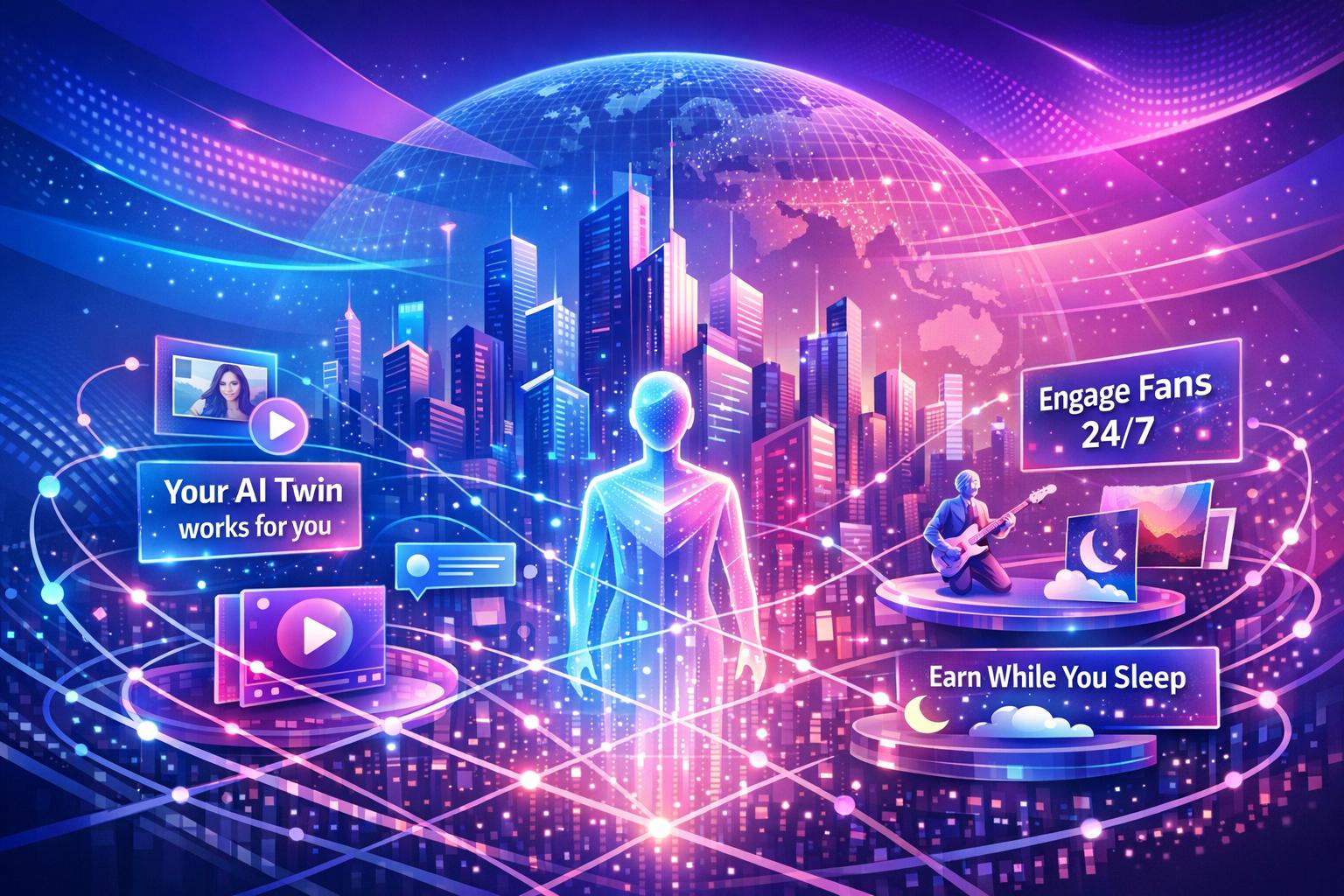
AI-generated user-generated content (AI UGC) is transforming how brands create and distribute content. Instead of relying on manual production, companies now use AI tools to produce videos, scripts, and social media posts in minutes. This approach saves time, reduces costs, and scales campaigns while maintaining a relatable tone.
Key takeaways:
Market Growth: Valued at $7.62 billion in 2024, the AI UGC market is projected to hit $35.44 billion by 2030, growing at 29.20% annually.
Efficiency: Brands like Shapermint reduced production time by 70%, creating 60–90 videos a day using AI tools.
Cost Savings: AI UGC slashes video production costs by up to 90%, making it accessible for brands with shrinking budgets.
Consumer Trends: Over 50% of Gen Z and Millennials prefer UGC over traditional media. AI helps brands meet this demand on platforms like TikTok and Instagram.
AI UGC platforms like TwinTone automate everything from scriptwriting to video creation, leveraging technologies like large language models (LLMs) and AI avatars. These tools allow brands to quickly test multiple content variations, localize campaigns in 40+ languages, and track real-time performance. While AI UGC is reshaping digital marketing, many brands still balance it with human-created content to maintain trust, as 57% of consumers prefer human-generated material.
This shift is not just about speed - it’s about creating content that resonates with today’s audiences while optimizing for performance and ROI. As the global creator economy grows, AI UGC is becoming a key tool for brands looking to stay competitive.
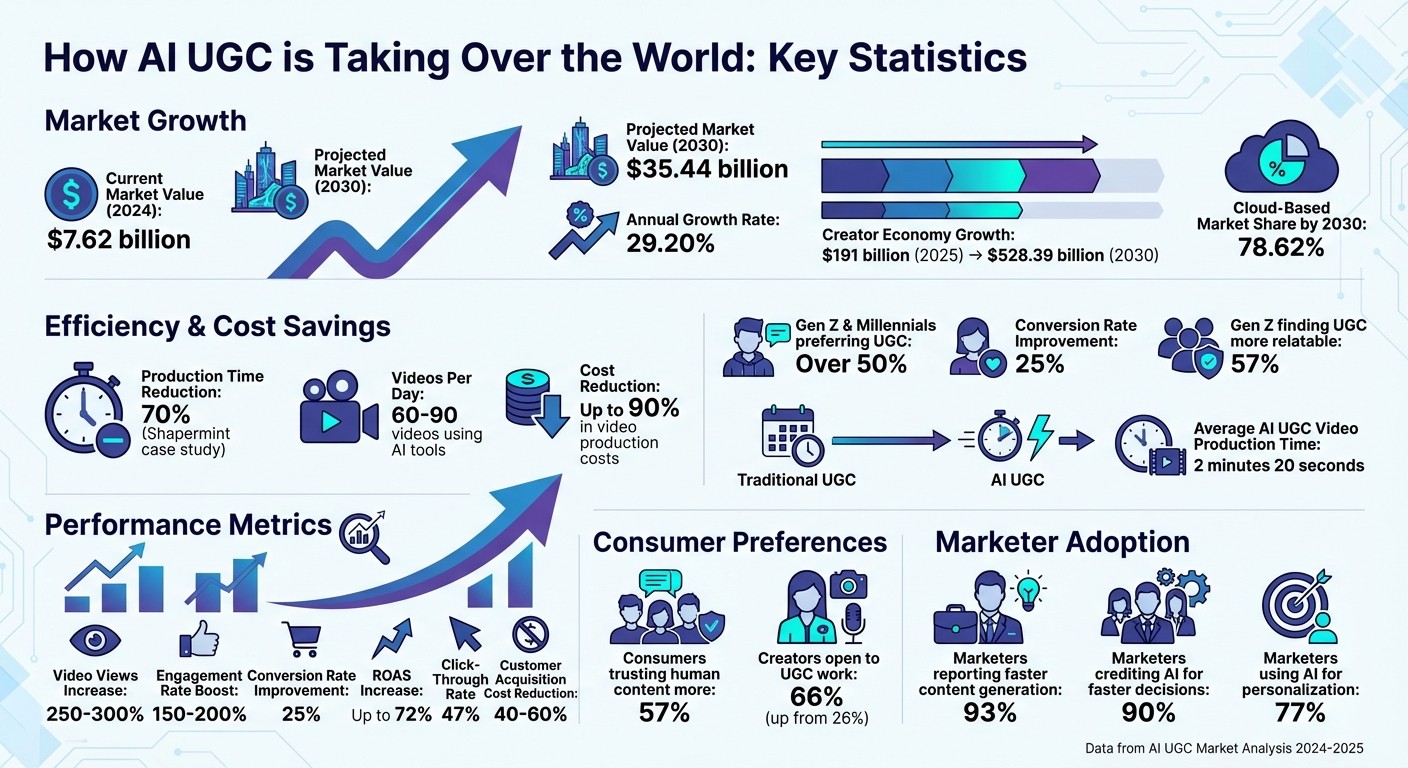
AI UGC Market Growth and Performance Statistics 2024-2030
I Built the Ultimate UGC Content System with AI Agents (free template)
Technologies Behind AI UGC Platforms
AI UGC platforms leverage a mix of cutting-edge technologies like multimodal AI models, large language models (LLMs), and programmatic APIs to produce content at an impressive scale. These systems streamline the entire process - from scriptwriting to final video production - delivering multiple content variations in mere minutes, a task that traditionally could take weeks.
At the heart of these platforms are advanced video generation tools such as Veo 3, Sora 2, and Seedance. These engines create lifelike synthetic videos that are almost indistinguishable from human-produced footage. For the creative side, LLMs like Anthropic's Claude and OpenAI's GPT-4 are employed to generate scripts and storyboards, often informed by performance data from previous campaigns. Some systems even monitor social media trends in real time, identifying emerging topics 7–10 days before they peak. This combination of visual content generation, creative automation, and trend forecasting forms the backbone of modern AI UGC platforms. Let’s break down the key components: AI Twins, on-demand automation, and programmatic APIs.
AI Twins and Creator Avatars
AI Twins are digital replicas of real people, created by licensing their name, image, and likeness. These clones include fine details like voice patterns, facial expressions, and even subtle movements like eye shifts. Brands use these avatars as virtual spokespeople, sidestepping traditional production challenges like scheduling conflicts, wardrobe costs, and physical filming locations.
Using LLMs like Claude, platforms craft performance-driven scripts, which are then converted into videos by tools such as Veo 3 or Sora. A notable example is "Granny Spills", an AI-generated influencer launched by creators Eric Suerez and Adam Vaserstein in November 2025. This character amassed 400,000 TikTok followers and 1 million Instagram followers within weeks. Each video took just 5–10 minutes to produce, compared to the days typically required for traditional production.
"What's really great with AI content is that they're not embarrassed to say things that a normal human would typically feel uncomfortable putting out in the public." - Eric Suerez, Co-creator of Granny Spills
This rapid production capability allows brands to run A/B tests efficiently, generating multiple variations with different personas or angles in a fraction of the usual time. Still, 57% of people report trusting human-generated content more than AI-produced material. As a result, many brands are opting for a hybrid approach, using AI for scripting and storyboarding while continuing to film with human creators.
On-Demand UGC and Livestream Automation
AI platforms have revolutionized product videos and shoppable content by automating the entire production process. Brands can now create on-demand demos, tutorials, and livestreams featuring AI avatars.
URL-to-ad conversion technology scrapes product details from a URL to generate scripts, choose avatars, and produce polished video ads in minutes. These platforms offer extensive libraries of AI actors - ranging from 300 to over 1,500 - capable of mimicking human gestures, lip-syncing, and tone to create authentic-looking "user-style" content without involving real people. The average time to produce an AI UGC video? Just 2 minutes and 20 seconds.
Take Zalando, for instance. The European fashion retailer slashed its product image production timeline from 3–8 weeks to just 3–4 days using generative AI under the guidance of Matthias Haase, Vice President of Content Solutions. This shift also reduced production costs by nearly 90%. Similarly, edtech brand Headway scaled its ad campaigns with AI creators, achieving 3.3 billion impressions in six months and boosting video ad ROI by 40%.
"We are using AI to be able to be reactive… I see it rather that creative minds have now, instead of two hands, six hands." - Matthias Haase, Vice President of Content Solutions, Zalando
AI also enables instant localization, delivering content in over 140 languages and expanding global reach effortlessly. Next, let’s dive into how APIs streamline and automate content production.
APIs and Programmatic Content Production
For brands managing extensive product catalogs, API integrations have become a game-changer. These tools seamlessly connect content creation to performance data and product information, enabling the automated production of hundreds of video variations across thousands of SKUs.
Platforms like Creatify and Meta provide APIs that integrate directly with existing CRM or CMS workflows. Features like "Batch Mode" allow brands to generate 10 or more video variations for rapid A/B testing. This capability is invaluable for brands needing to test multiple creative strategies quickly.
Consider Nano Foam. Using the MakeUGC platform, Eileen Lee, Senior Marketing Manager, ran an ad campaign where a $19,000 investment resulted in $69,000 in total sales - a 3.73x return on ad spend (ROAS). The ability to programmatically create and test content variations was crucial in identifying the best-performing ads.
Beyond video creation, APIs also support content discovery and moderation. AI-powered filters and natural language processing tools scan social media to identify, rank, and moderate content based on brand guidelines. This automation removes manual bottlenecks, with 77% of marketers now using AI-driven tools for personalized content creation. Brands employing AI for ad optimization have reported up to a 72% increase in ROAS, with click-through rates rising by nearly 47%. These advancements highlight the efficiency and scalability of AI UGC platforms, which continue to reshape digital marketing strategies.
TwinTone's AI UGC Platform: Features and Pricing

TwinTone provides a streamlined solution for brands aiming to ramp up their content production. The platform transforms creators into AI Twins - digital versions that can generate UGC videos on demand, host automated livestreams, and deliver shoppable content 24/7. Traditional UGC workflows often take 2–3 weeks and cost between $150–$300 per video. TwinTone, however, produces content in just minutes, with costs ranging from $10–$30 per video.
TwinTone Platform Features
At its core, TwinTone focuses on AI Livestreams and on-demand UGC creation. Brands can deploy interactive video streams on platforms like TikTok, Amazon, YouTube, Twitch, and Shopify. These streams maintain the creator's original tone, style, and personality while showcasing products in a realistic way. For instance, digital avatars can hold, display, or even "use" physical products, all generated from a simple photo or video upload.
The platform supports multilingual content in over 40 languages, making it easy for brands to execute global campaigns without language barriers. Custom AI avatars can be created or cloned in just 60 seconds, ensuring a consistent look and feel across thousands of products. With API access, brands can automate the production of hundreds of video variations for A/B testing, bypassing manual delays. Additionally, real-time performance analytics provide insights into engagement, conversions, and ROI. Brands leveraging AI-powered optimization have reported up to a 72% increase in return on ad spend. These features make TwinTone a flexible and scalable solution for businesses of all sizes.
Pricing Plans: Starter, Pro, and Enterprise
TwinTone offers three pricing tiers designed to meet the needs of different brands:
Plan | Monthly Cost | Key Deliverables |
|---|---|---|
Starter | $110 | 10 AI UGC videos, AI creator avatars, multilingual output, up to 60-second videos |
Pro | $220 | 20 AI UGC videos, creator gestures, advanced voice styles, multilingual variations |
Enterprise | Custom Pricing | 50+ videos, premium creators, AI livestreaming, priority support, tailored brand-specific training |
The Starter Plan at $110 per month is ideal for small brands or individual creators looking to dip their toes into AI-driven content creation. For $220 per month, the Pro Plan caters to growing brands that need higher volumes of content for multi-channel campaigns and A/B testing. According to studies, 93% of marketers using AI report faster content generation, while 90% say it accelerates decision-making. For larger operations, the Enterprise Plan offers custom pricing and advanced features like AI livestreaming, premium creators, and dedicated support.
Platform Integration and Analytics
TwinTone goes beyond content creation by integrating directly with leading e-commerce and social platforms like TikTok, Amazon, and Shopify. Its API-driven architecture allows seamless connection with existing CRM and CMS systems, enabling brands to scale creative output across their entire product catalog.
The platform also includes a robust analytics dashboard that tracks key metrics such as engagement rates, click-through rates, and conversions in real time. Brands using real-time analytics in their campaigns have seen 37% higher response rates compared to those that don’t. On platforms like Facebook and Google, AI-generated ad creatives from TwinTone have boosted click-through rates by 47%. Additionally, companies employing AI-driven personalization have reported up to a 40% increase in average order value. By combining seamless integration with actionable data, TwinTone helps brands fine-tune their content strategies and achieve better ROI, eliminating the guesswork often associated with traditional UGC campaigns.
How Brands Are Using AI UGC
Product Demos and Shoppable Videos
Brands are turning static images into engaging videos in just minutes, sidestepping the need for traditional production studios. Take Zalando, Europe’s top fashion retailer, for instance. Using generative AI, they created 70% of their editorial campaign images in Q4 2024. According to Matthias Haase, Zalando’s Vice President of Content Solutions, this approach slashed production time from 6–8 weeks to just 3–4 days and cut costs by a staggering 90%. This speed allowed them to quickly adapt to fast-changing social media trends.
"It's not because of AI content that is better than human-created content, it is really about how new, how relevant it is to our customers." – Matthias Haase, Vice President of Content Solutions, Zalando
Unilever also embraced AI with its "SuperShoots" model during the October 2025 launch of Closeup "White Now" toothpaste. In just three days, they generated over 100 assets across ten modular setups. Similarly, fitness brands using AI-generated product videos have reported a 25% boost in conversion rates and a 40% jump in engagement.
But AI UGC isn’t just about product showcases - it’s also revolutionizing influencer campaigns.
Automated UGC Ads and Social Commerce
AI UGC is streamlining influencer campaigns by eliminating the need for manual coordination. SelfMade Agency, for example, used AI tools like Arcads and HeyGen to create content with an avatar modeled on Ariel Marie. What used to take 3–8 weeks was reduced to just 15–30 minutes. This speed lets the agency test far more creative ideas and personas.
AI tools for trend detection and creative intelligence are also delivering impressive results. Brands have seen ad spend ROI improve by 3–5x, while automated UGC systems have driven video views up by 250–300% and boosted engagement rates by 150–200%.
The shift to AI-powered UGC isn’t just about saving time - it’s delivering measurable performance gains.
Performance Comparison: Manual vs. AI UGC
Here’s how AI UGC stacks up against traditional methods:
Metric | Manual UGC | AI UGC |
|---|---|---|
Time to Produce | Several weeks | 15 to 30 minutes |
Scalability | Limited by human hours | Unlimited; 100+ assets in 3 days |
Cost per Video | High (studio, equipment, travel) | 90% cost reduction |
Conversion Lift | Moderate | High (25% improvement reported) |
24/7 Availability | No | Yes |
This table highlights why brands are moving from experimental AI efforts to full-scale adoption. The ability to produce hundreds of localized ad variations in a fraction of the time traditionally required is reshaping how companies approach social commerce and paid advertising.
What's Next for AI UGC in the Creator Economy
Cloud-Based Solutions and Market Growth
The rise of cloud-based AI UGC platforms is reshaping the creator economy. By 2030, these platforms are projected to dominate 78.62% of the market, propelling the industry from $191 billion in 2025 to an impressive $528.39 billion by 2030.
This surge is driven by brands realizing that traditional content production simply can't keep up with the growing demand. Cloud-based platforms remove production delays, enabling content creation to operate seamlessly around the clock. Instead of waiting weeks, marketers can now generate videos in mere minutes. In fact, 93% of marketers report faster content generation, while 90% credit AI with speeding up decision-making. These advancements are paving the way for the next generation of AI-driven content.
Future AI Content Capabilities
AI UGC is on track to evolve far beyond basic avatar videos. Advanced real-time optimization systems are already analyzing ad performance and making automatic adjustments to visuals, scripts, and calls-to-action to improve results. Brands using these systems have seen up to a 72% increase in return on ad spend.
The integration of AI with AR/VR technologies, which are expected to grow into a $387.34 billion market by 2029, is another game-changer. These tools will make it possible for consumers to engage with AI avatars in virtual environments and even test products before purchasing. Amazon is already experimenting with this concept. Their AI-powered "shopping experts" provide short-form audio summaries on product pages. Rajiv Mehta, Amazon's Vice President of Search and Conversational Shopping, shared:
"We've recently started testing new short-form audio product summaries on select product detail pages, with AI-powered shopping experts discussing key product features".
Meanwhile, synthetic media is advancing at breakneck speed. The next generation of AI avatars will feature more realistic facial expressions, natural gestures, and voice cloning that captures human speech patterns with striking precision. These breakthroughs are not just reshaping content creation but also influencing how brands position themselves in the marketplace.
TwinTone's Position in the AI UGC Market
As these technologies mature, platforms are stepping up to meet the growing demand. TwinTone stands out by offering brands unlimited content creation through AI-powered "creator Twins" that maintain the authentic tone, style, and personality of real creators. With its API, TwinTone allows brands to produce programmatic content for entire product catalogs, creating hundreds of localized variations quickly. Supporting over 40 languages, the platform eliminates geographic barriers that have traditionally hindered direct-to-consumer growth.
TwinTone also features a robust analytics dashboard, providing real-time data on conversions, engagement, and ROI. This allows brands to fine-tune their campaigns as they go. With the creator economy booming - 66% of creators are now open to UGC work, a significant jump from 26% previously - TwinTone is positioning itself as a cornerstone for the next wave of social commerce. By transforming creators into scalable AI assets, it’s helping brands stay ahead in an ever-evolving market.
Conclusion: How AI UGC is Changing Digital Marketing
AI-generated user content (AI UGC) has reshaped how brands approach content creation and distribution. Tasks that once required weeks can now be completed in mere minutes thanks to AI-powered tools. The impact is clear: companies utilizing AI-driven trend intelligence have reported 250–300% increases in video views and 40–60% reductions in customer acquisition costs. Recent success stories highlight how AI tools not only streamline production but also drive revenue growth. This newfound speed and efficiency emphasize the importance of blending technological advancements with the trusted touch of human creativity.
While AI has made significant strides, the AI and human influencers both play roles, but the human element remains irreplaceable. A notable 57% of consumers still trust content created by humans more than AI-generated alternatives. This underscores the need for a balanced approach, where AI supports rather than replaces creative efforts. As Nicole Greene, VP and Analyst at Gartner, aptly puts it:
"CMOs continue to be asked to do more with less... Gen AI is giving us that capability to do more".
By adopting AI UGC platforms, brands gain a competitive advantage through hyper-personalized, scalable, and real-time optimized content. With 56% of Gen Z identifying UGC as more relatable than traditional media and the creator economy projected to skyrocket to $528.39 billion by 2030, the opportunity for adoption is undeniable.
Platforms like TwinTone are leading the way by merging AI efficiency with the authenticity of real creators. TwinTone's innovative approach transforms creators into AI Twins, generating limitless content while preserving each creator's unique style and personality. This model demonstrates how brands can scale AI-driven content without losing the genuine connection that resonates with audiences.
The future of digital marketing will belong to brands that successfully combine the speed and scalability of AI with the authenticity and trustworthiness of human creativity. Those who embrace this balance will leave behind competitors still clinging to traditional, labor-intensive methods of content creation.
FAQs
How does AI-generated UGC improve content creation for brands?
AI-driven user-generated content (UGC) is reshaping the way brands approach content creation. By automating the production of images, videos, and text, it allows businesses to generate personalized, high-quality assets on a large scale, cutting down both production time and costs.
Thanks to AI, brands can craft ready-to-use content in just minutes. This means faster turnarounds without compromising on creativity or relevance. The result? More efficient workflows and content that connects with audiences on a deeper, more personalized level.
What challenges come with relying only on AI-generated content?
Relying entirely on AI-generated content comes with its fair share of challenges for brands. One of the biggest concerns is authenticity. Content created by AI can sometimes feel artificial, and if audiences pick up on this, it could erode their trust in the brand. This not only risks damaging the brand’s reputation but also raises ethical questions about transparency and honesty.
There’s also the issue of alienating human creators. Influencers and content creators might feel replaced by AI tools, which could lead to backlash on social media and even draw attention from regulators. On top of that, AI models often reflect biases present in their training data. This can result in content that unintentionally excludes or misrepresents certain groups, further chipping away at trust and inclusivity.
Lastly, leaning too heavily on AI can make marketing campaigns come across as impersonal or overly generic. Unlike human-driven storytelling, which creates emotional connections, AI content can sometimes lack that personal touch. The key is finding the right balance - using automation where it makes sense but still incorporating the human element to keep your audience engaged on a deeper level.
How can brands use AI-generated UGC while keeping it authentic and trustworthy?
To strike the right balance between AI-generated content and authenticity, brands should view AI as a tool that complements human creativity, not a replacement for it. While AI can streamline content production and add a layer of personalization, the heart of a brand's strategy should still revolve around authentic elements like customer reviews, unboxing videos, and testimonials. These genuine interactions foster trust and connect with audiences on a deeper level.
Being transparent is crucial. If AI plays a role in content creation, make it clear with a simple note, such as "Created with AI assistance." This openness helps maintain credibility and avoids raising doubts. Additionally, human editors should always review AI-generated material to ensure it aligns with the brand's voice and feels natural - never mechanical.
A good approach might involve blending 70% real user-generated content with 30% AI-assisted material. Brands should keep an eye on engagement metrics and tweak this mix as needed to maintain trust while taking advantage of AI's capabilities.