brand marketing
AI Hosts for Brand Partnerships: A New Model
AI hosts let brands produce branded content and run live shopping events at scale, cutting production costs and expanding reach without creator burnout.
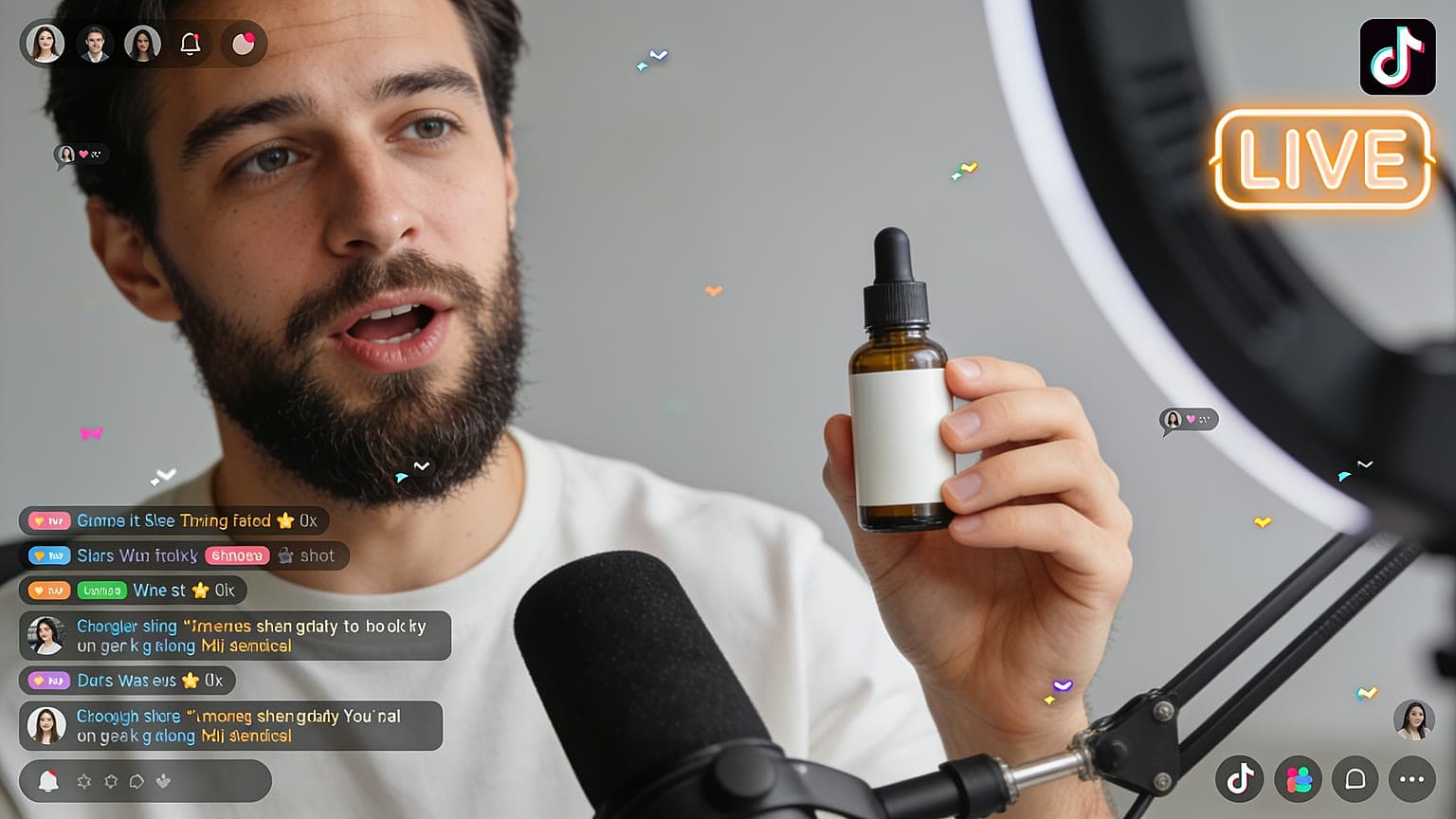
AI hosts give brands a scalable way to produce branded content, run live shopping events, and engage audiences 24/7 without the scheduling and burnout limits of human creators. Brands scan their site, pick an AI host, and go live on platforms like YouTube Live, Twitch, and own-site embeds.
AI hosts are transforming the way brands and creators collaborate by breaking down barriers like time, location, and human limitations. Instead of waiting weeks for a handful of posts, brands can now produce thousands of tailored assets in just days while preserving the creator’s original style. This isn’t about replacing human creativity · it’s about expanding its reach, enabling one creator’s voice to resonate across millions and on countless platforms. Let’s dive into how AI hosts are driving personalized content, continuous campaigns, and live engagement.
AI hosts are revolutionizing content production with unprecedented efficiency. For example, in July 2025, Nestlé teamed up with Microsoft, Accenture Song, and NVIDIA to create an AI-powered service that developed 4,000 3D digital twins for products from brands like Purina and Nespresso. This initiative slashed content production time and costs by 70%. David Rennie, Nestlé's Head of Strategic Business Units, explained:
"Our new content organization means we can do more with the talented teams we have, leveraging their skills to produce high-quality, consistent, scalable content supported by AI digital assistants and digital twin technologies".
How AI-Generated Influencers Are Shaping the Future of Marketing
Personalized Content at Scale
Here’s how it works: a brand creates a single 3D digital twin of a product using frameworks like OpenUSD. AI-powered studios then generate countless variations, from packaging to language, without the need for reshoots. Campaigns that once required coordinating multiple influencers can now remix one piece of creator content into hundreds of formats tailored to specific platforms. Unilever experienced this firsthand during a Dove x Crumbl campaign. Remixing influencer posts led to 3.5 billion earned social impressions, with 52% of buyers being new to the Dove brand.
AI hosts also enable advanced testing through Agentic AI. Marketers can interact with digital twins that represent different customer segments · like loyal customers versus churned users · to test personalized messages before launching a campaign. This allows brands to conduct A/B testing on thousands of content variations in just hours, ensuring only the most effective messages go live.
Traditional influencer campaigns can be costly and difficult to manage. Virtual influencers offer a more efficient solution, free from challenges like scheduling conflicts, burnout, or aging.
These digital personalities also deliver better results. Sponsored posts from virtual influencers generate 13.3% more engagement than their organic content, while human influencers typically see a 2.1% dip in engagement on sponsored posts. In the fashion and beauty industries, virtual influencers’ paid posts outperform unpaid ones by 16.3%.
A notable example is British fashion house Ralph & Russo’s 2020 couture collection, which featured Hauli, a custom-designed Black virtual model. Hauli appeared at iconic landmarks like the Taj Mahal and the Great Wall, earning 19.4 million views and $65.1 million in media exposure value. By separating content production from human limitations, brands can run campaigns that operate around the clock, spanning time zones and platforms seamlessly.
Continuous Influencer Campaigns
AI hosts aren’t just reshaping content creation · they’re redefining how brands interact with audiences. These technologies enable one-on-one, real-time engagement. Imagine an AI host hosting a live shopping event, answering customer questions, and adapting to trending topics · all without the logistical hurdles of human creators.
L'Oréal has embraced this approach through its CREAITECH content creation lab, which uses 3D product renderings and AI to produce thousands of unique, on-brand images and videos for social media and influencer marketing. Anne Machet, L'Oréal's Global Head of Content and Entertainment, highlighted:
"Generative AI enables our teams and partner agencies to explore creative possibilities... AI doesn't think with the same constraints as a human being. That opens new avenues for creativity".
This technology drives innovations like shoppable videos and 360-degree product views that adjust in real time based on user engagement, boosting conversions.
The shift from one-size-fits-all campaigns to personalized, interactive experiences is already yielding results. For instance, Moët Hennessy partnered with Grip and NVIDIA Omniverse to produce over 3 million content variations globally at twice the speed of traditional workflows, all while maintaining strict brand consistency. AI hosts can even create personalized video responses, addressing followers by name and incorporating specific data or trends · a level of mass personalization that was once unthinkable.
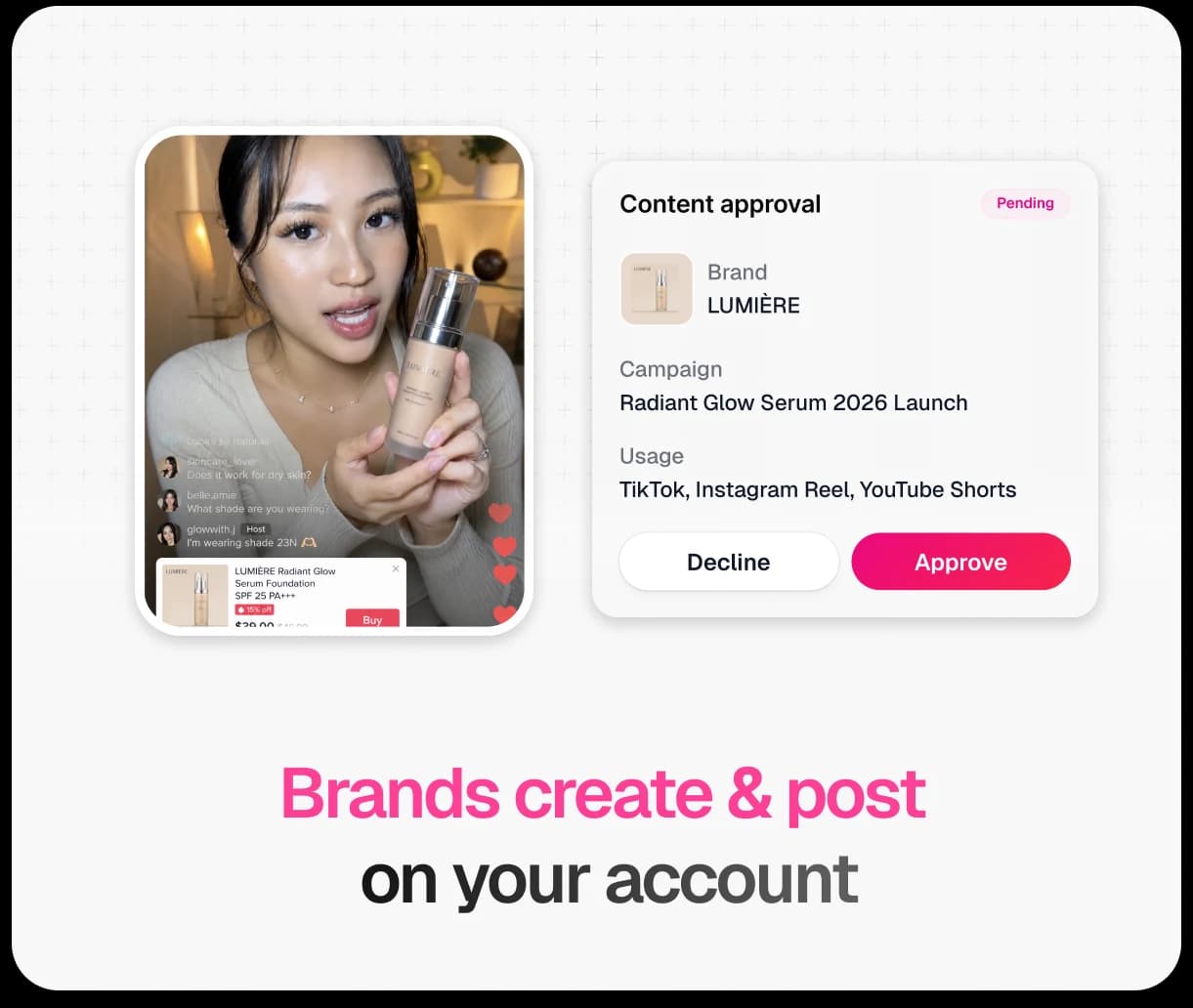
Remixing influencer posts led to 3.5 billion earned social impressions, with 52% of buyers being new to the Dove brand.
How AI hosts Change Brand Partnerships
Real-Time Audience Engagement
AI hosts are reshaping how brands collaborate, offering a fresh way to streamline marketing efforts. To make the most of this technology, focus on one high-friction area in your strategy · whether it’s content localization, performance reporting, or AI vs. manual creator discovery. By 2025·2026, a staggering 94% of marketers are expected to incorporate AI into their workflows in some form. A phased approach can help seamlessly integrate AI hosts into your existing processes, turning them into valuable collaborators.
Selecting the right AI host platform is key to success. Look for platforms that integrate effortlessly with your current tools, such as your CRM, Shopify store, TikTok Shop, or Amazon Live. Open API access is a must, as it enables a unified view of your marketing funnel · from content creation all the way to sales. For example, TwinTone provides API capabilities that allow brands to programmatically generate content across entire product catalogs while tracking real-time conversions.
Scalability is another critical factor. The platform should handle large volumes · think thousands of product conversions · while maintaining consistent quality and staying true to your brand’s voice. Multilingual capabilities are equally important. Platforms that support 40+ languages can drastically cut localization timelines, as demonstrated by L'Oréal, which localized campaigns in hours instead of weeks. After picking a platform, start by testing its functionality with targeted campaigns.
Begin with a focused approach. Test a specific campaign element, such as creating product demo variations or repurposing user-generated content for multiple platforms. Run these tests across two or three campaigns before expanding further. Apollo Neuro provides a great example: the brand used AI to refine its creator partnerships, identifying new collaborators who contributed 36% of total brand revenue and 22% of traffic by targeting audiences dealing with stress and insomnia.
To ensure high-quality training data, use 4K, 60fps video with soft, even lighting to capture subtle details, like micro-expressions. Record distinct emotional states · such as excitement, empathy, or authority · to help the AI accurately replicate the creator’s voice and tone. Transparency is essential for building trust. For instance, have the AI host introduce itself with a simple message like, “Hi, I’m Sarah’s AI host.” Resident, a bedding brand, doubled the value of its social media posts by leveraging AI analytics to identify and address consumer questions, such as, “Will it ease back pain?”.
Choosing an AI host Platform
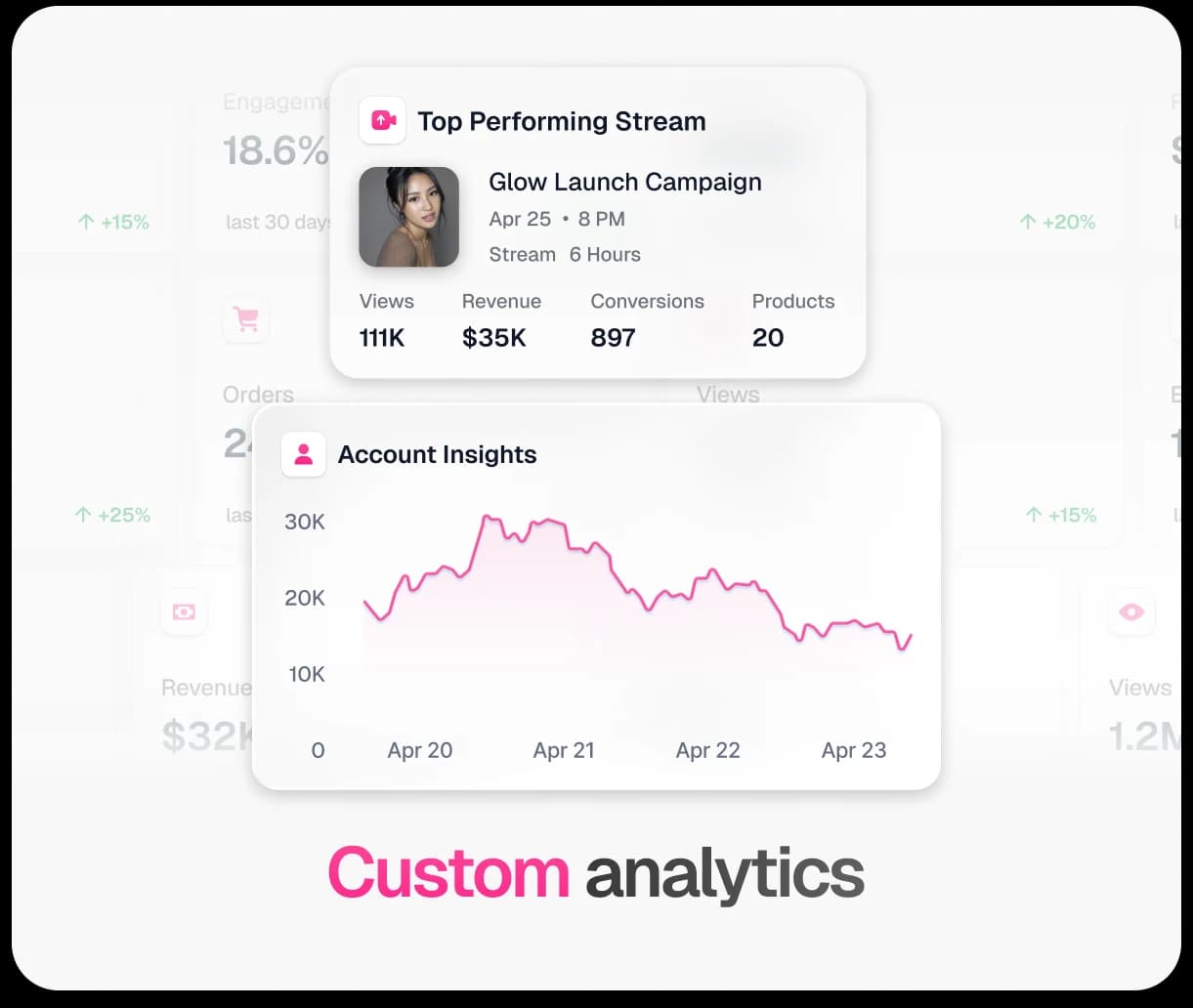
Once AI hosts are part of your campaigns, measuring their effectiveness is crucial. Go beyond surface-level metrics like likes and shares. Instead, focus on clicks, leads, sales, and conversions to gauge genuine business impact. Many platforms now include built-in analytics that monitor audience sentiment in real time by analyzing comments for emotions like excitement, frustration, or loyalty.
Predictive analytics can also be a game-changer. By using historical data and audience behavior, you can forecast campaign performance. A/B testing headlines or visuals mid-campaign allows for quick adjustments while the campaign is still live. Connecting AI host data directly to your e-commerce platform offers a complete view of the buyer’s journey · from their first interaction to checkout. Personalized campaigns driven by AI have shown to increase ROI by 10% to 30%, especially when you focus on metrics that truly impact your bottom line.
These case studies highlight how AI hosts are reshaping brand partnerships across various industries. By cutting costs, speeding up production, and reaching broader audiences, companies in sectors ranging from consumer goods to fashion are leveraging this technology for real-world gains.
In March 2025, Unilever's TRESemmé Thailand brand reported an 87% drop in content creation costs and doubled its production speed by incorporating AI-powered product twins. Using NVIDIA Omniverse, they created highly detailed digital replicas of their products. This approach not only reduced costs but also boosted purchase intent by 5%. Esi Eggleston Bracey, Chief Growth and Marketing Officer, shared her enthusiasm:
"Our product twins can be deployed everywhere and anywhere, accurately and consistently so content is generated faster and on brand. We call it creativity at the speed of life!"
How to Use AI hosts in Brand Partnerships
Adding AI hosts to Existing Campaigns
Nestlé followed suit in July 2025 by launching an in-house AI service to produce 3D digital replicas for its brands, including Purina, Nescafé Dolce Gusto, and Nespresso. The company created 4,000 digital master products with a goal of reaching 10,000 within two years. This initiative led to a 70% reduction in time and costs across 45 global studios. David Rennie, who spearheaded the project, explained:
"Our new content organization means we can do more with the talented teams we have, leveraging their skills to produce high-quality, consistent, scalable content supported by AI digital assistants and digital twin technologies."
Unilever utilized AI hosts to power a 2024/2025 campaign for Dove's cookie-scented body wash. By remixing over 100 influencer posts, they generated thousands of visual assets weekly. This effort resulted in 3.5 billion impressions and drew in 52% new-to-brand buyers. Selina Sykes, VP and Head of Digital Marketing at Unilever, emphasized the efficiency of this approach:
"It's about creating one universal file that becomes a raw material for any creative brief... the asset can be generated and deployed quickly, whether that's for Instagram, Amazon or a billboard."
H&M also embraced AI in April 2025, unveiling social media images featuring AI-generated digital clones of 30 models, including Vanessa Moody. These digital representations allowed models to maintain control over their likenesses while being compensated for usage. The initiative aimed to rethink traditional creative processes while minimizing the need for on-set talent for routine shoots. Jörgen Andersson, Chief Creative Officer, described the effort as:
Tracking ROI and Performance
"An exploration and a reimagining of the creative process, using technology as a catalyst to elevate how we tell stories and connect with our customers."
The table below summarizes the key outcomes from these case studies: · 87% cost reduction, 2x faster content, 5% purchase intent · 70% reduction in scaling costs, 4,000+ digital products · 3.5B impressions, 52% new-to-brand buyers
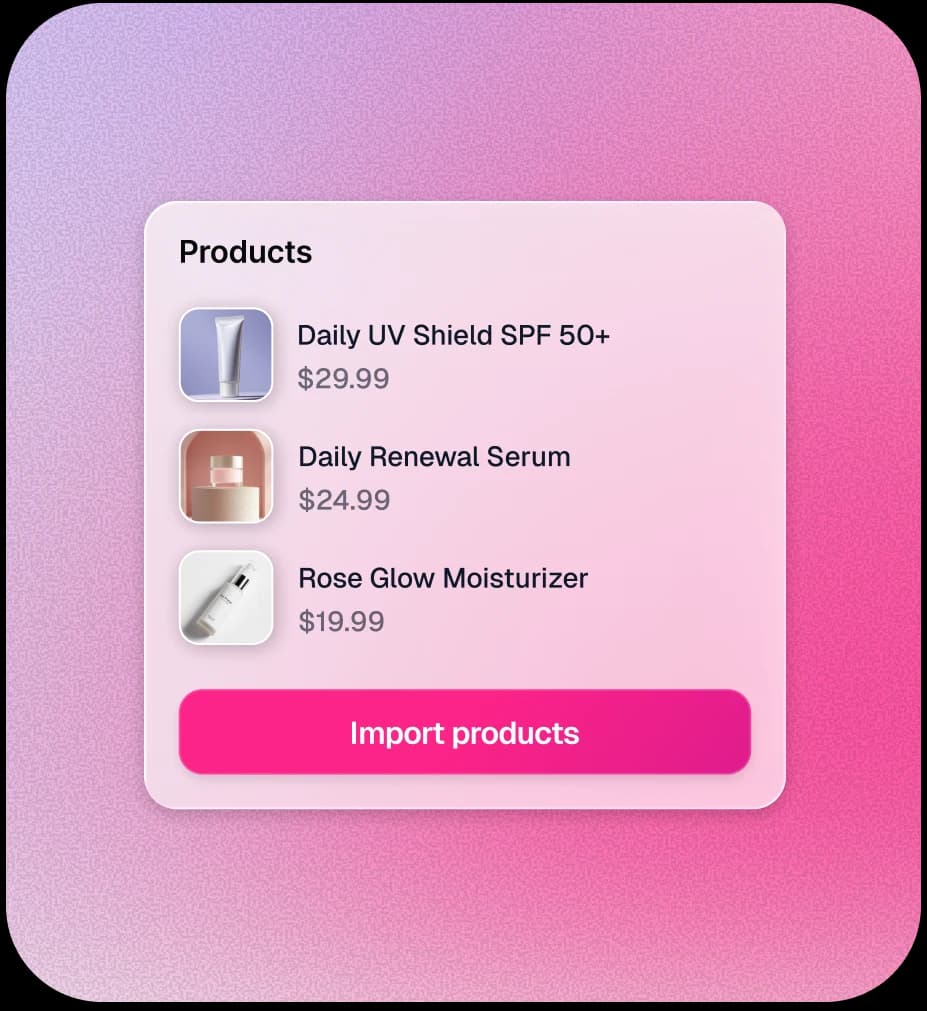
Case Studies: AI hosts in Action
DTC Brands Scaling UGC with AI hosts
30 models digitized while preserving models' rights
AI hosts are transforming how brands and creators collaborate, offering a way to separate content production from direct human effort · without sidelining human creativity. With AI hosts, creators can expand their presence, delivering content across multiple languages and time zones. Projections suggest the digital twin market will surge from $16.55 billion in 2026 to over $242 billion by 2032, growing at an annual rate of 39.8%. This shift highlights a new era in brand interactions, where human creativity and AI-driven efficiency coexist.
The nature of collaboration is also evolving. Rather than one-way communication, AI hosts enable interactive, real-time engagement between digital replicas and consumers. Brands are combining the emotional resonance of human influencers with the scalability of AI hosts to handle repetitive tasks and maintain 24/7 interaction · helping to combat creator fatigue.
The data supports this trend: 76% of consumers trust virtual influencers for product recommendations. The ability to create personalized content at scale and connect with audiences worldwide is becoming a cornerstone of modern brand partnerships.
Scalability and efficiency: AI hosts can cut content production costs and time by up to 70%, allowing brands to create high-quality, localized content more efficiently. However, transparency remains essential · audiences are more receptive to AI when its role is disclosed and it adds genuine value.
Global Retailers Driving Social Commerce
A blended approach works best: Rather than replacing human influencers, brands should use AI hosts for tasks like multilingual content creation, routine engagement, and around-the-clock availability. Becky Owen, Global Chief Marketing Officer at Billion Dollar Boy, puts it well:
"AI personas open up extraordinary creative possibilities, but possibility doesn't always equal utility. Just because we can create virtual influencers or digital twins doesn't mean audiences will engage."
The future belongs to brands that strike the right balance · embracing innovation while preserving the authenticity that fosters real connections. AI hosts can amplify reach and efficiency, but the human element will always be key to building trust and emotional resonance.
AI hosts offer creators a way to combat burnout by handling repetitive, time-consuming tasks like content creation and audience interaction. These AI-driven digital assistants can generate tailored, scalable content, freeing up creators to focus on their most creative and strategic endeavors. This shift not only conserves energy but also promotes a healthier balance between work and personal life.
On top of that, AI hosts allow creators to maintain a global presence without the need for constant travel or grueling schedules. By automating routine updates and interactions, creators can stay engaged with their audience without the relentless pressure of always being available. This technology helps ensure creators can sustain their efforts over the long term while boosting both their productivity and creative output.
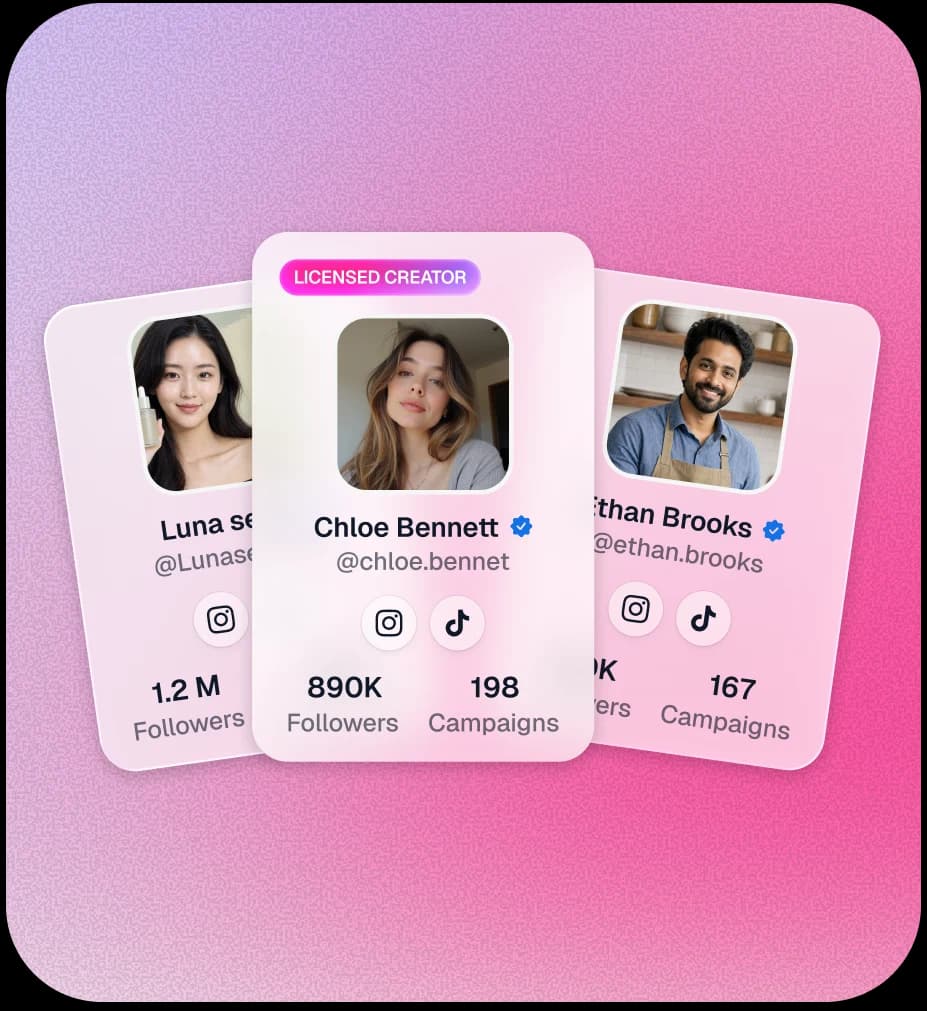
See an AI creator sell your products live
Connect your catalogue and go live in minutes · no studio, no crew.
Conclusion: The Future of Brand Partnerships
Key Takeaways
AI hosts are making waves in industries where visual branding and personalized marketing are crucial. Sectors like consumer goods, fashion, and beauty are at the forefront, using AI-powered digital replicas to craft scalable and tailored campaigns that resonate with their audiences. Take fashion brands, for instance · they’re using AI hosts of models to streamline content creation. This not only cuts down the time and effort required for traditional photoshoots but also opens up more room for creative experimentation.
Marketing agencies and digital content creators are also jumping on the AI hosts bandwagon. By integrating generative AI into their processes, they can produce consistent, top-tier content more efficiently and on a larger scale. Essentially, any industry that prioritizes marketing, influencer partnerships, or audience engagement stands to gain a lot by adopting this technology.
How can AI hosts help creators avoid burnout?
AI hosts act as digital stand-ins that mirror a creator's identity, ensuring their likeness is protected and only used with their explicit consent. This helps safeguard their personal brand and keeps their image authentic.
With full control over their AI hosts, creators can set clear boundaries to ensure their digital presence matches their values and public image. This not only reinforces trust with their audience but also opens up new opportunities for scalable and creative brand collaborations.
Which industries can benefit the most from using AI hosts? · AI hosts and Synthetic Relationships · How AI Changes Creator-Fan Interactions
How do AI hosts ensure a creator's authenticity and brand integrity? · How Brands Are Using AI hosts to Scale Influencer Marketing · Why Brands Are Replacing Influencers With AI hosts · AI hosts for Brand Partnerships: A New Model · How Brands Can License Creators Using AI · AI-Driven Influencer Marketing Explained
See what an AI host does to a live stream. Get started with TwinTone or [book a walkthrough](mailto:james@twintone.ai).