AI Stress Detection: How It Works
How to build a futureproof relationship with AI
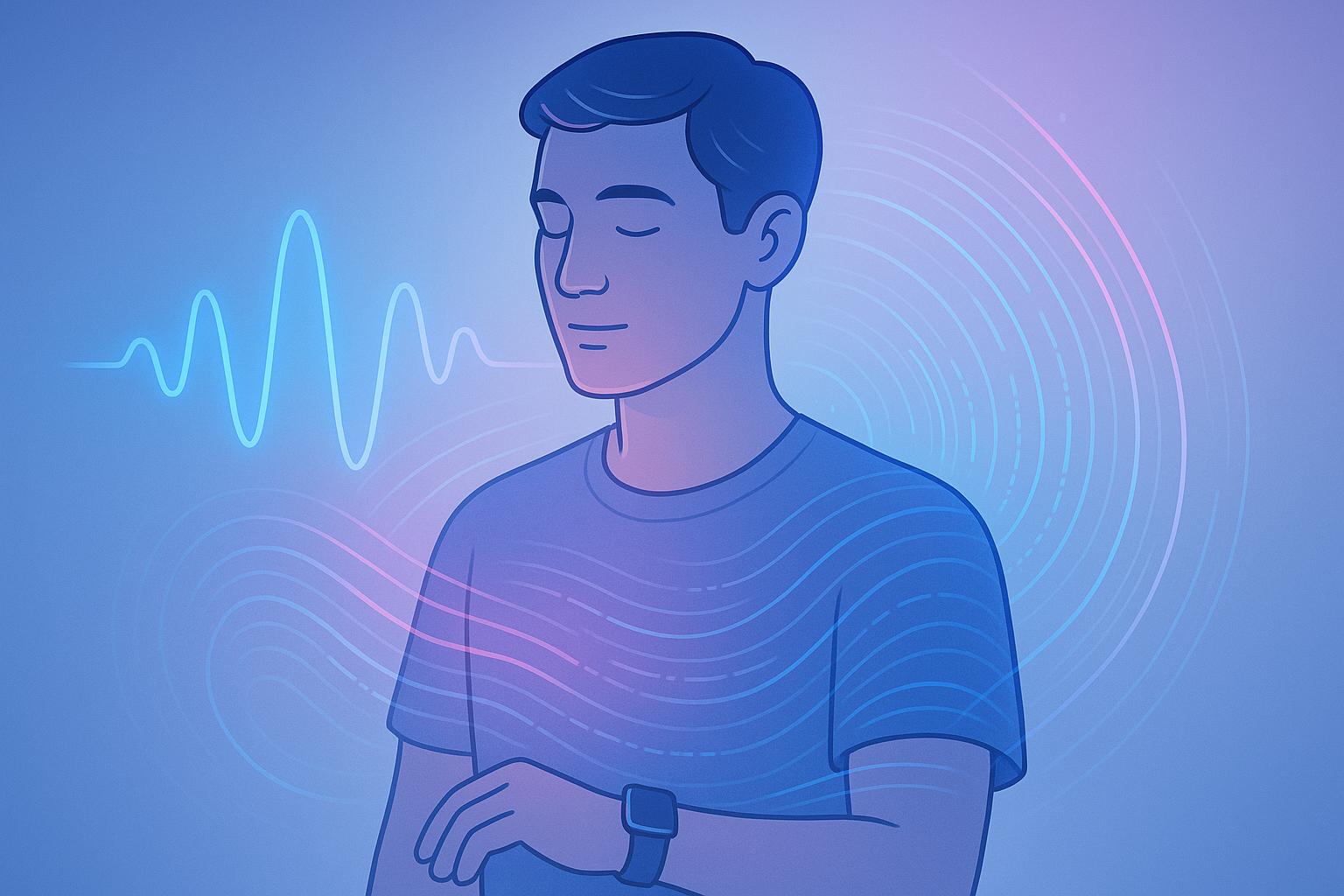
AI stress detection uses advanced algorithms to monitor stress through facial expressions, voice tones, text analysis, and wearable sensors. Unlike traditional methods like self-reporting, it identifies stress in real-time and even predicts it before users notice. By combining data from multiple sources, such as EEG and ECG signals, these systems achieve accuracy rates as high as 98.6%. This technology is applied in telehealth, workplaces, and wellness programs to promote mental well-being.
Key Features:
Voice Analysis: Tracks tone, pitch, and rhythm for stress signals.
Text Analysis: Uses patterns, sentiment, and typing behavior to detect stress.
Wearables: Monitors heart rate, brain activity, and electrodermal responses.
Real-Time Alerts: Provides instant feedback and stress management suggestions.
Multimodal Fusion: Combines data from multiple sources for higher accuracy.
Quick Comparison:
Data Source | Accuracy | Key Insight |
|---|---|---|
EEG + ECG | 98.6% | Combines brain and heart signals for precision. |
Electrodes | 94.4% | Measures detailed physiological responses. |
Smartwatches | 83.6% | Tracks heart rate and movement patterns. |
Smart Bands | 69.5% | Basic heart rate and activity monitoring. |
AI systems also provide personalized stress management recommendations and comply with strict privacy laws like HIPAA. As these tools evolve, they aim to deliver more precise and user-friendly mental health support.
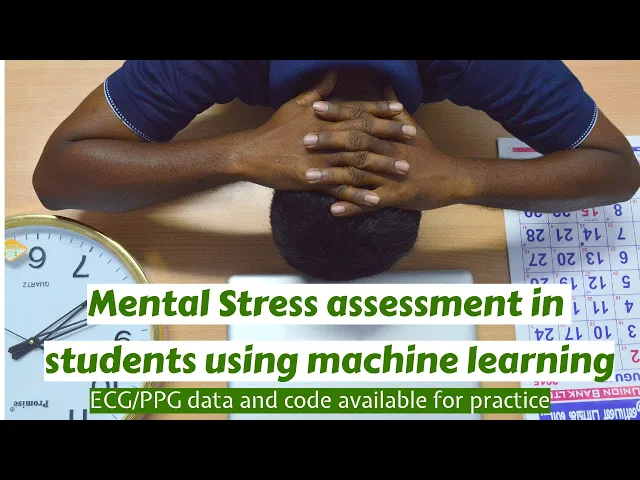
Stress Detection by Machine Learning and Wearable PPG sensors | Python Tutorial
Data Sources AI Uses to Detect Stress
AI stress detection systems rely on a mix of voice, text, and wearable data to assess stress levels. Each source offers unique insights, working together to create a more complete picture of stress.
Voice and Speech Analysis
Your voice can reveal a lot about your emotional state. AI systems analyze elements like tone, pitch, rhythm, and speaking rate to detect stress or anxiety signals. For instance, when you're stressed, your pitch may rise, your speech might become uneven, and subtle tremors or changes in breathing patterns can emerge. This kind of real-time analysis is particularly helpful for live-streaming creators, where maintaining performance quality and audience connection is crucial.
Text Analysis and User Behavior Data
AI also uses Natural Language Processing (NLP) to analyze written communication and digital behaviors. By examining the sentiment of messages, language patterns, typing speed, and even errors, AI can pick up on stress indicators. For example, a sudden increase in negative language or frequent typos might signal heightened stress. Beyond text, behavioral data - like how often you interact with your device or how you move your mouse - can provide additional clues, especially in digital spaces where text-based communication dominates.
Wearable Device Data
Wearable devices bring a physical dimension to stress detection by tracking physiological responses. Tools like heart rate monitors, smartwatches, and EEG headbands measure signals such as heart rate variability (HRV), electrodermal activity (EDA), and brainwave patterns.
A 2024 study highlighted the varying accuracy of wearable AI systems depending on the device. Electrodes were the most precise, detecting stress with 94.4% accuracy, while smartwatches and smart bands followed with 83.6% and 69.5% accuracy, respectively.
Device Type | Accuracy Rate | Key Measurements |
|---|---|---|
Electrodes | 94.4% | ECG, EEG, precise physiological signals |
Smartwatches | 83.6% | Heart rate, HRV, movement patterns |
Smart Bands | 69.5% | Basic heart rate, activity levels |
For creators using platforms like TwinTone, wearable data integration allows for real-time stress monitoring during AI Twin performances. This not only supports creators' well-being but also enhances audience engagement. However, in the U.S., using wearable data for stress detection must comply with strict privacy laws - HIPAA regulations are critical when handling health-related information.
Interestingly, the most advanced AI systems combine data from multiple wearable sensors. For instance, integrating EEG and ECG signals with sophisticated AI models can boost accuracy to as high as 98.6%, far surpassing the 91%–96% range typically achieved by single-sensor systems. This multi-sensor approach underscores the potential of combining diverse data streams for better stress detection.
AI Methods for Stress Detection
After collecting stress-related data from various sources, AI systems need effective ways to process and interpret this information. The most successful techniques rely on machine learning to identify key stress markers within the data.
Deep Convolutional Neural Networks (DCNNs)
Deep Convolutional Neural Networks (DCNNs) are particularly effective for analyzing physiological signals like EEG and ECG data. These networks use layered filters to extract both spatial and temporal stress markers directly from raw signals.
Here’s how DCNNs work: they process physiological signals through multiple layers, each creating feature maps that highlight stress-related patterns. Pooling layers then reduce the data size, speeding up processing without losing crucial information. This automated feature extraction enables the network to focus on the most relevant aspects of the data.
Recent research showcases the power of DCNNs. For example, stress detection using EEG data with DCNNs has achieved an impressive 96.5% accuracy, while ECG-based detection reached 91.8% accuracy. DCNNs excel at capturing not only what stress looks like in the data but also how it changes over time. Similarly, these methods can analyze language patterns to detect stress signals in communication.
Natural Language Processing (NLP) for Emotional Analysis
Natural Language Processing (NLP) is another key AI tool, focusing on analyzing written and spoken language to identify stress indicators. NLP algorithms assess linguistic markers such as tone, word choice, sentence structure, and overall sentiment to flag signs of stress in emails, messages, or chats.
But NLP doesn’t stop at text. It can also analyze speech patterns. When someone is stressed, their voice often changes - they might speak faster, with a higher pitch, or include more pauses and hesitations. NLP-based voice analysis detects these shifts in real time, making it possible to identify stress as it happens.
Combining Multiple Data Sources
The most accurate stress detection systems don’t rely on a single type of data. Instead, they integrate multiple sources - a process called multimodal data fusion. By combining physiological signals, voice patterns, text analysis, and behavioral data, these systems create a comprehensive picture of stress.
There are two main approaches to multimodal fusion:
Feature-level fusion: Combines raw data from different sensors before analysis, allowing the system to integrate information at the earliest stage.
Score-level fusion: Analyzes each data type independently using separate AI models, then merges the results for a final assessment.
Here’s a quick comparison of these strategies:
Approach | Data Sources | Accuracy | Key Advantage |
|---|---|---|---|
Feature-level Fusion | EEG + ECG | 98.6% | Maximizes accuracy by integrating raw data |
Score-level Fusion | Multiple sensors | 97.8% | Offers flexibility in combining outputs |
Single EEG | Brain signals only | 96.5% | Strong results for neurological analysis |
Single ECG | Heart signals only | 91.8% | Reliable for cardiovascular patterns |
Personalized models add another layer of precision to these systems. AI trained on individual user data consistently outperforms generic models. For instance, in a study involving individuals with intellectual disabilities, personalized models significantly outshined random models in accuracy. By learning a person’s unique stress patterns and triggers, these systems can deliver more precise assessments and timely interventions.
Together, these methods form a powerful framework for real-time stress detection and response. From advanced neural networks to personalized models, AI is paving the way for smarter, more accurate stress management solutions.
Real-Time Detection and Custom Recommendations
Real-time detection takes the insights gathered from earlier data collection methods and puts them into action immediately. Once AI systems are equipped to interpret stress-related data, the next step is to analyze it as it happens and provide instant, personalized responses to help users manage stress more effectively.
How Real-Time Detection Works
Real-time detection works by continuously monitoring key indicators like heart rate variability (HRV) from wearables and voice parameters to identify stress. For instance, voice analysis tools track changes in tone, pitch, and speaking speed that may signal anxiety or frustration. Machine learning models, trained to recognize these stress markers, process the data streams as they come in.
When a smartwatch detects irregularities in your HRV, deep learning algorithms compare this data to your personal stress baseline. Similarly, if you're using a voice-enabled app during a tense phone call, the system can pick up on subtle shifts - like a faster speaking pace or higher pitch - and flag potential stress immediately.
Stress levels are classified using both binary (e.g., stressed/not stressed) and graded scales, which measure intensity from low to high.
These systems are impressively accurate. For example, wearable devices can distinguish between stressed and non-stressed students with 85.6% accuracy. More advanced electrode-based systems achieve up to 94.4% accuracy, outperforming smartwatches (83.6%) and smart bands (69.5%). By identifying stress in real time, these tools enable quick, tailored interventions.
Custom Stress Management Solutions
With real-time insights in hand, AI can deliver personalized stress management solutions instantly. By analyzing your unique data patterns, context, and stress history, these systems suggest interventions that are tailored to your needs and preferences.
These recommendations adjust dynamically based on what the system detects. For example, if your wearable notices elevated stress levels during work hours, it might suggest a quick breathing exercise or remind you to stretch. The type and timing of these suggestions depend on factors like your current activity, location, and time of day. For users in the U.S., notifications are delivered in familiar formats, such as suggesting a "5-minute walk" or using a 12-hour clock for reminders.
Interactive AI assistants also provide immediate, personalized guidance through chat interfaces. These assistants learn from your feedback to improve future suggestions, making their advice increasingly relevant over time.
In March 2023, a mental health platform introduced real-time stress detection using wearable devices and AI algorithms. Over three months, users reported a 30% reduction in stress levels. The platform provided customized breathing exercises and adaptive content based on detected stress, leading to higher engagement and satisfaction[OnTheGoWellness, 2023].
AI systems also offer adaptive content, such as relaxation exercises, videos, or music that align with your stress levels. For instance, if the system observes that you prefer guided meditation in the morning but enjoy instrumental music in the afternoon, it will adjust its recommendations accordingly.
The strength of these systems lies in their ability to provide timely, relevant advice. For example, Arya.ai's Stress Detection API uses facial analysis to identify stress from uploaded images, offering both a binary result (Stressed/Not Stressed) and a confidence score. This tool is used by mental health platforms and HR systems to provide instant feedback and personalized recommendations[Arya.ai, 2023].
Platforms like TwinTone are pushing these capabilities further by creating AI-powered digital twins for real-time interaction. These digital twins can deliver live relaxation sessions or adaptive wellness content tailored to individual stress patterns. For U.S. users, this means on-demand, relatable support that balances personalization with scalability, benefiting both users and brands.
The real magic of these systems is their ability to learn and adapt. By continuously incorporating user feedback, AI becomes better at predicting what interventions will be most effective for each individual. This creates a feedback loop where recommendations grow increasingly accurate and relevant, ensuring that stress management tools remain useful in a variety of situations.
Privacy and Ethics in AI Stress Detection
As real-time stress detection technology advances, ensuring user privacy and fairness is critical to maintaining trust in these systems. These tools often handle highly sensitive personal data, from physiological signals to behavioral patterns. The stakes are especially high in the United States, where strict regulations govern health data and workplace monitoring. These privacy safeguards set the foundation for ethical AI practices.
Data Privacy and Security Standards
In the U.S., regulations like HIPAA require robust protection of health data. For example, HIPAA mandates that systems handling personal health information use advanced safeguards, such as AES-256 encryption and secure transmission protocols like HTTPS and TLS, to protect sensitive data. Consider a smartwatch that transmits heart rate variability data for stress analysis. That data must pass through multiple security layers before it’s processed by AI algorithms.
Equally important is obtaining informed user consent. Platforms must clearly explain what data will be collected, how it will be used, and who will access it. This transparency builds trust and ensures compliance with privacy standards.
In August 2024, Arya.ai introduced its Stress Detection API, tailored for health and HR platforms. This system analyzes facial images in real time, providing stress predictions with confidence scores while adhering to HIPAA requirements for U.S. clients. It’s now utilized by telehealth apps and employee wellness programs, ensuring compliance and proper user consent.
Many platforms also align with GDPR principles to further enhance user confidence. Regular security audits and risk assessments keep these systems prepared for emerging threats and ensure ongoing compliance.
Reducing Bias and Ensuring Transparency
Beyond securing data, ethical AI must address fairness and accuracy across all user groups. Bias in stress detection systems can lead to serious consequences, particularly when these tools perform inconsistently across demographics. For instance, wearable devices might be less accurate for users with varying skin tones, while voice analysis systems can misinterpret stress signals from non-native English speakers.
Training data is often a major source of bias. If a model is trained primarily on data from young, white, English-speaking users, it may fail to detect stress in other populations. This can lead to misclassifications and erode trust, especially among communities already underserved by healthcare technology.
To combat this, developers are prioritizing diverse training datasets that reflect the broad range of users these systems serve. Some companies use fairness-aware machine learning techniques to monitor and correct demographic imbalances during the training process.
Combining data from multiple sensors also helps reduce bias. Instead of relying solely on heart rate data, advanced systems integrate EEG, ECG, and behavioral metrics to provide a more comprehensive and fair analysis of stress indicators. This multi-sensor approach has led to models achieving accuracy rates as high as 98.6% in stress detection.
Transparency is another cornerstone of ethical AI. Explainable AI (XAI) techniques allow users and regulators to understand how stress predictions are made. For example, some systems display confidence scores and highlight the features that contributed most to a prediction. Arya.ai’s platform offers this level of transparency, enabling users to see how certain the AI is about its assessments. For U.S. users, this means access to stress detection tools that not only deliver results but also explain their reasoning in plain language, making the technology easier to trust.
Balancing effective stress detection with ethical considerations is an ongoing challenge. Regular bias audits, input from diverse stakeholders, and clear communication about data use are vital. As these systems become more common in workplaces and healthcare, the focus on privacy-by-design principles and fairness will only grow.
The Future of AI Stress Detection
The future of AI stress detection is shaping up to make real-time mental health support as accessible as checking your heart rate on a smartwatch. With multimodal systems already achieving an impressive 98.6% accuracy by combining data from EEG and ECG sensors, the possibilities for this technology are expanding rapidly.
One major area of growth is wearable integration. Current devices boast accuracy rates ranging from 69.5% to 94.4%, and as these numbers continue to improve, stress detection could become a standard feature in consumer electronics. Imagine monitoring your mental well-being as effortlessly as tracking steps or calories - it’s closer than you think.
For digital creators, especially those grappling with burnout, AI could automatically monitor stress levels during live streams. It could then suggest timely breaks or adjustments to their workload, helping maintain both their mental health and the quality of their content.
Brands and audiences also stand to benefit. Companies could use stress insights to personalize customer experiences, offering support when stress signals are detected and tailoring communication to be more empathetic. On the flip side, audiences might enjoy more authentic and engaging content as creators enhance their well-being. Interactive features could even adapt in real time to viewer stress levels, creating a more dynamic and responsive experience.
Looking ahead, the next leap in stress detection lies in advanced sensor integration. Multimodal sensor fusion - combining data from voice patterns, typing behavior, and physiological signals - could provide a more complete and reliable picture of mental well-being. This approach moves beyond single data sources, capturing stress indicators with greater accuracy.
Generative AI is another game-changer in this space. By integrating with stress detection systems, it could deliver personalized interventions tailored to an individual’s unique stress patterns, personality traits, and lifestyle. Instead of generic advice, users could receive targeted recommendations that align with their specific needs.
Privacy will remain a top priority as these technologies gain traction. U.S. consumers, in particular, value systems that prioritize data security. Solutions that process sensitive information, such as stress levels and emotional states, directly on devices - rather than sending it to remote servers - are likely to build trust and encourage wider adoption.
Workplaces are already exploring the potential of stress detection. HR platforms and employee wellness programs are incorporating stress detection APIs, offering insights that could lead to healthier work environments while respecting individual privacy. With further advancements, organizations could implement proactive measures and personalized early interventions to support employee well-being.
As these systems evolve, the shift from reactive to proactive care will become the norm. Instead of waiting for stress to escalate, AI could provide timely nudges, coping strategies, and support to help users manage their mental health more effectively.
These advancements underscore the broader goal of using AI to deliver real-time, personalized stress management. The integration of stress detection with platforms for content creation, social media, and digital workspaces points to a future where technology actively enhances human well-being. Platforms like TwinTone (https://twintone.ai) are well-positioned to embrace these innovations, further supporting creators and fostering real-time audience engagement.
FAQs
How does AI stress detection protect user privacy and comply with regulations like HIPAA?
AI stress detection systems take privacy seriously, using advanced encryption techniques to keep sensitive information secure and confidential. Many of these systems are built to align with strict privacy laws, such as HIPAA in the United States, which protects personal health information.
To adhere to these regulations, these platforms often anonymize or de-identify user data, ensuring that only authorized individuals have access. They also implement strict protocols for how data is stored, shared, and processed, prioritizing the protection of users' rights and privacy at every step.
What are the benefits of using multimodal data fusion in AI stress detection compared to single-sensor methods?
Multimodal data fusion brings together information from various sources - like heart rate, facial expressions, and voice tone - to create a more thorough and precise understanding of stress. By blending these different data types, AI systems can uncover subtle patterns and connections that might go unnoticed when relying on just one input.
This method significantly reduces errors that can occur when depending on a single data source. It also makes stress detection more reliable and adaptable to different contexts. For instance, combining physiological signals with behavioral cues can help distinguish stress from other emotional states, offering deeper insights and more practical outcomes.
How do AI systems detect stress and offer personalized real-time solutions?
AI-driven stress detection systems work by examining data from multiple sources, including voice tone, facial expressions, heart rate, and other biometric signals. Using sophisticated algorithms and machine learning models, these systems interpret the data to spot patterns associated with stress.
When stress is detected, the AI steps in with real-time, personalized recommendations. These might include breathing exercises, mindfulness practices, or suggestions for physical activities to help users manage their stress. Over time, as the system interacts with users, it learns and adjusts, offering increasingly customized support.