AI Growth Models for DTC Brands
How to build a futureproof relationship with AI
AI is transforming how direct-to-consumer (DTC) brands grow, making it easier to scale while maintaining personal customer connections. With the ecommerce market projected to hit $4.8 trillion in 2025, brands face intense competition and rising consumer expectations for personalization. Here's how AI is helping DTC brands tackle these challenges:
Hyper-Personalization: AI tailors shopping experiences based on real-time customer behavior, boosting engagement and revenue. Example: Fresh Clean Threads increased abandoned cart revenue by 50% using AI.
Content Creation: Tools like TwinTone generate user-generated content (UGC)-style videos in minutes, enabling brands to produce marketing materials faster and more efficiently.
Real-Time Insights: AI analyzes customer actions instantly, enabling smarter decisions like personalized emails or targeted discounts.
Automation: AI handles repetitive tasks like email segmentation, ad optimization, and customer support, reducing costs and freeing up resources.
Predictive Analytics: AI forecasts inventory needs and optimizes pricing, helping brands avoid stock issues and maximize profits.
DTC brands using AI report higher conversion rates and revenue growth. As 83% of brands plan to increase AI investments, adopting these tools is no longer optional - it's essential for staying competitive.
The AI Stack Powering Our 8 Figure DTC Agency Group in 2025
AI-Driven Personalization and Customer Engagement
Today’s customers expect more than just a transactional experience - they want interactions that feel personal, even when shopping online. AI steps in by analyzing every click, scroll, and purchase to uncover customer intent and deliver messaging that feels custom-made. It’s not just about showing the right products; it’s about creating shopping experiences that genuinely resonate with individual behaviors and preferences.
And the payoff? It’s huge. A whopping 81% of consumers say they prefer brands that provide personalized experiences. For direct-to-consumer (DTC) brands, embracing AI-powered personalization has led to happier customers and stronger revenue growth. This level of behavioral insight allows brands to adapt in real time and fine-tune their strategies for maximum impact.
Real-Time Behavioral Analysis
AI changes the game when it comes to understanding customers. Instead of waiting days - or even weeks - for data analysis, AI processes behavioral data instantly. It tracks browsing habits, purchase patterns, and engagement in real time, enabling brands to adjust the shopping experience on the fly.
This immediacy empowers brands to make smarter decisions. For instance, if a customer abandons their cart, AI can send a personalized email within minutes, featuring the exact products they left behind and messaging tailored to their interests. Similarly, if someone explores a specific product category, the system can surface related reviews or offer timely discounts.
Here’s a telling statistic: 42% of retail executives prioritize AI for suppressing irrelevant ads based on real-time actions, while 41% rely on it for smarter product recommendations. AI even dives into micro-behaviors - like how long a customer lingers on a product description or whether they zoom in on an image - to refine its understanding of individual preferences. These real-time insights enable brands to deliver highly relevant, engaging experiences that can influence purchasing decisions almost immediately.
Dynamic Content and Campaign Optimization
AI doesn’t stop at product recommendations; it takes personalization to the next level by crafting unique marketing experiences for each customer. This includes everything from personalized email copy and custom images to adaptive website layouts that adjust based on individual preferences.
For example, AI systems can tweak the tone, visuals, and even emojis in marketing messages to better connect with each consumer. Companies leading the charge are 1.7 times more likely to use AI to create multi-step, cross-channel campaigns that feel seamless and connected (47% vs. 28%). These campaigns span email, SMS, social media, and websites, creating a unified customer journey.
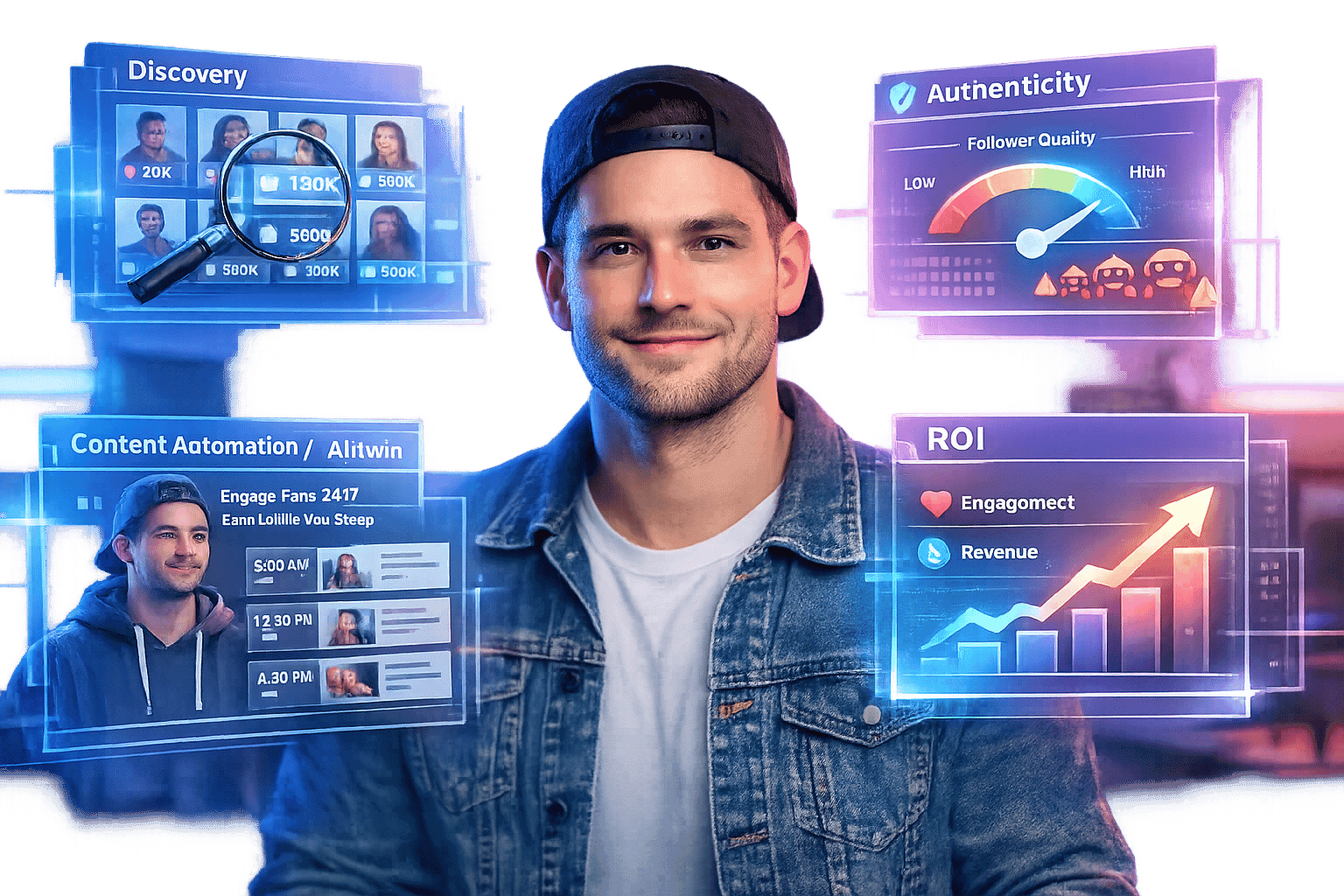
Platforms like TwinTone are pushing boundaries by allowing brands to scale personalization in ways that feel authentic. Using AI-powered “Twins” of real creators, companies can generate user-generated content on demand or host live product showcases around the clock. This approach not only strengthens customer relationships but also makes it easier to scale personalized marketing across multiple channels.
The secret to making all this work? Unified data strategies. By integrating behavioral data, purchase history, and real-time interactions, brands can deliver highly effective, personalized experiences that drive both customer loyalty and growth. AI makes it possible to turn data into action, ensuring every touchpoint feels meaningful and relevant.
AI-Powered Content Creation and Creator Collaboration
The traditional hurdles of content creation - endless outreach, lengthy negotiations, and time-consuming editing - are now a thing of the past thanks to AI. Brands can now produce a range of high-quality videos in mere minutes. Instead of replacing human creativity, AI enhances it, making it easier to scale authentic content across campaigns of all sizes. This shift paves the way for more efficient user-generated content (UGC) creation and smoother collaboration with creators.
On-Demand UGC Creation
User-generated content is a proven driver of engagement, but consistently securing it has always been a challenge. AI changes the game by allowing brands to instantly produce UGC-style content that feels genuine. How? Through AI Twins - digital replicas of real creators that retain their unique voice, style, and personality.
Platforms like TwinTone are leading this evolution. With access to over 100 AI avatars modeled after real creators, brands can create polished "Product in Hand" videos in just two minutes. Simply upload a product image, and the AI handles the rest, mimicking the creator’s natural mannerisms, speech, and personality to ensure the content feels personal and relatable.
This approach eliminates the need to manage multiple creator relationships while enabling brands to scale their UGC campaigns effortlessly. Features like "Dress Your Creator" let brands style AI avatars in their own branded clothing, ensuring the content aligns with their identity and stays on-trend. Plus, with support for over 40 languages, creating content for global audiences is easier than ever, bypassing the complexities of managing international creator networks.
What makes this even more impactful is the authenticity factor. These AI Twins are based on real creators who are compensated for the use of their likeness. This creates a balanced ecosystem where creators earn ongoing income while brands receive consistent, high-quality content that resonates with audiences.
AI Livestreams and Social Commerce
AI-powered livestreams remove the barriers of time and scheduling, making it possible for brands to showcase products 24/7 and engage customers across all time zones.
With TwinTone’s AI livestreaming technology, brands can host continuous product demonstrations featuring AI Twins of real creators. These AI Twins can answer questions, demonstrate products, and provide real-time recommendations, offering an engaging and interactive shopping experience that feels personal.
The integration possibilities make this even more powerful. AI livestreams can run simultaneously across multiple platforms like TikTok, Amazon, YouTube, Twitch, and Shopify, expanding reach without requiring separate content for each platform. Multilingual support ensures brands can connect with global audiences in their native languages, delivering a personalized experience at scale.
Brands can also track engagement and conversions to fine-tune their AI Twins for better performance. This data-driven approach ensures that livestreams not only engage viewers but also drive measurable results in sales and customer interaction.
And let’s not forget the cost savings. Compared to traditional live shopping approaches, AI-powered livestreams drastically reduce expenses. Instead of paying for multiple live sessions or navigating complex scheduling, brands can maintain round-the-clock product showcases at a fraction of the cost, all while reaching broader audiences and offering higher availability.
Operational Efficiency and Cost Optimization with AI
AI is transforming how DTC brands operate by automating tedious tasks and delivering actionable insights. This allows businesses to grow without significantly increasing their overhead.
Automation of Repetitive Tasks
Tasks like managing email campaigns, testing ads, and optimizing marketing strategies can eat up hours that could be better spent on strategic initiatives. AI steps in to take care of these repetitive tasks, allowing teams to focus on activities that drive growth.
AI handles a range of tasks, including email segmentation, personalized content delivery, 24/7 chatbot support, and ongoing ad optimization. This automation not only reduces manual effort but also boosts metrics like open rates, conversion rates, and return on ad spend (ROAS).
Take email marketing automation, for example. Today’s AI tools go far beyond simple drip campaigns. They can segment audiences in real time, tailor email content based on browsing behavior, and even optimize the timing of email sends to maximize engagement. The result? Higher open and conversion rates, all while lightening the workload for marketing teams.
Then there’s customer support automation. AI-powered chatbots provide consistent, around-the-clock service, cutting down on support costs and ensuring customers always have their questions answered.
Ad optimization is another area where AI shines. Tools driven by AI continuously test and tweak ad creatives, targeting options, and bidding strategies - all without human intervention. This constant fine-tuning improves ROAS and minimizes wasted spending on ads that don’t perform.
By automating these processes, businesses can operate more efficiently and set the stage for more advanced strategies like predictive analytics.
Predictive Analytics for Inventory and Pricing
While automation takes care of the daily grind, predictive analytics helps brands make smarter, data-driven decisions. One of the biggest challenges for DTC brands is managing inventory. Overstocking ties up cash flow, while running out of stock leads to lost sales and unhappy customers. AI-powered predictive analytics tackles this issue by analyzing past sales data, seasonal trends, and external factors to forecast demand with impressive precision.
With inventory optimization, AI helps brands maintain the perfect balance. It can notify teams when it’s time to reorder fast-selling items or slow down orders for products that are losing traction. This proactive approach helps reduce holding costs and prevents missed sales opportunities.
AI also enhances dynamic pricing strategies. By analyzing real-time market data, competitor pricing, and customer demand, these systems recommend the best price points. Brands can automatically adjust prices to maximize revenue during peak demand or efficiently clear out excess inventory during slower periods.
Supply chain automation further amplifies these benefits. AI-driven order management systems can predict demand shifts and streamline picking and packing processes, increasing efficiency across the entire fulfillment chain. This reduces operational costs and improves customer satisfaction by ensuring faster, more reliable deliveries.
For predictive analytics to work effectively, it requires a combination of data sources like historical sales records, customer demographics, website activity, inventory levels, and supply chain timelines. The good news? Many AI tools are now available as easy-to-use SaaS platforms that integrate seamlessly with existing e-commerce systems, making these advanced capabilities accessible to businesses of all sizes.
The impact is clear: 95% of marketing companies now use AI-powered predictive analytics, and 44% have fully integrated it into their operations.
Conclusion: Using AI for Scalable Growth
The numbers speak for themselves: 83% of DTC brands plan to expand their use of AI in the coming year. AI has moved from being a nice-to-have to a must-have for brands aiming to scale effectively. In a marketplace that’s more competitive than ever, adopting AI-driven growth strategies is becoming a key differentiator for long-term success.
Several key areas highlight AI's transformative potential. First, hyper-personalization - powered by AI - creates tailored experiences that resonate with consumers, with 81% of them expressing a preference for these personalized interactions. Second, AI-driven content creation addresses the unrelenting demand for fresh marketing materials, reducing the manual workload while maintaining authenticity. Lastly, predictive analytics and automation enhance operational efficiency, freeing up resources that can be directed toward growth-focused initiatives.
The results are hard to ignore. Brands leveraging AI report conversion rate boosts of 15–20% and impressive revenue gains across critical metrics. Tools like TwinTone showcase the next frontier in AI-powered growth. TwinTone allows brands to scale engagement by generating on-demand user-generated content and hosting live product showcases with AI-powered replicas of real creators. This not only drives sales but also ensures creators are fairly compensated, creating a balanced and sustainable system.
As the e-commerce sector in the U.S. continues to expand, the urgency to adopt AI becomes even more pressing. Brands delaying AI integration risk falling behind competitors who are already reaping the benefits - faster growth, better customer experiences, and streamlined operations.
AI isn’t just reshaping DTC commerce; it’s already done so. The real question is: Will your brand take the lead in this transformation, or will it struggle to keep up?
FAQs
How can AI improve personalization for direct-to-consumer brands, and why does it matter for customer engagement?
AI is transforming how direct-to-consumer (DTC) brands connect with their audiences by enabling highly personalized experiences. With tools like AI-generated voice or video messages, live streams, and virtual hosts that embody a brand's personality, these interactions feel natural and uniquely tailored to each customer.
Such personalization goes a long way in creating stronger bonds with customers. When brands offer engaging, human-like interactions, they build trust, inspire deeper engagement, and, in turn, boost sales. Beyond improving the customer experience, personalization helps brands differentiate themselves in an increasingly crowded marketplace.
How can AI-powered tools like TwinTone help DTC brands grow?
AI-driven platforms like TwinTone are transforming how direct-to-consumer (DTC) brands grow by offering on-demand user-generated content (UGC) and round-the-clock live product showcases. With the help of AI Twins - digital replicas of real creators - brands can produce content that feels genuine, captures audience interest, and encourages purchases.
What makes TwinTone stand out is its ability to simplify the content creation process. Brands can maintain a steady flow of content while creators earn money from their digital likeness. This fresh approach allows brands to connect with their audience on a deeper, more personalized level, ultimately increasing both engagement and sales.
How can DTC brands use predictive analytics to optimize inventory and pricing?
Predictive analytics plays a crucial role for direct-to-consumer (DTC) brands by helping them anticipate demand and manage inventory more effectively. By diving into historical sales data, customer behavior, and market trends, these brands can ensure they have the right products available at the right time. This approach not only prevents overstocking or shortages of popular items but also cuts costs and enhances customer satisfaction.
Beyond inventory, predictive models are transforming pricing strategies. By spotting trends in customer preferences and tracking competitor pricing, brands can adjust their prices in real time. This allows them to stay competitive while maximizing revenue. With this data-driven method, businesses can make smarter decisions about both inventory and pricing, fueling growth and profitability.