AI Grouping for Live Shopping Events
How to build a futureproof relationship with AI
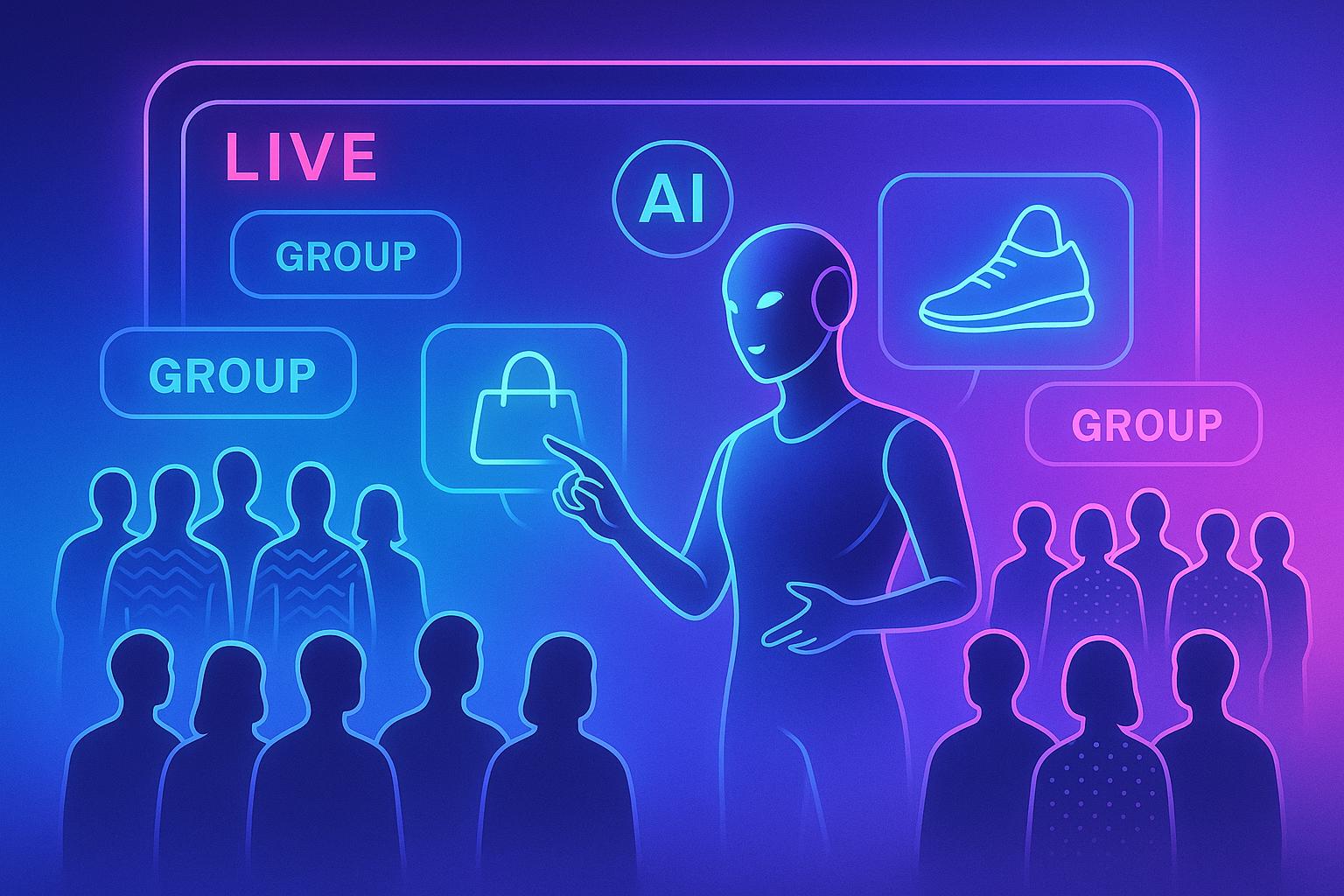
AI is transforming live shopping by personalizing streams in real time. Instead of generic broadcasts, brands now use AI to group viewers based on behavior like browsing habits, past purchases, and live interactions. This enables tailored recommendations, dynamic offers, and segmented content, boosting engagement and sales. Tools like TwinTone even create AI-powered hosts to deliver 24/7 targeted streams, ensuring every viewer gets content suited to their interests. By focusing on what matters to each group - whether it’s discounts for deal hunters or detailed specs for enthusiasts - brands see higher conversions and improved audience retention. Live shopping is no longer one-size-fits-all; it’s data-driven, dynamic, and customer-focused.
Key takeaways:
AI grouping segments live audiences based on real-time behavior.
Tailored content increases engagement and conversions.
AI hosts like TwinTone automate and personalize streams 24/7.
Dynamic offers cater to specific groups, driving more sales.
AI-powered live shopping is changing how brands connect with customers, offering personalized experiences that lead to better results.
LiveCart: Online Live Selling with AI Avatars
How AI Grouping Works in Live Shopping
AI grouping in live shopping involves gathering behavioral data, organizing viewers into dynamic groups, and delivering personalized content in real time. Let’s break this down into three key steps: collecting behavioral data, grouping customers dynamically, and delivering tailored content.
Collecting and Analyzing Behavioral Data
AI grouping starts by collecting behavioral signals that reveal viewer preferences. These signals typically fall into three categories: on-site behavior, historical transactions, and live-session engagement.
On-site behavior includes actions like pages viewed, products clicked, items added to the cart, or even abandoned carts. These actions give insight into what catches a viewer’s attention and where they hesitate.
Historical transactions provide a deeper understanding of buying patterns, such as past purchases, average order value, and coupon usage. For example, someone who regularly buys high-end products and skips discounts is likely in a different segment than a bargain hunter who shops only during sales.
Live-session engagement captures real-time signals like watch time, reactions (likes, hearts), poll responses, chat activity, and clicks on in-stream offers. These signals are particularly valuable because they reflect immediate intent and preferences.
By combining these data points, AI can infer preferences, price sensitivity, and urgency. It assigns scores based on attributes like category interest, engagement level, and price sensitivity, which are then used to organize viewers into dynamic groups.
Privacy is a top priority in this process. U.S. regulations require clear opt-in banners and privacy controls. Brands typically use cookie banners to explain how data will be used for personalization. Customers can adjust their preferences, while secure systems ensure sensitive data is anonymized or minimized. Technical setups often involve customer data platforms (CDPs) that securely handle event tracking and identifiers.
Grouping Customers in Real-Time
The real power of AI grouping lies in its ability to adapt segments instantly based on viewer behavior during the live event. Unlike static segmentation, which assigns groups before the stream begins, this approach continuously processes new signals and updates group memberships within seconds.
Here’s how it works: A streaming layer captures live events - like clicks, chat messages, or product views - and feeds them into a real-time data pipeline. These raw signals are quickly translated into actionable scores. Low-latency models or rules engines then assign or adjust group memberships, and the live shopping interface uses these group IDs to customize the experience for each viewer.
For example, if someone starts out as a casual browser but begins clicking on product links and asking detailed questions in the chat, the system identifies the shift and moves them to a high-intent group. They might then see a limited-time discount or a bundle offer to encourage a purchase. This constant adjustment ensures the experience stays relevant as viewer behavior evolves.
To keep things effective, brands often begin with broad segments like new versus returning customers or category-specific groups. Over-segmentation can lead to irrelevant recommendations, so teams expand groups only when data supports finer distinctions. For new viewers without prior history, contextual signals - such as traffic source or early engagement - guide initial grouping. Performance dashboards help monitor and refine thresholds to avoid repetitive or off-target suggestions.
Delivering Personalized Content
Once viewers are grouped, AI fine-tunes the experience by delivering customized product recommendations, messaging, and offers. The goal is to personalize without fragmenting the audience or making the experience feel disconnected.
A common strategy is to keep the main video feed consistent for all viewers while personalizing the surrounding elements. Everyone sees the same host and core show, but clickable features, product carousels, and follow-up messages are tailored to their group. This approach maintains a sense of community while ensuring relevance.
Personalization extends beyond product recommendations. AI can adjust promotional overlays, on-screen text, product order in carousels, and group-specific chat prompts. It might also emphasize different benefits, like free shipping or premium features, depending on the group’s preferences. Limited-time offers or bundles can be targeted to specific segments, aligning with factors like value sensitivity or brand loyalty.
For brands using AI-presenter tools like TwinTone, AI grouping enhances how these AI Twins interact with different groups. TwinTone allows creators to turn their likeness into AI-powered hosts for live streams. These AI Twins can tailor their tone, scripts, and product focus based on group preferences. For example, they might highlight styling tips for fashion-conscious viewers while focusing on durability and pricing for value-driven shoppers. AI Twins can even reference real-time group behavior, such as acknowledging a surge of interest in a particular product category, making the experience feel more human and engaging.
Using AI Grouping in Live Shopping
AI has taken live shopping to the next level by transforming generic broadcasts into highly personalized, targeted experiences. By leveraging real-time data and dynamic grouping, brands can engage audiences more effectively, showcase products strategically, and boost sales during live events.
Increasing Engagement with Tailored Interactions
Keeping viewers hooked during a live shopping event hinges on making them feel like the content is crafted just for them. AI grouping makes this possible by tailoring interactions to match what each audience segment values most.
For instance, real-time prompts can guide hosts to address specific needs. Technical users might appreciate detailed product specs, while newcomers might prefer simple, easy-to-follow explanations. Sephora demonstrated this approach effectively with targeted live makeup tutorials, which resulted in a 30% increase in conversions and 40% higher click-through rates through features like instant polls.
Interactions can also shift based on group behavior. High-intent buyers, who are ready to make a purchase, tend to respond well to quick product comparisons or limited-time bundle demonstrations that help them make fast decisions. Casual browsers, on the other hand, are more drawn to story-driven presentations, styling tips, or "shop the look" segments that inspire rather than pressure them to buy immediately.
For VIPs or repeat customers, brands can create exclusive micro-experiences within the main event. These could include priority Q&A sessions, early product reveals, or small-group backstage streams. AI identifies these high-value viewers and automatically grants them access, making them feel appreciated and encouraging loyalty, advocacy, and higher spending.
Aligning Products with Group Interests
One of AI grouping's standout capabilities is its ability to match products with the interests of specific audience segments - and to do so in real time. Instead of presenting every product to every viewer in the same order, AI dynamically sequences items based on what each group is most likely to care about.
The system uses historical data, live engagement metrics, and factors like price sensitivity to rank products for each group. Metadata such as category, price, and availability also play a role in this process.
A smart sequencing strategy might begin with a universally appealing product to capture broad interest, then branch into tailored tracks. For example, deal-seekers might see value bundles and promotions first, while enthusiasts might get early access to premium or limited-edition items. AI continuously monitors engagement during the event - products that spark strong interest get prioritized, while those that don’t resonate are shown less often.
Cotopaxi successfully implemented this approach by letting live viewers vote on color schemes for limited-edition gear. By customizing product options in real time to align with group preferences, they achieved an impressive 92% sell-through rate for those items.
AI also fine-tunes how products are presented, emphasizing features that align with each segment’s buying motivations. This dynamic product sequencing naturally leads to more relevant offers and higher conversions.
Boosting Sales with Personalized Offers
Driving purchases during live events often comes down to delivering the right incentives at the right time. AI grouping enables brands to deliver custom offers tailored to each segment’s preferences, often through private channels like personalized overlays or direct chat messages.
The most effective offers cater to the specific needs of each group. For instance, first-time or price-sensitive customers might respond best to percentage discounts, starter kits, or free shipping. Meanwhile, loyal customers or high-value buyers may be more drawn to exclusive product drops, early access to new items, or premium bundles that reward their ongoing support. For viewers who are engaged but undecided, time-sensitive offers tied to interactive milestones - like unlocking a discount when a group reaches a certain level of engagement - can help turn interest into action without relying on excessive discounts.
Public promotions during the event remain general and accessible to everyone, while more targeted deals are shown privately to the relevant groups. This ensures transparency while still delivering highly relevant offers to individual viewers.
CommentSold, a live selling platform, has successfully used AI grouping to target collaborators and VIP customers with exclusive offers and access. This approach has significantly boosted engagement and sales, contributing to over $3.8 billion in lifetime gross merchandise value.
TwinTone further illustrates the potential of AI grouping with its AI Twins. These automated hosts handle tailored segments - one focusing on budget-friendly picks, another on premium deep dives. By testing different product sequences and offers for each group, the AI Twins optimize conversions at scale, freeing up human teams to focus on strategy and creative planning.
To make the most of AI grouping, brands should prepare in advance by defining audience segments, integrating data sources, and testing grouping logic using insights from previous sessions. Prepping assets like demos, FAQs, and offers for each segment ensures a seamless experience. Training hosts to respond to AI prompts in real time and setting up detailed reporting to measure segment-level engagement and revenue can help brands refine their approach and see measurable results.
TwinTone: AI-Powered Live Shopping Automation

TwinTone takes personalized shopping to the next level by transforming real creators into AI-powered hosts, or "AI Twins", for live shopping events. These AI Twins deliver tailored content, seamlessly building on the interest-based grouping concept we discussed earlier. The result? Every viewer gets content that feels relevant and engaging.
AI Twins for 24/7 Live Shopping
TwinTone starts by capturing a creator’s likeness, voice, and hosting style, then uses this data to create an AI Twin capable of hosting continuous live shopping streams. Unlike traditional live events that depend on human schedules, these AI Twins ensure a consistent brand presence around the clock - whether it’s during peak shopping hours, late-night browsing, or major events like Black Friday and Cyber Monday.
Here’s how it works: after capturing the creator’s style, the AI Twin is trained and connected to the brand’s product catalog. This includes pricing (in U.S. dollars), inventory details, and promotional rules. The AI Twin can then showcase products, answer common questions, and launch time-sensitive offers. What makes this approach even more impactful is its ability to host multiple streams at once, each tailored to a specific audience. For instance, one stream might dive into skincare education for beauty enthusiasts, while another focuses on quick makeup tutorials with limited-time discounts for deal hunters. Despite being AI-driven, the streams feel authentic because they’re modeled after real creators.
These AI Twins also adapt on the fly. If there’s a spike in chat activity around a product, they can extend demonstrations or address new questions. Plus, with support for over 40 languages, they can connect with audiences across time zones, making them a versatile tool for global brands.
On-Demand UGC for Targeted Groups
TwinTone doesn’t stop at live streams. It also allows brands to create on-demand, user-generated content (UGC) tailored to specific audience segments. Here’s how: brands upload product images and scripts, select from TwinTone’s library of over 100 AI Avatars modeled after real creators, and the platform generates realistic product demonstrations.
For example, a fitness brand could create three different clips: one emphasizing technical performance for serious athletes, another focusing on affordability for budget-conscious shoppers, and a third showcasing lifestyle integration for casual users. The "Dress Your Creator" feature further customizes content by enabling instant outfit changes. This means brands can align visuals with audience preferences - like athleisure for wellness groups, business casual for professionals, or trendy streetwear for younger shoppers - without needing costly reshoots.
These UGC variations are versatile. Short vertical clips can be used on TikTok or Instagram to grab attention, longer videos can educate shoppers during the consideration phase, and post-event clips can recap deals or answer FAQs to keep the engagement going.
To refine the experience, brands can provide detailed segment definitions, recent behavioral data, and product lists tailored to each group’s budget. By adding creative guidelines - like preferred tone or cultural references - brands ensure that the AI Twin delivers content that feels both relatable and aligned with their identity. TwinTone’s automated tools then distribute this content across platforms like YouTube, Instagram, and TikTok, making it easy to reach and retarget specific audiences throughout the shopping journey.
Real-Time Analytics for Better Insights
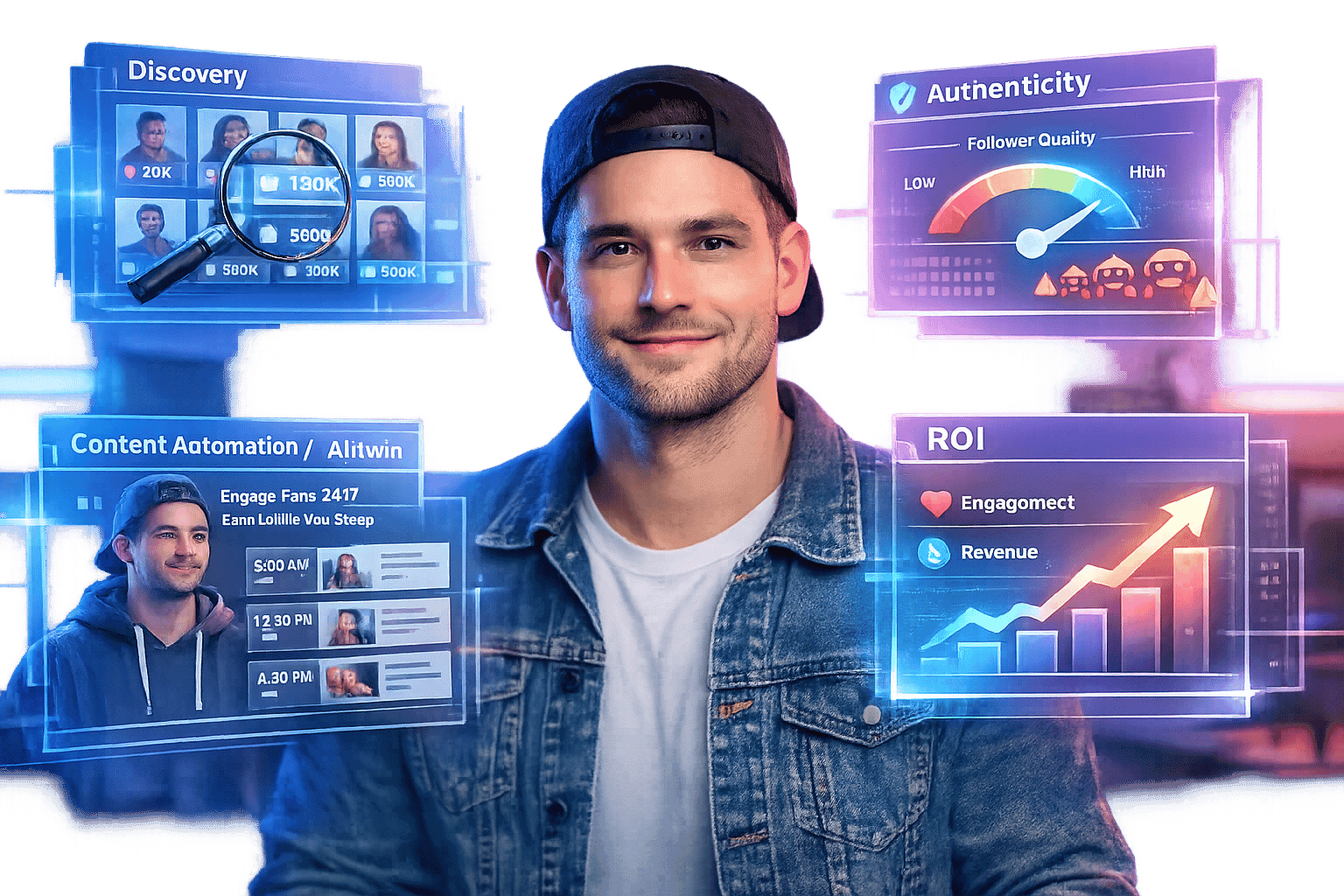
TwinTone doesn’t just create content - it helps brands measure its impact. With real-time analytics, brands can track engagement, conversions, and ROI through an intuitive dashboard. This data allows them to fine-tune their live shopping sessions, adjusting content, scripts, or timing as needed to better resonate with their audience. By continuously analyzing viewer behavior, brands can stay agile and ensure their strategies evolve alongside customer preferences.
Benefits of AI Grouping for Brands
AI grouping transforms live shopping into a highly targeted marketing strategy, delivering measurable results. By segmenting audiences based on their interests, brands can boost engagement, increase sales, and improve efficiency - all while keeping costs manageable.
Better Customer Engagement
When a live stream feels tailored to their interests, viewers are more likely to stay engaged. AI grouping makes this possible by customizing product highlights, demonstrations, and Q&A sessions for specific audience segments. For instance, budget-conscious shoppers won’t have to sit through premium product pitches, and skincare experts won’t endure beginner-level explanations. Instead, each group gets content that resonates with them.
This personalized approach shows up in the numbers. Viewers stick around longer because the content feels relevant. Chat activity spikes as people ask questions about products they’re genuinely interested in. Reactions - like emojis, likes, and poll participation - also increase, reflecting deeper engagement.
AI grouping achieves this by analyzing data like browsing history, past purchases, and real-time interactions during the stream. Hosts, whether human or AI-driven, can then adjust their focus to match what matters most to each segment. For example, a fitness brand could highlight technical specs for serious athletes while showcasing affordability and ease-of-use for casual gym-goers - all in the same event.
Localization also plays a key role. Pricing appears in U.S. dollars, measurements use familiar units like pounds and inches, and streams are timed to align with American viewing habits, such as prime-time slots or seasonal events like Black Friday. These adjustments make the experience seamless and set the stage for turning interest into purchases.
More Conversions and Sales
Engagement is great, but the ultimate goal is sales. AI grouping helps by aligning product recommendations and offers with each group’s buying behavior and price sensitivity. Instead of generic promotions, brands deliver dynamic deals that feel personalized.
For example:
High-intent shoppers who often add items to their cart might see bundle offers to encourage larger purchases.
First-time visitors might receive simple discounts like 15% off or free shipping to lower the barrier to entry.
Budget-conscious shoppers could get percentage-based discounts, while premium buyers might enjoy early access to new releases or exclusive products.
AI monitors real-time signals - like clicks, add-to-cart actions, and dwell time - to adjust offers on the fly. If a specific product or deal resonates with a group, brands can act immediately by extending demonstrations, launching flash sales, or highlighting customer reviews. This flexibility often leads to better conversion rates compared to static, one-size-fits-all programming.
Revenue metrics tell the story. By tracking conversion rates, revenue per viewer, add-to-cart rates, and average order values - broken down by AI group - brands can see which segments perform best. For instance, if "skincare enthusiasts" convert at 12% compared to 4% for "casual browsers", brands can allocate more resources to high-performing groups while testing new strategies for others.
Tailored content consistently outperforms generic ads. By focusing marketing dollars on messages that resonate, brands achieve a higher return on investment.
Scaling Live Shopping Efficiently
Traditional personalized live shopping can become resource-intensive. Running separate events for different segments often requires more hosts, complex scheduling, and higher production costs. AI grouping, paired with tools like TwinTone, eliminates these challenges.
AI Twins allow brands to run multiple targeted live streams simultaneously without needing human hosts for every session. For example, one AI Twin might focus on detailed product specs for enthusiasts, while another offers quick tutorials and discounts for deal hunters. This approach enables brands to host frequent, personalized events for various micro-segments - like style preferences or budget tiers - without inflating costs.
The efficiency gains are impressive. Automation handles segmentation and content delivery, freeing up teams to focus on strategy and creative planning instead of repetitive tasks. Brands can also repurpose successful live segments for future use, with AI hosts managing common questions.
TwinTone’s automation shifts the cost structure. Instead of costs increasing proportionally with each new segment or time slot, brands primarily invest in initial setup. From there, they can scale across segments, languages, and time zones with minimal added expense. A brand that once held three live events per week with human hosts can now run dozens of targeted streams daily, reaching niche groups that were previously too small to justify the effort.
To sustain growth, brands should treat AI grouping as an ongoing process. Continuously refine audience segments and creative strategies based on real-world data, not assumptions. Integrate insights from AI grouping into broader CRM and loyalty programs, ensuring a consistent, personalized experience across email, SMS, and paid media. This approach builds long-term customer relationships, not just short-term sales spikes.
Conclusion
AI grouping is reshaping live shopping by delivering content that's tailored to match the unique interests of different audience segments. This personalized approach not only keeps viewers engaged longer but also boosts conversion rates significantly. While traditional e-commerce conversion rates often hover in the low single digits, live shopping has the potential to climb into double digits - and AI grouping helps brands consistently hit the higher end of that spectrum.
Getting started with AI grouping can be simple. Brands can begin by leveraging basic behavioral signals and setting clear goals, then expand their efforts as they gain confidence. U.S. consumers, in particular, value interactive and creator-led experiences that adapt dynamically to their preferences. This consumer-first strategy pairs perfectly with advanced AI tools designed to enhance personalization.
One standout tool in this space is TwinTone, which automates live streams using AI Twins modeled after real creators. These AI Twins deliver personalized, around-the-clock content, allowing brands to run targeted live streams without requiring creators to be present every time. Whether it’s always-on or scheduled programming, these streams can cater to specific audience groups, showcasing products in a way that feels both relevant and authentic. Since AI Twins are trained to mirror the style and guidelines of actual creators, the content stays trustworthy - something U.S. audiences highly value when it comes to recommendations.
AI grouping also enables brands to scale live shopping events from a handful of monthly shows to continuous, targeted streams, all without a proportional increase in costs. The aggregated data collected through these efforts helps refine everything from product strategies to promotional calendars, leading to more predictable revenue and smarter marketing budget allocation.
The benefits of AI grouping don’t stop at live events. The insights gathered can fuel broader digital strategies, such as retargeting campaigns on social media, segmented email marketing, and personalized on-site recommendations. Each live session becomes both a sales driver and a source of valuable data, continuously improving how brands connect with and serve their U.S. customers across the social commerce ecosystem.
To maximize results, monitor key performance metrics like group-level watch time, click-through rates, conversion rates, revenue per viewer, and cost per acquisition. Treat AI grouping as an ongoing process - an optimization loop that evolves over time, rather than a one-and-done setup.
If you're looking to scale your live shopping strategy, start by evaluating your current performance. Identify your priority audience segments, and test one or two AI-powered tools, such as behavioral grouping or TwinTone’s AI Twins. Use these initial steps to build a repeatable playbook for growth. Make AI grouping a cornerstone of your social commerce efforts, not just an experimental side project. By doing so, you'll set the foundation for long-term success in this rapidly evolving space.
FAQs
How does AI grouping improve personalization in live shopping events?
AI-driven grouping takes live shopping to the next level by segmenting viewers based on their interests. This lets brands share content that feels directly relevant to each audience group. The result? A more engaging experience where viewers get their questions answered in real time and brands see a boost in sales through these tailored interactions.
Platforms like TwinTone push this concept even further by introducing AI Twins - virtual versions of real creators - to host live streams. These AI Twins can showcase products and share personalized content around the clock, creating a sense of genuine connection while improving return on ad spend (ROAS). This level of personalization makes the shopping experience more impactful for both viewers and brands.
How is viewer data protected when using AI to create interest-based groups?
When it comes to using AI for creating interest-based groups, viewer privacy takes center stage. Data collection is generally restricted to the bare minimum needed for grouping, and all information is managed in line with privacy laws like GDPR or CCPA.
To keep personal information safe, advanced security practices - such as data encryption and anonymization - are commonly applied. On top of that, users are typically kept in the loop about how their data is collected and used. Many platforms also provide tools for managing privacy settings or the option to opt out entirely, giving users more control over their information.
How can brands evaluate the effectiveness of AI-powered group targeting in live shopping events?
Brands can gauge their success by diving into key performance metrics like engagement rates, conversion rates, and audience retention during live shopping events. Keeping an eye on these numbers reveals which AI-generated audience groups are sparking the most interest and driving sales.
On top of that, brands can fine-tune their strategies by analyzing audience feedback and behavior trends. This approach enables ongoing adjustments, ensuring that AI groupings stay aligned with customer preferences and deliver the best possible outcomes.