5 Steps to Identify Trending Creators in Specific Demographics
How to build a futureproof relationship with AI
Want to find trending creators who resonate with your audience? Here’s how to do it in 5 simple steps:
Define Your Target Demographics: Identify key audience traits like age, gender, location, and interests. For example, 77% of Gen Z uses TikTok for product discovery, while Instagram has a nearly equal gender split.
Collect Platform Data: Use tools like Facebook Insights or TikTok Analytics to analyze audience demographics and engagement patterns. Third-party tools can help fill gaps for cross-platform insights.
Leverage AI Tools: AI platforms like TwinTone quickly identify rising creators, analyze engagement quality, and predict future trends - saving time and effort.
Verify Creator Authenticity: Check for fake followers and inflated engagement using tools like Social Blade or manual reviews. Ensure the creator’s audience aligns with your campaign goals.
Monitor Trends Continuously: Use social listening tools and analytics to track shifts in audience behavior and discover new creators early.
Quick Tip: Smaller influencers often achieve 2–3x higher engagement rates than mega influencers, making them a smart choice for targeted campaigns.
How To Check Influencer Audience Demographics In 30 Seconds
Step 1: Define Your Target Demographics
To effectively engage trending creators, it's essential to clearly define your audience. Without specific demographic parameters, you risk spreading your efforts too thin and missing out on creators who could genuinely impact your brand. Start by determining which demographic details matter most for your campaign.
Pinpoint Key Demographic Variables
Focus on the core demographic factors that align with your campaign goals. These include age, gender, location, education level, income, interests, ethnicity, marital status, and parenthood status. These details provide insight into audience behavior and preferences.
For instance, age is a crucial factor since different generations consume content in distinct ways. If you're targeting Gen Z, consider that 77% of them use TikTok for product discovery. On the other hand, millennials remain the most active social media users, with 69.2% projected to use social platforms by 2025.
Gender distribution also plays a role in choosing the right platform and creators. For example, Instagram leans slightly female (57% female versus 43% male), while X (formerly Twitter) skews male (63% male versus 37% female). Understanding these dynamics helps you select creators whose audiences align with your target gender.
Geographic location is another critical factor, especially for local or region-specific campaigns. A creator with a strong following in one region may not be effective if your product caters to a different market. Similarly, income levels and education influence purchasing habits, making them valuable filters when identifying creators.
Leverage Social Media Demographic Insights
Once you've outlined your key variables, examine how audiences are segmented on major platforms. For example:
Facebook: Its largest age group is 25–34, accounting for 24.2% of its audience, with a gender split of 43.7% female and 56.3% male. This makes it a solid choice for targeting millennials and older Gen X users.
Instagram: Popular among younger users, 78% of its audience is aged 18–24, and it has a near-equal gender balance. It's ideal for product-focused campaigns, as 61% of users discover new products there.
TikTok: Known for its younger demographic, 36.2% of users are aged 18–24, with an almost even gender split (49.2% female, 50.8% male). TikTok excels in discovery, with 63% of Gen Z users relying on it for product research.
LinkedIn: Perfect for B2B campaigns, 60% of users are aged 25–34, with a gender breakdown of 43.7% female and 56.3% male. It’s the go-to platform for reaching professionals and decision-makers.
Align Demographics with Campaign Goals
Your demographic choices should directly support your campaign objectives. Misaligned targeting can waste resources - for instance, promoting luxury retirement services to a younger audience won't yield results.
Purchasing behavior also varies by platform. Facebook leads in direct purchases (39% of users buy through the platform), followed by TikTok (36%) and Instagram (29%). For example, Great Jones successfully targeted millennials by collaborating with a creator who resonated with that demographic, significantly boosting engagement.
Matching demographics to campaign goals ensures effective budget use. By working with influencers whose followers align with your ideal customer profile, you can minimize wasted spending and reduce customer acquisition costs. Considering that businesses earn an average of $5.78 for every dollar spent on influencer marketing, nailing your demographic targeting is crucial for maximizing returns.
"To fully leverage celebrity endorsements, brands must pick a celebrity who aligns with the preferences and demographics of their target market." – Kolsquare
While 69% of consumers trust influencers for product recommendations, this trust only delivers results when the influencer’s audience matches your target group. For instance, a fitness influencer with a predominantly male audience aged 25–35 would be a poor fit for promoting maternity wear, no matter how high their engagement rates are.
Develop detailed audience personas that blend demographic, psychographic, and behavioral traits. For example, think of a profile like: working mothers aged 25–35, college-educated, household income of $50,000–$75,000, interested in sustainable products, active on Instagram and Facebook, and likely to research before purchasing.
Defining clear demographic criteria lays the groundwork for using AI tools to identify the best creators in the next steps.
Step 2: Collect and Analyze Platform Data
Once you've defined your target demographics, the next step is to gather social media data to find creators whose audiences align with your goals. This involves using both native platform tools and third-party analytics to paint a clear picture of potential creators. With this data in hand, you can focus on narrowing down and verifying creators based on engagement quality.
Use Platform Analytics and Tools
Most major social platforms provide built-in analytics that offer valuable demographic insights. While these tools are a good starting point, they do have their limitations, especially when it comes to analyzing data across multiple platforms.
Here’s a quick overview of platform-specific analytics:
Facebook Insights: Provides detailed audience data, including age, gender, location, and interests. Facebook continues to be the most popular global social media platform as of 2025.
Instagram Creator Studio: Offers insights into audience demographics and engagement patterns, with 60% of users under the age of 35.
TikTok Analytics: Focuses on video performance and demographic breakdowns. The 25–34 age group now makes up 35.3% of TikTok's user base.
YouTube Analytics: Tracks watch time, subscriber demographics, and geographic data. YouTube has surpassed Facebook as the most popular social platform in the U.S..
LinkedIn Analytics: Provides professional insights, such as job titles, industries, and company sizes, with 50.6% of users falling in the 25–34 age range.
These tools help verify whether a creator's audience aligns with your target demographics. However, native analytics often fall short when it comes to providing complete or cross-platform insights. To fill these gaps, third-party analytics tools can help you gather and interpret performance data for more comprehensive research.
Filter Creators by Engagement Metrics
Once you've collected data, the next step is to refine it by focusing on meaningful engagement metrics rather than just follower counts. Engagement rates are a better indicator of how well a creator connects with their audience.
One key metric to consider is engagement rate by reach (ERR), which measures the percentage of unique viewers who interact with content after seeing it. This metric gives a clearer picture of audience resonance compared to general impressions. For context, in 2024, the average daily engagements per post across all industries stood at 14.
Analyzing content performance patterns can also reveal what types of content resonate most with specific demographics. Comparing engagement across different formats helps identify what works best. Additionally, diving into comments can provide qualitative insights, offering a glimpse into audience sentiment and whether a creator's values align with your brand.
Hashtag performance is another useful metric, showing how well creators engage with broader industry conversations. Tracking engagement trends over time can also help you identify the best posting times and content strategies.
Add Social Listening Tools
Social listening tools are invaluable for capturing broader conversations and spotting trends. These tools can help you identify creators who may not show up in standard searches but are gaining traction in relevant discussions.
By tracking brand mentions, you can find creators who are already talking about topics related to your industry. This approach often uncovers micro-influencers and emerging creators before they hit the mainstream.
Keyword monitoring is another effective strategy, helping you discover creators involved in conversations that align with your brand's messaging. Sentiment analysis can further refine your search by revealing how audiences perceive these topics, allowing you to steer clear of creators whose audiences might have negative associations with your brand.
Machine learning systems take this a step further by identifying emerging trends and creators before they gain widespread attention. Spotting these opportunities early can help you establish relationships with creators before their demand - and rates - skyrocket.
Tools like Mentionlytics are particularly effective for social listening. With ratings ranging from 4.3 stars on Google Play to 4.9 stars on G2, users often highlight its simple interface, affordability, and excellent customer support.
The key to this process is systematic analysis. By segmenting audience data based on demographics, you can extract actionable insights. Social media analytics not only help refine your creator selection but also demonstrate ROI and support data-driven decision-making.
Step 3: Use AI-Powered Discovery Tools
AI tools have revolutionized creator discovery, making it faster and more precise. These tools can process enormous amounts of data in seconds, uncover hidden patterns, and even predict which creators are likely to trend. By complementing manual research, AI refines your search, helping you zero in on rising stars. With about 78% of companies expected to rely on AI to stay competitive through 2025 and beyond, using these tools is no longer optional - it's critical.
Automate Trend Detection with AI
AI algorithms can scan millions of profiles to find influencers that match your target audience. These tools monitor online conversations in real time, notifying you of emerging trends and rising creators instantly. They’re a game-changer, cutting discovery and vetting time by up to 70%. Beyond just identifying influencers, AI-powered social listening tools analyze sentiment, context, and engagement patterns to pinpoint micro-influencers who are starting to gain traction with your audience. These tools even forecast future growth, giving you an edge in identifying creators before they become mainstream. Once trends are detected, you can dive deeper using specialized platforms for more comprehensive insights.
Use TwinTone for Better Creator Discovery
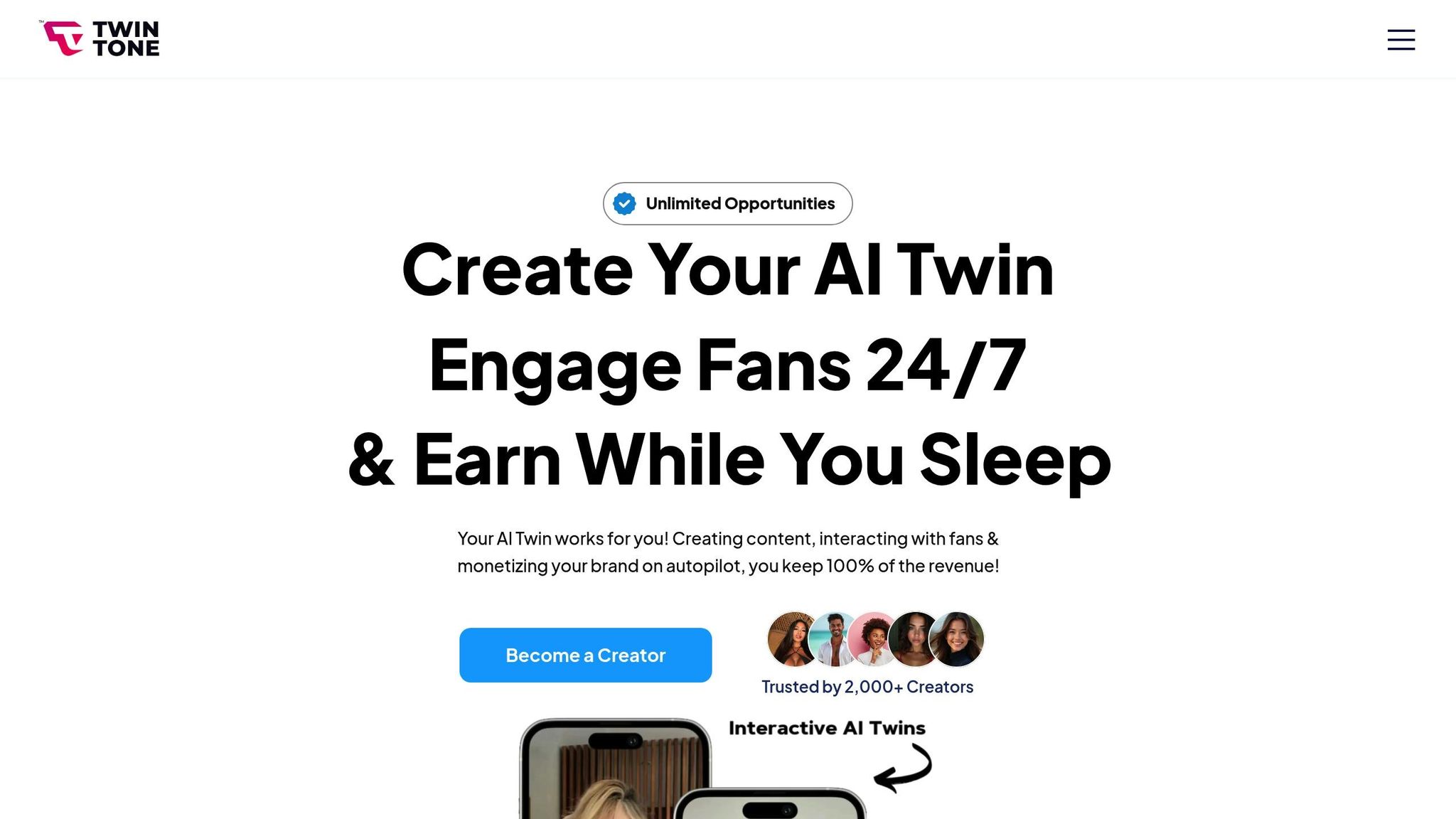
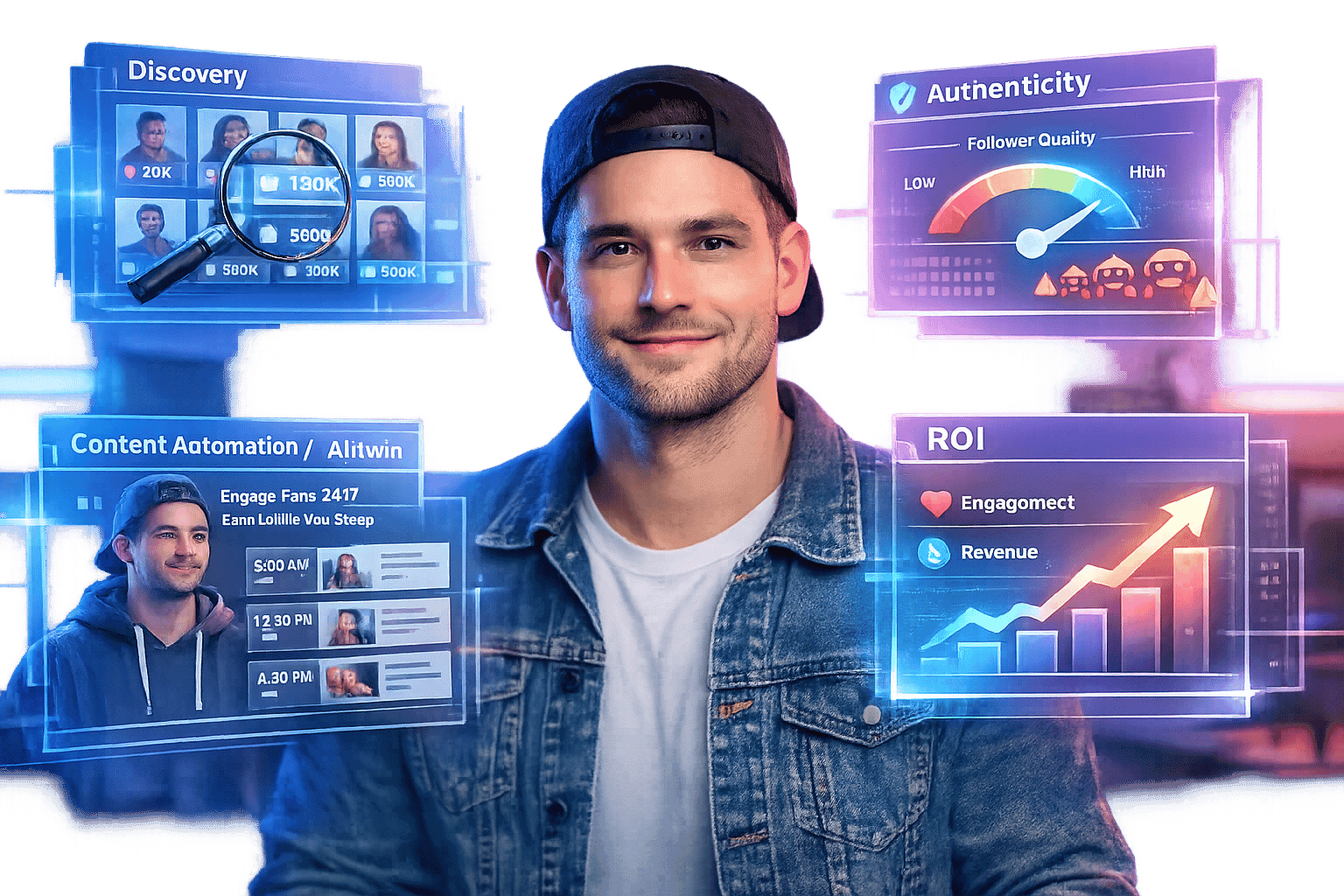
One standout platform in this space is TwinTone. It’s an AI-powered tool designed to identify trending creators by analyzing more than just surface metrics. TwinTone evaluates creator authenticity and audience engagement patterns, offering a clear picture of how well a creator connects with their followers. Its cross-platform integration allows you to assess performance across multiple social media platforms at once, giving you a unified view of a creator’s digital presence.
TwinTone goes a step further by incorporating emotional intelligence. Its AI analyzes expressions, tone, and sentiment, mimicking human perception to understand how creators resonate with their audience.
"Your AI Twin interacts like a real person understanding emotions, creating hyper-personalized memorable experiences." – TwinTone.ai
The platform also provides real-time analytics, offering instant insights into creator performance and audience trends. With support for over 30 languages, it’s especially effective for brands looking to engage with diverse audiences. For businesses serious about creator discovery, TwinTone offers plans like the Creator plan at $99/month, which includes advanced analytics, and the Mr Beast Mode plan, which provides enterprise-level features and API integration for large-scale operations.
Improve Efficiency with AI Insights
AI makes creator discovery a streamlined, data-driven process. One of its strengths is sentiment analysis, which helps you understand not just who follows a creator but how those followers feel about their content. AI also excels at trend prediction, identifying demographic shifts by analyzing engagement and audience growth patterns.
"There is a saying going around now - and it is very true - that your job will not be taken by AI. It will be taken by a person who knows how to use AI. So, it is very important for marketers to know how to use AI." – Christina Inge, author of Marketing Analytics: A Comprehensive Guide and Marketing Metrics and instructor at Harvard Division of Continuing Education’s Professional & Executive Development
AI’s ability to detect subtle patterns and correlations that traditional methods might miss can lead to smarter creator selection and stronger partnerships. It even helps overcome challenges like writer's block when crafting outreach messages and fine-tunes content for different creator segments. These capabilities make it easier to make quick, informed decisions about which creators to collaborate with.
A great example of AI-powered discovery in action is Heinz’s 2023 "Draw Ketchup" campaign with Rethink Ideas. Using DALL-E 2, the AI consistently generated images resembling Heinz bottles, leading to over 850 million impressions worldwide. Considering that 49% of consumers make purchases monthly due to influencer posts and 86% are inspired by influencer content annually, choosing the right creators can have a huge impact on your bottom line. AI ensures those choices are smarter and more effective.
Step 4: Check Creator Authenticity and Audience Fit
After identifying potential creators using AI tools, the next step is to dig deeper. This is where you separate genuine engagement from inflated numbers, ensuring the creators you choose have an audience that aligns with your goals and authentic interaction. It's worth noting that up to 20% of mid-level influencers might engage in practices like buying fake followers, so taking the time to verify can save you from costly missteps. Once you’ve shortlisted creators, it’s essential to confirm their audience and engagement genuinely match your campaign's objectives.
This process builds on the initial data and trends you’ve gathered, ensuring the creators you select truly connect with your target audience.
Verify Audience Demographics
Leverage analytics tools like Instagram Insights, YouTube Analytics, and TikTok Pro to confirm details such as age, gender, location, and interests of a creator's audience. If needed, ask creators to share screenshots of this data. Most reputable influencers are happy to provide these insights, and hesitation might indicate something is off.
You can also manually review their followers and engagement patterns. Look at profile pictures, bios, and interactions to ensure they line up with your ideal customer base.
Don’t overlook platform-specific trends. For example, males make up 63% of X (Twitter) users, and Instagram has a slight male majority of about 2%. Knowing these benchmarks can help you assess whether a creator’s audience matches your expectations.
Check Engagement Quality and Authenticity
Take a closer look at the quality of engagement on a creator’s posts. Comments, shares, saves, and direct messages are often more telling than likes alone. To gauge authenticity, calculate the engagement-to-follower ratio:
(Total Engagement / Total Followers) × 100.
Watch for red flags like consistent engagement across posts or high likes but few comments - these could signal fake interactions. Tools like Social Blade are helpful for spotting unusual spikes in follower growth, which might indicate the purchase of fake followers.
"This is the number one question to ask [about influencers] – Do they have a connection to their audience?"
Ethan Frame, Senior Manager, Influencer Marketing at MVMT
Consistency across platforms is another key indicator. A creator’s brand voice and engagement should feel organic whether they’re on Instagram, TikTok, or YouTube.
Manual vs. AI-Powered Analysis Comparison
When it comes to verifying creator authenticity, choosing the right mix of methods is essential. Manual analysis and AI-powered tools each have their strengths, and combining them can give you the best results.
Aspect | Manual Analysis | AI-Powered Analysis |
|---|---|---|
Speed | Time-consuming and effort-intensive | Quickly processes large datasets |
Cost | Free but labor-intensive | Requires a subscription fee |
Accuracy | Depends on human judgment | Offers objective, data-driven insights |
Depth | Adds context and intuition | Provides detailed demographic data |
Scalability | Best for a small group of creators | Can handle hundreds of creators |
Fraud Detection | Identifies obvious red flags | Detects subtle patterns of manipulation |
Best Use Case | Final verification | Initial screening and large-scale checks |
"When you boil it down, you are your most trusted source for the truth. Learn how to spot fake followers and engagement yourself and you won't need to rely on third-party sites when you have no idea where they're pulling data from, or how accurate their reports are."
Ryan Kucey, Co-Founder/COO of Intro Fuel Marketing
By combining AI for initial screening with manual analysis for final verification, you can balance efficiency with a nuanced understanding that raw data alone might miss.
With 92% of consumers worldwide trusting recommendations from social media creators over traditional ads, and 63% of online shoppers more likely to buy products recommended by influencers, ensuring a creator’s authenticity and audience fit is crucial for driving campaign success and maximizing ROI.
Step 5: Monitor Trends and Improve Strategy
Finding the right creators is just the beginning - keeping up with trends is an ongoing effort, especially as audience preferences can shift quickly. With 75% of consumers trying out new shopping behaviors, having a flexible and evolving creator discovery process is crucial to staying relevant.
The best brands understand that trend monitoring isn’t a one-and-done task. It’s a continuous process that helps you identify rising creators before they hit the mainstream and ensures your campaigns remain aligned with your audience. Here’s how you can effectively track trends, leverage AI, and refine your strategy.
Keep an Eye on Demographic Trends
After your initial research and authenticity checks, regular monitoring fine-tunes your creator partnerships. Staying on top of audience data allows for strategic tweaks over time.
Frequent analysis of demographic shifts gives you a competitive edge. Use analytics tools to track changes in age, location, and interests. Watch for patterns in engagement rates across different groups and note any shifts in content preferences.
Social listening tools are a must for spotting real-time changes. These tools help you track conversations about your brand and industry, alerting you to new topics gaining traction with your audience.
Pay attention to how audiences move across platforms. As users spread out over multiple devices and platforms, tracking these shifts is key. For example, a demographic that was active on one platform six months ago might now favor another. Identifying these movements can lead you to creators who are thriving in these new spaces.
Set up monthly check-ins and automate reports to monitor demographic changes and engagement trends. Focus on creators with steady engagement growth rather than those with sudden spikes, as the latter might indicate artificial boosting.
Use AI to Stay Ahead
Artificial intelligence is transforming how brands understand audience behavior, offering the ability to predict trends before they fully emerge. AI tools can analyze massive amounts of data to detect patterns that might go unnoticed with manual analysis.
AI-powered platforms scan social media to find creators whose content is gaining traction, tracking metrics like engagement and audience sentiment. This allows you to discover promising influencers early, giving you a competitive edge.
Use AI for predictive insights to fine-tune your creator selection and campaign planning. These tools can forecast which creators and content types are likely to connect with your audience in the near future.
Consider investing in AI platforms that offer features like discovery, analytics, and fraud detection. These tools can handle tasks like generating campaign briefs, verifying compliance, and tracking performance - all while saving you time to focus on strategy and building relationships with creators.
One global beauty brand saw a 40% increase in engagement and a 25% jump in conversions by collaborating with micro-influencers identified through an AI-powered platform. This highlights how AI can pinpoint creators whose audiences align perfectly with your target demographic, leading to better campaign results.
Adjust Your Strategy for Long-Term Success
Adapting your strategy as audience preferences evolve is critical for maintaining campaign success. Companies that use advanced analytics report a 15% higher profit margin compared to their competitors, largely due to their ability to pivot based on data insights.
Refine your messaging and offerings as your audience’s interests change. For example, if your data shows a shift toward educational content over entertainment, adjust your creator discovery criteria to reflect this trend.
Brands that actively use social listening tools have seen a 25% boost in customer satisfaction rates. Staying connected to your audience’s preferences allows you to adapt before any disconnects occur.
Create a feedback loop between your trend monitoring and creator selection process. For instance, if certain creator types consistently perform well with specific demographic segments, prioritize those traits in future searches. Similarly, if your audience responds better to behind-the-scenes content, seek out creators who excel in that style.
Remember, 80% of consumers are more likely to buy from brands that offer personalized experiences. Your creator partnerships should reflect this by aligning with the specific interests and values of your audience.
"Adapting to changing audience preferences in a dynamic media landscape requires several strategies. Firstly, it is essential to know your audience and their preferences through tools such as surveys, focus groups, and social media engagement." - C&I Studios
Experiment regularly with A/B testing, trying different creator types and content formats. What works for your 18-24 demographic might not resonate with your 25-34 group, even if they share other similarities.
Document your findings and create playbooks tailored to different demographic segments. These resources ensure consistency in decision-making and make it easier to onboard new team members to your refined approach.
Conclusion: Key Points for Identifying Trending Creators
Spotting trending creators requires a mix of smart data analysis, AI tools, and ongoing adjustments. This guide’s five-step approach helps you move past guesswork and achieve real, measurable outcomes.
It all begins with defining your target audience. Matching creators to your campaign goals ensures their followers align with your brand’s demographics. This precise targeting not only enhances relevance but also boosts your return on investment (ROI).
Next, lean on platform data and AI-driven tools. These technologies are now part of nearly 49% of influencer strategies, helping brands analyze data, streamline creator selection, and match profiles to campaign needs efficiently. This tech-driven approach lays the groundwork for verifying authenticity.
Authenticity is non-negotiable. With 36.8% of Instagram influencers facing fraud in 2024, combining manual reviews with AI tools ensures you collaborate with creators who genuinely engage their audience and deliver meaningful reach.
Finally, consistent monitoring and strategy tweaks are what turn one-time campaigns into long-term successes. Keeping an eye on trends helps you identify up-and-coming creators early and adapt to shifting audience preferences. Focus on quality over quantity - smaller influencers often achieve engagement rates 2–3 times higher than mega influencers. Partner with creators who consistently demonstrate genuine engagement and a strong connection to their audience.
FAQs
How can I find creators with genuine engagement who match my target audience?
To make sure creators genuinely connect with their audience and align with your target group, start by diving into their engagement metrics - likes, comments, and shares. These numbers can give you a clear picture of how well they interact with their followers. Pay attention to steady follower growth over time, and be cautious of sudden, unexplained spikes, as these can sometimes signal inauthentic activity.
It’s also important to examine their audience demographics through analytics tools. Check if their followers match your target audience in terms of age, location, interests, and other relevant factors. On top of that, take the time to manually review their content and interactions. This helps ensure their tone, style, and messaging align with your brand’s values and objectives.
How does AI help identify trending creators, and how can it improve my marketing strategy?
AI makes it easier to pinpoint trending creators by sifting through massive amounts of social media data. It identifies emerging trends, audience preferences, and engagement habits, helping brands discover rising creators. By analyzing metrics like follower growth, content performance, and audience interactions, AI can highlight creators gaining traction within specific demographics.
Using these insights, you can fine-tune your marketing strategy to collaborate with the right creators at the perfect moment. This not only enhances engagement but also keeps your brand aligned with current trends, ensuring your campaigns resonate more effectively with your target audience.
Why is it important to track social media trends, and how can this benefit my influencer marketing campaigns?
Keeping up with social media trends is a must if you want to stay relevant and truly connect with your audience. Trends reveal what clicks with your audience, highlight new opportunities, and help fine-tune your marketing strategies to match current interests.
When it comes to influencer marketing, staying on top of trends ensures your campaigns stay fresh and engaging. It gives you the flexibility to adapt to changes, boost audience interaction, and get the most out of your investment. Being ahead of the curve also shows your brand is responsive and forward-thinking, which helps build stronger connections with your audience and keeps you competitive.